
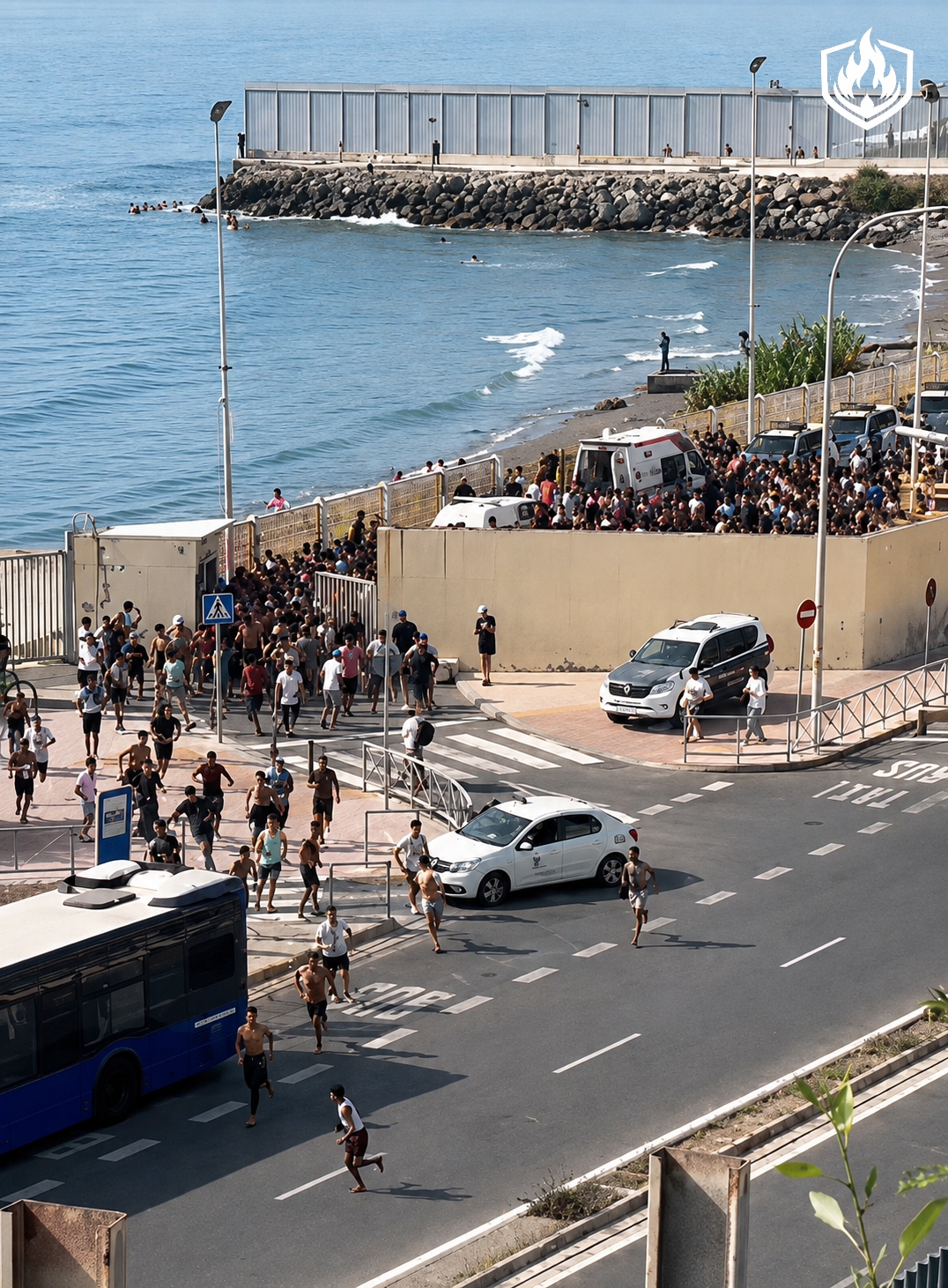
The European Union (EU) is preparing for an emergency meeting after a large number of migrants crossed from Morocco into the Spanish territory of Ceuta. Around 60,000 people entered Ceuta in a short period, making it one of the biggest migration events the region has seen in recent years. The sudden crossings have created political tensions across Europe and raised new concerns about border security and migration policies.
Ceuta is a small Spanish territory located on the northern coast of Africa. Along with Melilla, it is one of the only land borders between the European Union and Africa. Because of its location, many migrants try to reach Ceuta in the hope of entering Europe. Some cross by land, while others swim through the sea to reach the territory.
The recent wave of migrants has led the European Union to organize an emergency meeting on Tuesday. EU leaders want to discuss how to better protect the bloc's external borders and improve cooperation between member countries. Twenty-two EU countries signed a joint letter calling for a united response and stronger border controls. They warned that if people believe they can enter the EU illegally without consequences, it could encourage more dangerous migration attempts in the future.
Spain has strongly criticized the reactions of some European countries. Spanish officials said they acted quickly and managed to regain control of the situation in less than two days. Prime Minister Pedro Sánchez said that while many countries supported Spain, others spread false information and criticized the Spanish government for political reasons. He also reminded other leaders that Ceuta is not part of the Schengen border-free travel area.
The migration crisis has also caused disagreements between European governments. Italy temporarily suspended its Schengen cooperation with Spain for one month. Finland and Denmark supported stronger border measures, while France and Portugal also considered introducing temporary border checks. Some European leaders argued that stricter controls were necessary to protect the EU from further illegal migration.
European Commission President Ursula von der Leyen said the scenes in Ceuta were unacceptable. She stressed that people cannot enter the European Union without following legal immigration rules. German Chancellor Friedrich Merz also called on Morocco to immediately take back migrants who entered Spain illegally. At the same time, the United Kingdom offered support to Spain in dealing with the crisis.
Spanish Interior Minister Fernando Grande-Marlaska said the situation has now mostly returned to normal. According to him, almost all of the migrants who entered Ceuta have already left the territory or been returned. Businesses that had temporarily closed during the crisis have reopened, and authorities are working on new safety measures, including inflatable sea barriers, to help stop illegal crossings in the future.
Sadly, the dangerous journey has resulted in many deaths. Officials say at least 67 people lost their lives while trying to reach Ceuta. Many migrants attempted to swim long distances through rough waters, making the journey extremely risky. Rescue teams and emergency workers have continued searching the coastline and helping those who survived.
Spain believes that migrant smuggling groups played a major role in encouraging people to make the dangerous trip. The government says traffickers spread false promises and took advantage of a recent court ruling that limited Spain's ability to immediately deport people arriving by sea. Spanish officials argue that these criminal networks misled migrants into believing they could easily enter Europe.
Migration has remained a difficult issue for Europe for many years. Every summer, more people try to reach Ceuta because the weather makes sea crossings easier. Social media is also often used to organize these journeys and spread information among migrants. Similar events happened in 2021, when about 8,000 people entered Ceuta within a few days, causing diplomatic tensions between Spain and Morocco.
Despite the current crisis, Spain has generally taken a more welcoming approach to immigration than some other European countries. Earlier this year, the Spanish government announced plans to give legal status to around 500,000 undocumented migrants already living in the country. The goal is to allow them to work legally, pay taxes, and become part of Spanish society.
The latest events have also drawn attention to the relationship between Spain and Morocco. The two countries work closely on migration issues, but large migration waves often create diplomatic challenges. European leaders hope that better cooperation with Morocco and stronger border management will help prevent similar situations in the future.
The emergency EU meeting is expected to focus on improving border security, increasing cooperation among member states, and finding long-term solutions to migration. Leaders are also expected to discuss ways to fight human trafficking networks and reduce the number of dangerous journeys across the Mediterranean and into European territories.
The Ceuta migration crisis has once again highlighted the challenges Europe faces in balancing border security with humanitarian responsibilities. While authorities say the immediate situation is now under control, the event has reopened debates about immigration policies, international cooperation, and the need to protect people from dangerous and illegal migration routes.
Politics
EU Holds Emergency Meeting After Thousands of Migrants Cross Into Spain's Ceuta
Summary
The European Union will hold an emergency meeting after around 60,000 migrants crossed from Morocco into Spain's Ceuta enclave. EU leaders are discussing stronger border security while Spain says the situation is now mostly under control.
Content


×
![]()
Comments
Sign in to join the conversation