
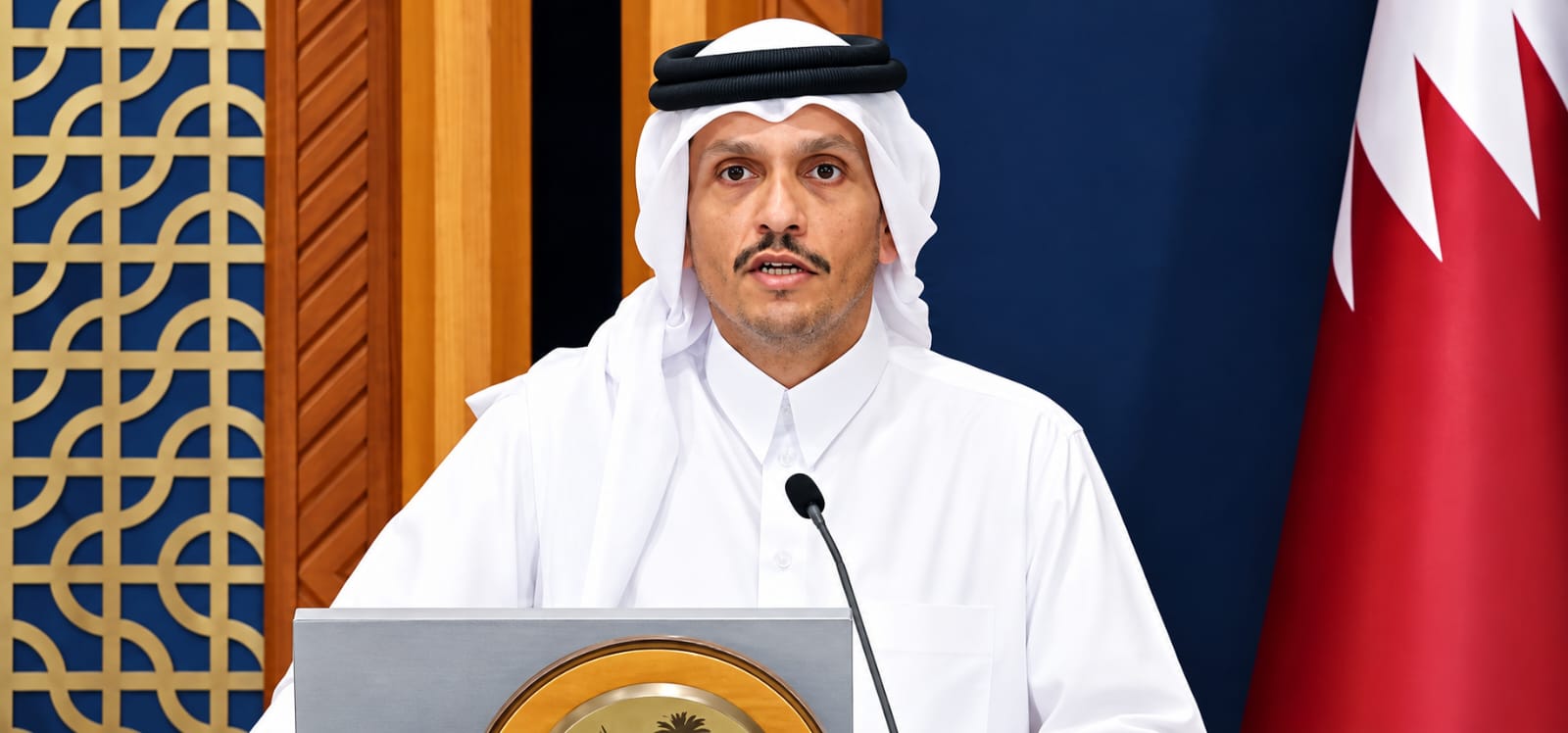
Qatar Says Energy Disruption Is a Major Challenge
The Qatari prime minister said his country has been blessed with substantial natural resources and has become one of the world's leading LNG suppliers.
He acknowledged that the recent disruption represented a major challenge and one of the risks Qatar and its international partners had anticipated. He said Doha had tried to remain transparent with its people, partners and customers throughout the situation.
The prime minister said the disruption would not change Qatar's credibility or reliability as an energy supplier. He added that once the situation is resolved, Qatar intends to fulfill its commitments.
Recent reporting has highlighted the impact of the regional conflict on Qatar's LNG industry. QatarEnergy said attacks on the Ras Laffan export hub had disabled around 17% of the country's LNG capacity, while repairs to some damaged facilities could take years.
Qatar Warns Against Attacks on Civilian Infrastructure
The prime minister said Qatar is particularly concerned that facilities previously regarded as off-limits during conflicts are increasingly being targeted.
He listed schools, hospitals, bridges, power plants and energy facilities among the sites that he said should not be attacked. He warned that deliberately crossing these boundaries could establish a dangerous precedent for future conflicts.
He also criticized parties that, in his words, openly claim responsibility for such attacks, arguing that the international community has a responsibility to respond to violations of protections for civilian infrastructure.
Qatar Balances Relations With Iran and the United States
The prime minister described Iran as Qatar's neighbor and the United States as its strategic ally. He also referred to the Gulf as Qatar's natural security coalition.
He said the consequences of the current conflict extend beyond Qatar and the Middle East and could affect global security.
Qatar has continued efforts to communicate messages between the parties involved, but the prime minister acknowledged that the conflict is complicated and that rapidly changing events are affecting the direction of negotiations.
He said there is currently no clear overall strategy capable of bringing the conflict to an end.
Qatar Calls Houthi Attacks on Saudi Arabia Irresponsible
The Qatari leader also criticized recent Houthi attacks against Saudi Arabia.
He described the escalation as irresponsible given the current regional circumstances and warned that further attacks could create additional conflict and tension.
He said attacks originating from the Houthis or Iran should be opposed, particularly at a time when diplomatic efforts are attempting to prevent further escalation.
Recent attacks claimed by the Houthis have included strikes around Riyadh and against an Aramco facility in Yanbu, while Saudi authorities have reported intercepting incoming missiles and drones.
Qatar Reaffirms Its Strategic Alliance With the U.S.
The prime minister said the U.S.-Qatar relationship remains strong and described Washington as a strategic ally.
He said Qatar uses American military equipment and continues joint military training with the United States. He emphasized that the relationship is intended to be a two-way partnership rather than a one-sided arrangement.
The comments come as Qatar continues to navigate a regional conflict involving countries with which it has different types of relationships, including Iran and the United States.
Qatar Says It Needs a Period of Peace
Reflecting on the recent years of regional crises, the prime minister said Qatar has experienced continued pressure since hosting the 2022 FIFA World Cup.
He referred to the October 7 attacks and the subsequent Gaza war as developments that prevented Qatar from having what he described as a period of rest.
He appealed for a peaceful 2027, saying Qatar needs a period without another major crisis.
Qatar Says Gaza Situation Remains a Concern
On Gaza, the prime minister criticized the Israeli government over what he described as continued attacks and restrictions on humanitarian assistance.
He called on Israel to fulfill its commitments and allow humanitarian aid to reach civilians.
The comments come as Qatar continues to play a diplomatic role in efforts connected to the Gaza conflict and wider regional negotiations.
Qatar Highlights Its Record of Responding to Crises
The prime minister also referred to Qatar's experience hosting the 2022 World Cup as an example of the country's ability to overcome difficult challenges.
He recalled that Qatar faced skepticism when it bid to host the tournament and that some critics predicted the event would fail.
He said Qatar ultimately delivered what he described as an exceptional World Cup and argued that the country's experience showed its ability to turn difficult or seemingly impossible projects into reality.
Key Points
- Qatar's prime minister warned against attacks on civilian and energy infrastructure.
- He said Qatar remains committed to its LNG customers despite recent disruptions.
- Qatar described Iran as a neighbor and the United States as a strategic ally.
- Doha continues efforts to communicate between parties involved in the regional conflict.
- The prime minister criticized Houthi attacks against Saudi Arabia.
- Qatar reaffirmed its military and strategic relationship with the United States.
- He called for a peaceful 2027 after years of regional crises.
- Qatar continues to raise concerns about humanitarian conditions in Gaza.
- Qatar's energy sector has been affected by disruptions linked to the regional conflict.
Source
This article is based on remarks by Qatar's Prime Minister Sheikh Mohammed bin Abdulrahman Al Thani concerning Qatar's energy sector, regional security, Iran, the United States, Saudi Arabia, the Houthis and Gaza. Recent developments concerning Qatar's LNG infrastructure and regional attacks have been added from current reporting.
Comments
Sign in to join the conversation