
When kids were given similar problems with dots instead of numbers, those differences went away. Children with math learning disabilities had the same amount of activity in the two identified brain areas as kids without those disabilities. Chang notes, however, that the analysis is exploratory and cannot show cause and effect between brain activity in these regions and the math abilities of these children.
Identifying these brain regions suggests that explaining differences in math skills is more complex than finding one part of the brain that handles math and numbers. Instead, the study suggests that brain areas that process information and find errors seem to be key, says Marie Arsalidou, a developmental cognitive neuroscientist at York University in Toronto, who was not involved in the study. “We’re learning that there’s many regions involved.”
One insight of the new work, Chang says, is that “there are hidden mechanisms that differentiate students who may potentially have math learning difficulties.” Future interventions, she says, could involve teaching kids to think about how they are solving problems and even teaching them different problem-solving strategies.
Questions or comments on this article? E-mail us at [email protected] | Reprints FAQWhen kids were given similar problems with dots instead of numbers, those differences went away. Children with math learning disabilities had the same amount of activity in the two identified brain areas as kids without those disabilities. Chang notes, however, that the analysis is exploratory and cannot show cause and effect between brain activity in these regions and the math abilities of these children.
Identifying these brain regions suggests that explaining differences in math skills is more complex than finding one part of the brain that handles math and numbers. Instead, the study suggests that brain areas that process information and find errors seem to be key, says Marie Arsalidou, a developmental cognitive neuroscientist at York University in Toronto, who was not involved in the study. “We’re learning that there’s many regions involved.”
One insight of the new work, Chang says, is that “there are hidden mechanisms that differentiate students who may potentially have math learning difficulties.” Future interventions, she says, could involve teaching kids to think about how they are solving problems and even teaching them different problem-solving strategies
Personality
Why is math harder for some kids? Brain scans offer clues

Summary
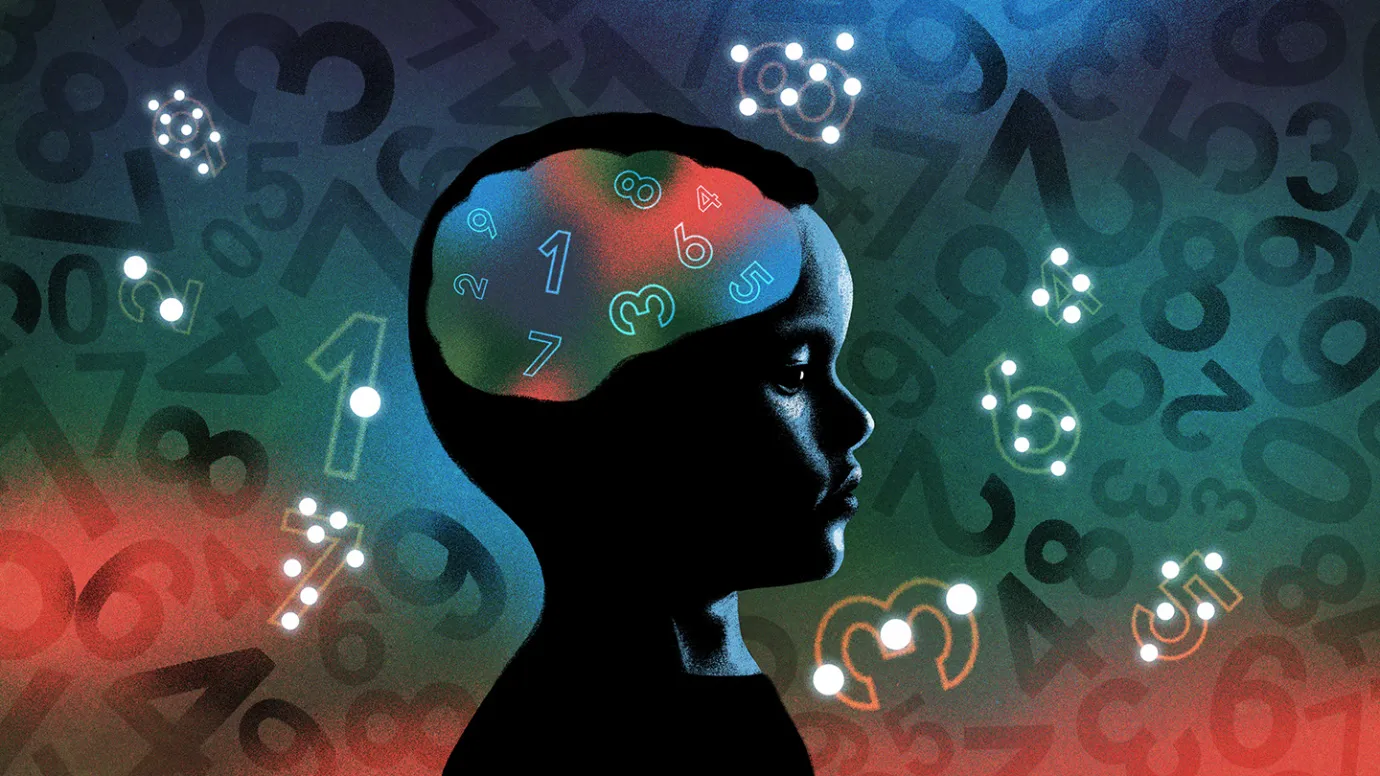
Some kids struggle with math. Now, scientists have pinpointed some of the specific thinking processes and brain regions that might explain why math is a little harder for some than others.
When given simple math problems, kids with math learning disabilities in a new study were less cautious about giving their answers and did not slow down after making errors compared with kids with typical math skills. But these differences disappeared when those same kids were given problems with dots to represent numbers instead of Arabic number symbols, researchers report February 9 in the Journal of Neuroscience.
Content




×
![]()
Comments
Sign in to join the conversation