
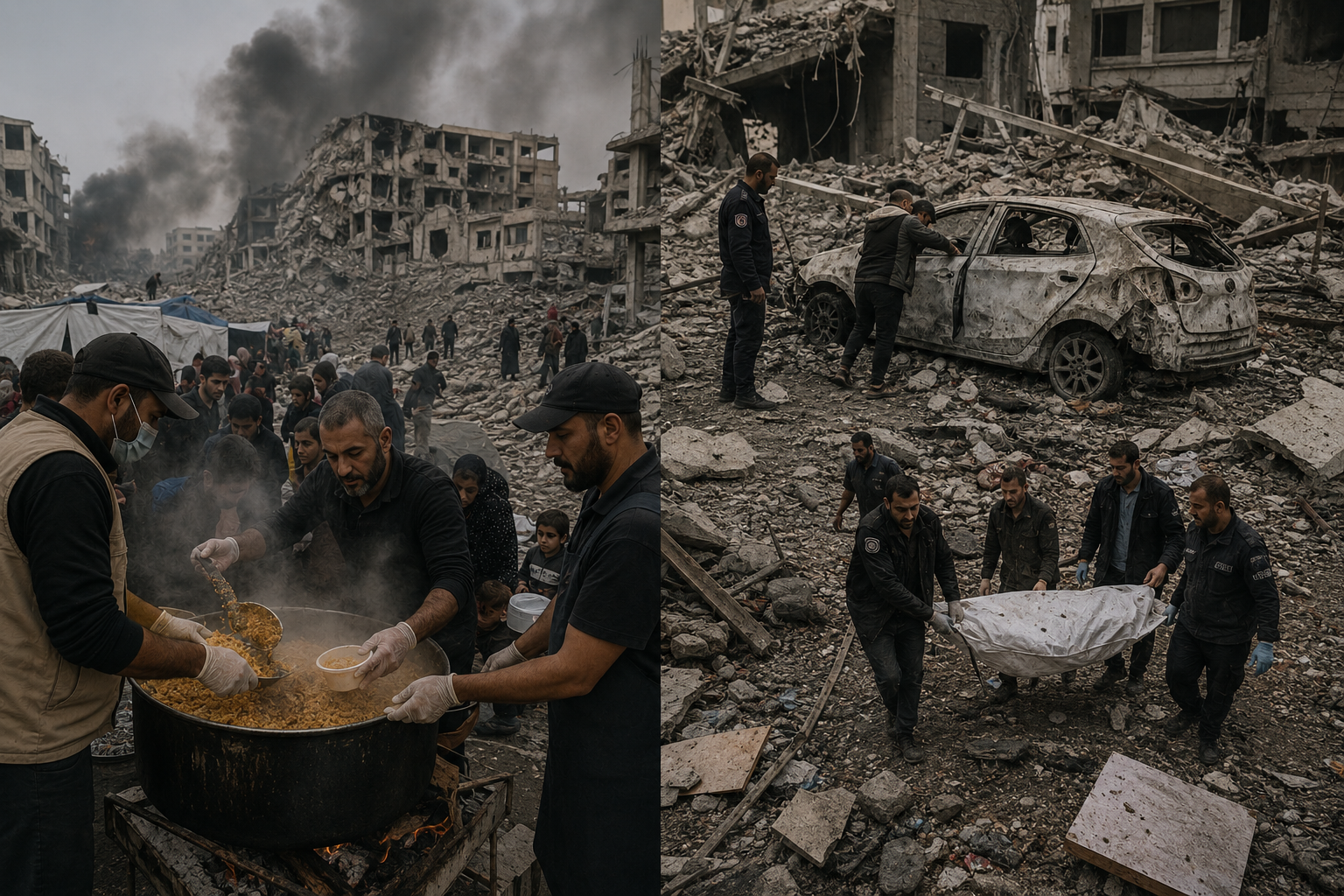
Israeli attacks in Gaza are increasingly affecting organisations that provide support and aid to civilians struggling to survive during the ongoing war. In the latest incident, Israeli forces reportedly targeted a community kitchen connected to the Turkish government in the city of Deir el-Balah in central Gaza.
The community kitchen had been providing hot meals to thousands of displaced Palestinians who have lost their homes and livelihoods during months of fighting. According to local reports, at least three workers were killed in the attack, while several others suffered serious injuries.
The strike has added to growing fears among humanitarian organisations and civilians that aid groups and community services are becoming targets in the conflict.
Deir el-Balah has become one of the main areas where displaced families are sheltering after fleeing heavy bombardment in other parts of Gaza. Many people staying there originally came from eastern areas of Deir el-Balah, as well as from the southern cities of Khan Younis and Rafah.
Most of these families have been unable to return home because large parts of Gaza remain dangerous or under military restrictions. Families are living in overcrowded shelters, damaged buildings, makeshift camps, and tents with limited food, water, electricity, and medical care.
For many people, community kitchens have become their only reliable source of food.
The kitchen targeted in the attack was known for distributing cooked meals daily to displaced families, children, and elderly people. Aid workers there were helping civilians who had already been struggling with hunger and shortages caused by the war.
Witnesses described scenes of panic after the strike, with injured people carried away from the area as smoke rose from the damaged site. Rescue workers and local residents rushed to help survivors despite the risks of further attacks.
The attack has sparked anger among many Palestinians, who say humanitarian workers should be protected during war.
Local residents said the workers killed were not fighters but civilians involved in relief work. Many people in the area viewed the kitchen as an important lifeline for families facing severe hardship.
The latest strike came only one day after another deadly incident near al-Shifa Hospital in Gaza City.
According to reports, two Palestinians travelling in a vehicle near the hospital were killed in an Israeli strike. The victims were said to be connected to an organisation called Qawafil Al Khair, which is also involved in humanitarian and community support activities.
A police officer was reportedly among those killed.
These incidents have increased concerns that organisations working to support civilians are facing growing dangers across Gaza.
Humanitarian groups operating in the territory already face major challenges due to constant air strikes, damaged roads, fuel shortages, communication problems, and restrictions on aid deliveries.
Despite these difficulties, local and international organisations continue trying to provide food, medical assistance, shelter, and other basic needs to civilians affected by the war.
However, aid workers say conditions are becoming nearly impossible.
Many organisations have lost staff members during the conflict, while others have seen warehouses, vehicles, shelters, or distribution centres damaged or destroyed.
Several humanitarian groups have repeatedly called for greater protection of aid workers and civilians under international law.
The situation in Gaza remains extremely difficult for ordinary people. Large areas have been destroyed after months of fighting, and many families have been displaced multiple times.
Parents are struggling to find food for their children, hospitals are overcrowded, and many injured people cannot receive proper treatment because of shortages in medicine and equipment.
Community kitchens and local charities have become critical in helping people survive.
In many parts of Gaza, residents wait in long lines every day hoping to receive a simple meal or clean drinking water. Aid workers often continue operating even during dangerous conditions because civilians depend on them.
The reported targeting of organisations providing these services has created fear among volunteers and humanitarian staff.
Some residents worry that if community kitchens and relief groups stop operating, thousands of people could face even worse hunger and suffering.
International organisations have repeatedly warned about the humanitarian crisis in Gaza. The United Nations and aid agencies say civilians need urgent protection and increased humanitarian access.
Food insecurity has worsened dramatically during the conflict, with many families unable to access enough daily nutrition.
Children are among the most affected, as many suffer from hunger, trauma, and lack of healthcare.
Medical workers also continue to face major risks.
Hospitals across Gaza have struggled to remain operational due to repeated strikes nearby, shortages of fuel and supplies, and the growing number of wounded civilians.
Al-Shifa Hospital, one of Gaza’s best-known medical centres, has frequently been at the centre of fighting and military operations during the war.
The deaths near the hospital have further increased tensions and fears among residents.
Many Palestinians say attacks on humanitarian workers and community organisations make daily survival even harder.
Israel has repeatedly said its military operations target armed groups and militant infrastructure. Israeli officials argue that fighters sometimes operate within civilian areas, which complicates military operations in densely populated places like Gaza.
However, humanitarian organisations and rights groups continue calling for independent investigations into attacks affecting civilians and aid workers.
International law requires the protection of humanitarian workers, medical staff, and civilian infrastructure during armed conflict.
As the war continues, displaced families in Gaza remain heavily dependent on aid organisations for survival.
In shelters and camps across Deir el-Balah, Khan Younis, Rafah, and other areas, families continue waiting for food distributions, medical support, and humanitarian assistance while hoping for safety and an end to the violence.
Residents say every new strike increases fear and uncertainty about the future.
For many people in Gaza, community kitchens are more than just places for food. They represent hope, solidarity, and survival during one of the most difficult periods in the territory’s recent history.
The deaths of aid workers have deeply affected local communities because many volunteers were known personally by the families they served.
People in Deir el-Balah described the workers as individuals trying to help hungry families during a time of extreme suffering.
As fighting continues, humanitarian agencies warn that the destruction of aid networks could have devastating consequences for civilians already living through severe hardship.
The humanitarian crisis in Gaza continues to grow with each passing day, while displaced families remain caught between ongoing violence, hunger, displacement, and uncertainty about when the conflict will finally end.
Summary
Israeli attacks in central Gaza have reportedly targeted organisations helping displaced families, including a community kitchen linked to the Turkish government. Several aid workers and civilians were killed or injured, raising concerns about the safety of humanitarian groups operating in Gaza.
Content


×
![]()