
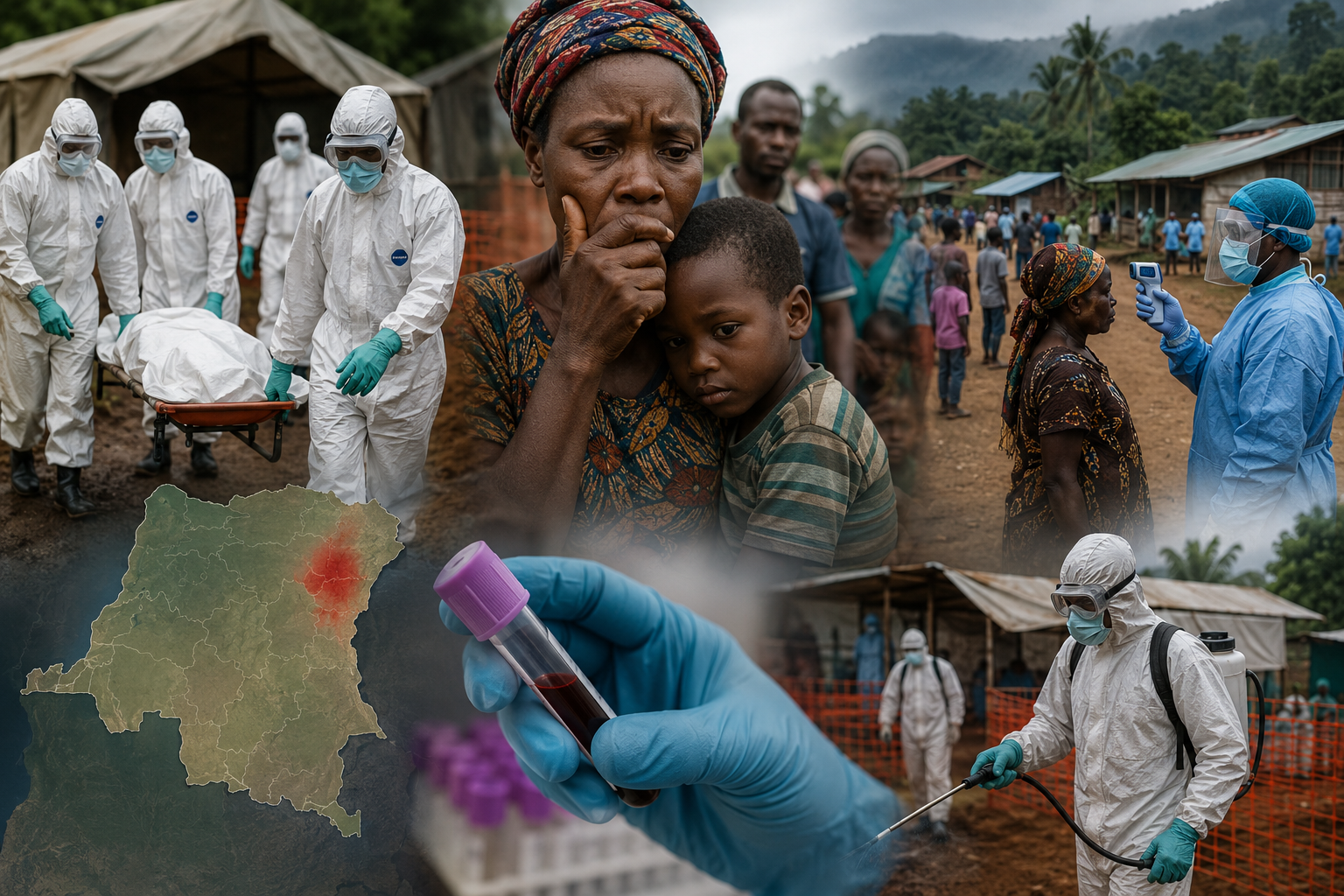
The Ebola outbreak in the Democratic Republic of Congo (DR Congo) is becoming more serious, and health experts fear it may be spreading faster than first thought. The World Health Organization (WHO) has warned that the number of infections could be much higher than official reports show. Communities living near the centre of the outbreak say fear is growing as more people fall ill and die quickly.
The outbreak began in DR Congo’s north-eastern Ituri province, where many of the confirmed and suspected cases have been found. According to health officials, the virus has already killed more than 130 people, while over 500 cases are suspected. Experts believe the real number may be even higher because many infections may not have been detected yet.
A study released by the MRC Centre for Global Infectious Disease Analysis in London suggested that the outbreak could already involve more than 1,000 cases. Researchers said the “true magnitude” of the outbreak remains uncertain because many infected people may not be reaching health centres or being properly tested.
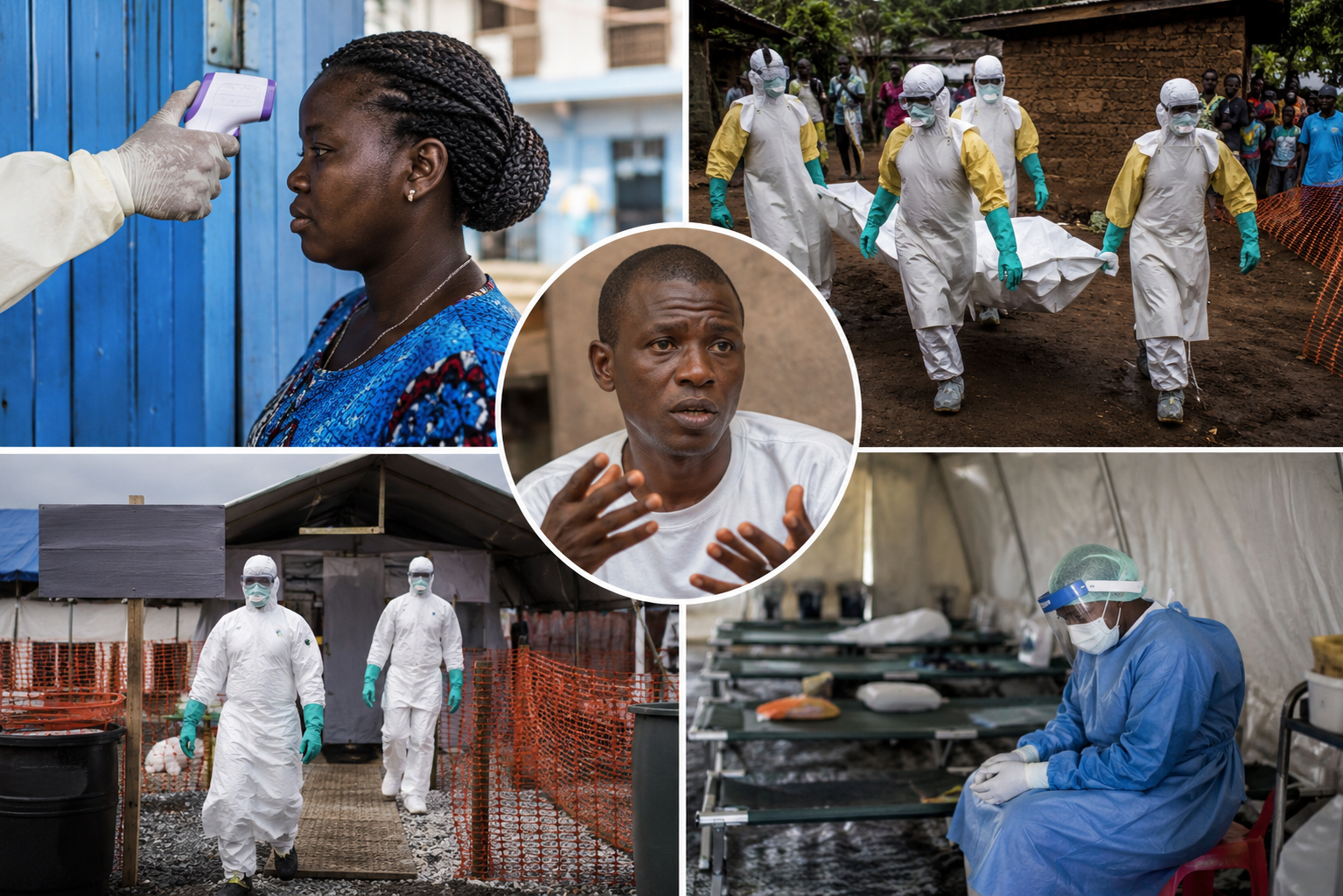
People living in affected communities say they are frightened and struggling to protect themselves. A resident identified as Bigboy told the BBC that infected people were dying “very fast” and described how Ebola has brought fear and suffering to local families. He explained that people are trying to stay safe by washing their hands regularly with clean water and avoiding unnecessary contact with others.
However, many residents say they lack important protective supplies such as face masks and medical equipment. Another local resident, Alfred Giza, said communities are aware of the danger but do not fully know what to do if a family member becomes infected. He added that people are waiting for health authorities to provide masks and more guidance.
The International Red Cross has warned that Ebola outbreaks can become much worse if infected people are not identified early. The organisation said communities often lack enough information about the disease, while hospitals and clinics become overwhelmed very quickly. According to the Red Cross, all of these problems are now happening in the current outbreak.
WHO officials say the situation is especially difficult because many affected areas are insecure and dangerous. Dr Anne Ancia from the WHO explained that Ituri province experiences large movements of people, making it easier for the virus to spread from one area to another. She said health teams are discovering more cases as they continue investigations, and some infections have already crossed borders and spread to other provinces.
The outbreak has now reached South Kivu province, another area already suffering from years of conflict and humanitarian problems. Health workers fear the virus could spread rapidly in communities where people already face shortages of food, clean water, and healthcare services.
There has also been a confirmed Ebola case in the eastern city of Goma, which has a population of around 850,000 people. Goma is an important trading and transport centre, so health experts worry that the virus could spread more easily if it reaches crowded urban areas. The city is also affected by armed conflict and instability, making it harder for health workers to respond quickly.
The WHO declared the outbreak an international health emergency last week because of growing concern over its spread. WHO Director-General Tedros Adhanom Ghebreyesus said he was deeply worried about the speed and scale of the epidemic. Officials believe the virus may have been spreading quietly for several weeks before it was officially detected in April.
One major challenge is that there is currently no approved vaccine for the strain of Ebola causing the latest outbreak. Health experts are now studying whether existing medicines or treatments may still help protect people or reduce severe illness. Medical teams are also working to improve testing, contact tracing, and isolation procedures to stop further spread.
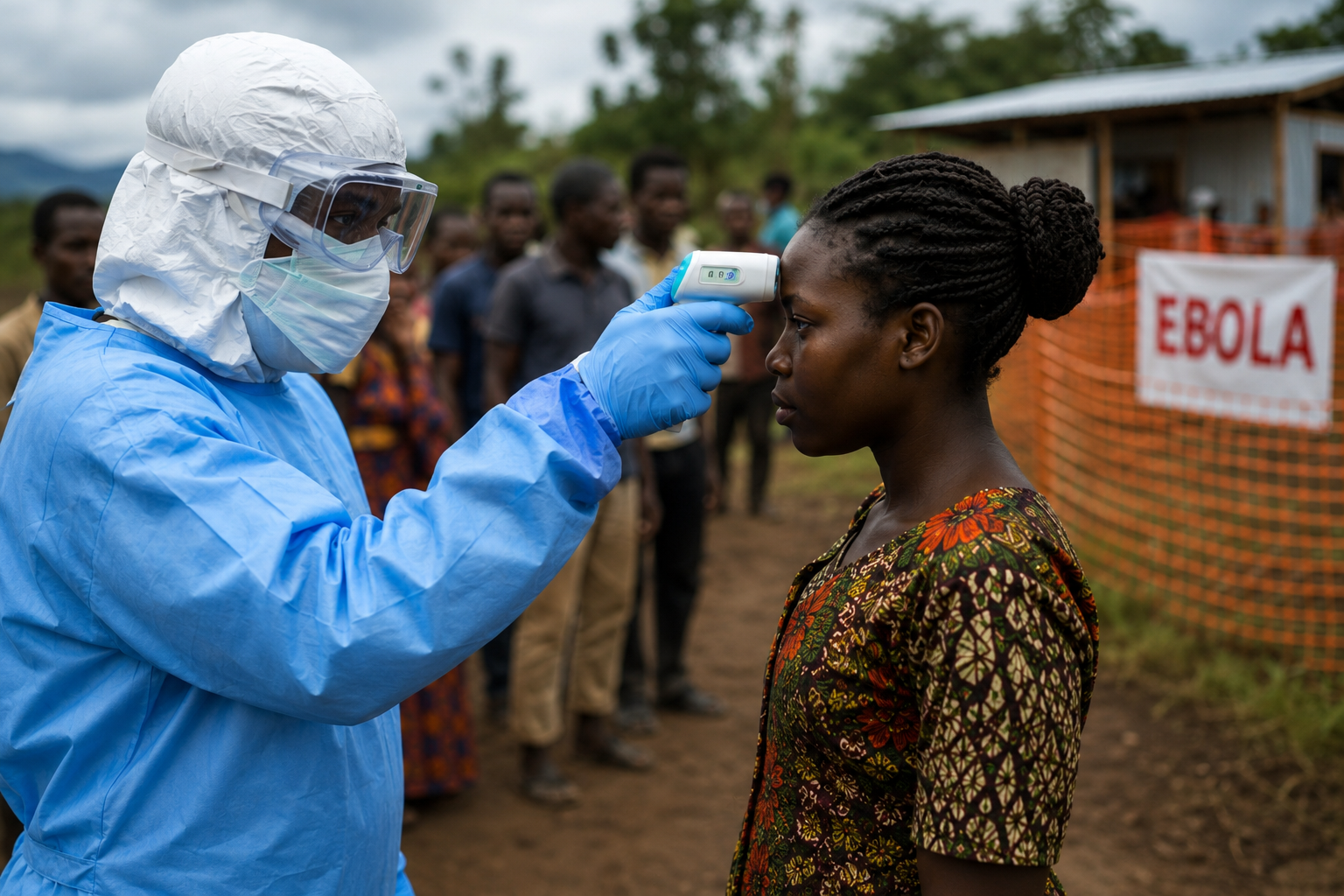
Several neighbouring countries are now increasing safety measures at their borders. Rwanda has temporarily closed its border with DR Congo, while Uganda has advised people to avoid hugging and shaking hands. Health authorities across the region are screening travellers and preparing hospitals in case more infections appear outside DR Congo.
The outbreak has already reached Uganda, where one person has died after testing positive for Ebola. Officials fear that more cross-border cases could appear because many people travel between countries for work, trade, and family visits.
International concern has also grown after reports that several foreign aid workers and medical staff may have been exposed to the virus. An American doctor believed to be connected to a missionary group developed symptoms and was evacuated from DR Congo for treatment in Germany. The US Centers for Disease Control and Prevention (CDC) said it is helping evacuate several other Americans who may have been exposed to Ebola.
Ebola is a very dangerous virus that spreads through direct contact with infected blood or body fluids. Symptoms often begin with fever, weakness, muscle pain, headaches, and sore throat before becoming more severe. In serious cases, patients can suffer internal bleeding, organ failure, and death. Without quick treatment and isolation, the disease can spread rapidly within families and communities.
Health organisations are urging people to report symptoms quickly and avoid direct contact with sick individuals. Communities are also being encouraged to follow hygiene measures such as regular handwashing and safe burial practices.
Despite the challenges, health workers continue to work in difficult conditions to control the outbreak and save lives. The WHO, Red Cross, local governments, and other international agencies are sending medical teams, supplies, and emergency support to affected regions.
However, experts warn that the coming weeks will be critical. If cases continue to rise and the virus spreads further into crowded cities or neighbouring countries, the outbreak could become much harder to contain. Many families in affected areas are now living in fear, hoping the disease can be stopped before more lives are lost.
Summary
Health officials are worried that the Ebola outbreak in the Democratic Republic of Congo is spreading more quickly than first believed. The World Health Organization (WHO) says many cases may still be undetected, and the virus has already reached other areas and crossed into Uganda. People living in affected communities say they are scared as more people become sick and die rapidly. Aid agencies are working to control the outbreak, but insecurity, population movement, and weak health systems are making the situation harder.
Content
×
![]()