
For Palestinians living in the Gaza Strip, daily Israeli air attacks and military activity have become part of everyday life. Even after ceasefire announcements and diplomatic talks, people across Gaza say the violence has not stopped. Instead, many describe living under constant fear as drones continue flying overhead and explosions regularly shake neighbourhoods already damaged by months of war.
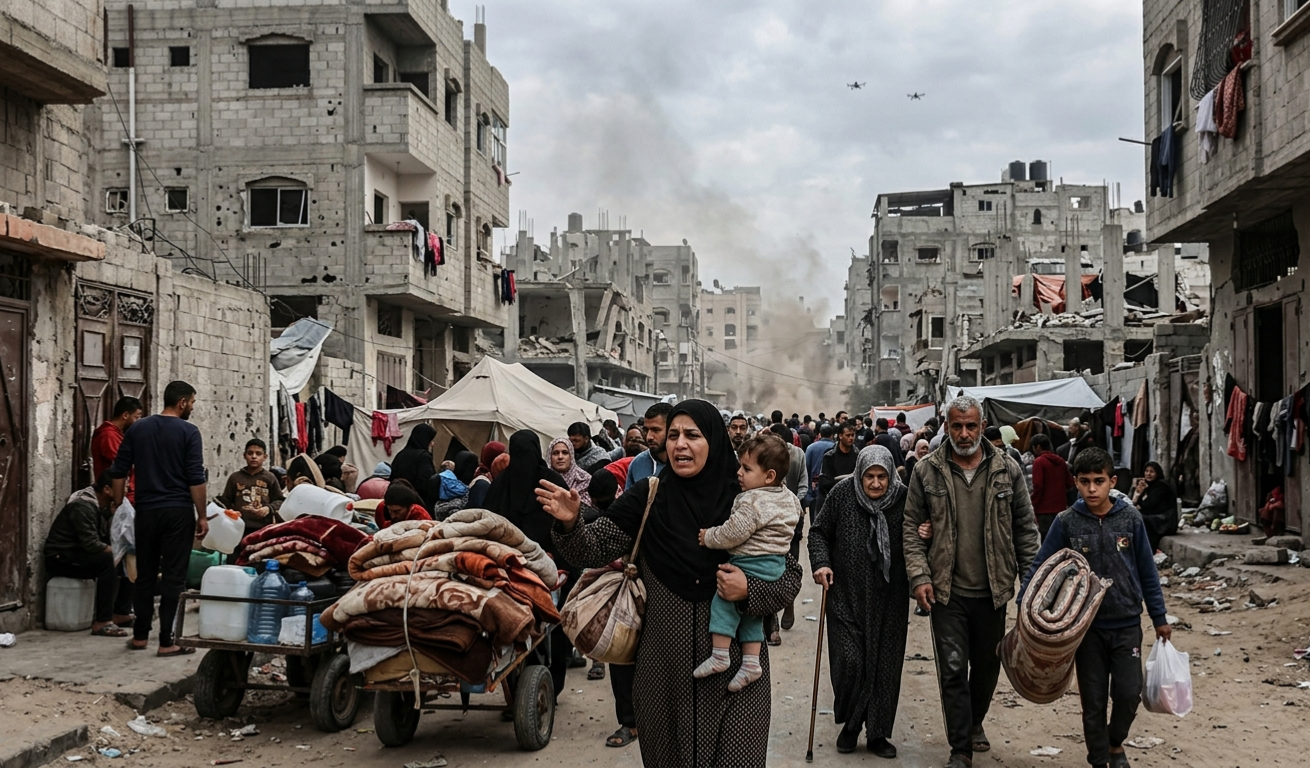
Residents say surveillance drones are almost always present in the sky, creating a tense atmosphere day and night. The sound of drones hovering over homes and streets has become a constant reminder that another strike could happen at any moment. Families say the psychological pressure has become unbearable, especially for children who wake up terrified by explosions and aircraft sounds.
In recent attacks, two homes were struck in the Nuseirat refugee camp, one of the most crowded areas in Gaza. Nuseirat is a densely populated refugee camp where homes are built very close together and streets are narrow. Because of the lack of space, even a small explosion can cause destruction across several nearby buildings.
Witnesses described scenes of panic after the Israeli military issued forced displacement orders for certain areas. Families rushed to gather whatever belongings they could carry, including blankets, mattresses, clothing, and food. Many parents were seen carrying frightened children while trying to escape before the attacks intensified.
However, according to residents, explosions struck areas shortly after evacuation warnings were issued, leaving little time for people to safely leave. Some families said they did not even know where to go because shelters and safer areas were already overcrowded with displaced people from earlier attacks.
People spent the night sleeping in streets, schools, damaged buildings, and overcrowded shelters. By morning, further explosions were reported in both the Nuseirat refugee camp and nearby Al-Bureij Camp, causing additional destruction and injuries.
Residents say the repeated displacement orders are creating chaos and exhaustion. Many families have now been forced to move several times within just a few weeks. Some people say they no longer unpack their belongings because they expect to flee again at any moment.
Humanitarian conditions in Gaza continue to worsen as thousands remain homeless and essential services struggle to operate. Electricity shortages, limited clean water, damaged hospitals, and overcrowded shelters have made daily survival increasingly difficult.
Parents say one of the hardest challenges is trying to protect children emotionally while living through repeated bombings and displacement. Children often become separated from relatives during sudden evacuations, and many suffer from fear, anxiety, and trauma after witnessing destruction around them.
The ongoing strikes have also destroyed homes, roads, and civilian infrastructure, making movement across Gaza even more dangerous. Ambulance crews and rescue workers often face difficulties reaching wounded people because damaged streets and continued air strikes create unsafe conditions.
Local residents say the short warning times given before evacuation orders are not enough for large families, elderly people, or injured civilians to move safely. In highly populated areas like Nuseirat, thousands of people may try to leave at the same time, causing panic and overcrowding in the streets.
Many Palestinians say they feel trapped between repeated displacement and continued bombardment, with few safe places remaining inside Gaza. Families who have already lost homes earlier in the conflict now fear losing the little shelter they still have left.
As air attacks continue almost daily, people across Gaza say uncertainty and fear now dominate ordinary life. For many residents, survival has become a moment-by-moment struggle while they wait to see whether the violence will finally end or continue to spread further across the territory.
Summary
Residents of Gaza Strip say constant Israeli air strikes, forced displacement orders, and ongoing surveillance have turned daily life into a continuous struggle for survival, especially in crowded refugee camps like Nuseirat refugee camp.
Content




×
![]()