
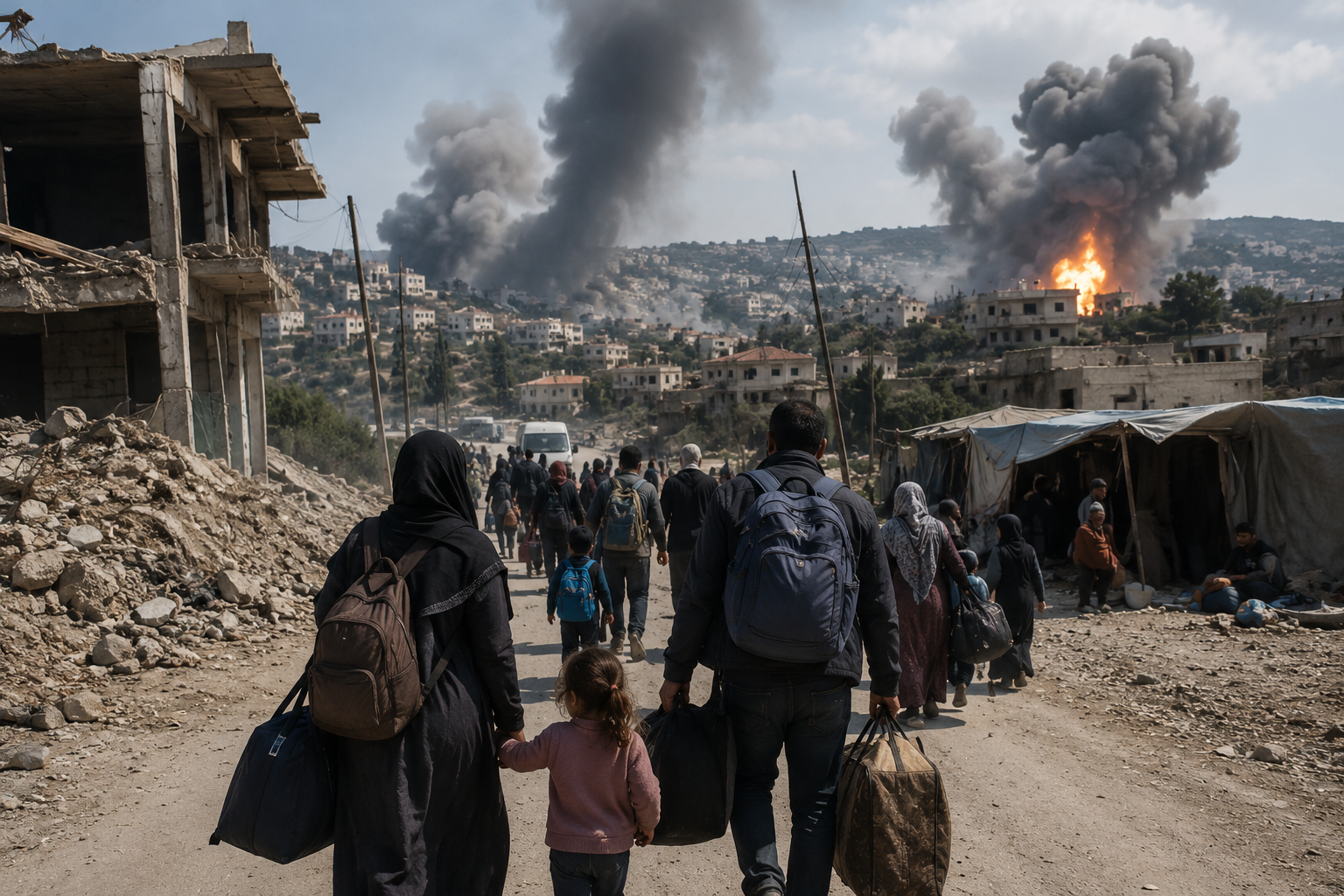
Israel has intensified its attacks across southern Lebanon, creating growing fears of a major humanitarian crisis. Civilians living in towns and villages near the border are once again being forced to flee as air strikes expand into areas that many people had previously considered safe.
After the ceasefire and its later extension, thousands of displaced Lebanese families returned to their homes in the south. Many people were tired of living in overcrowded shelters, temporary camps and difficult conditions in Beirut and other cities. Families hoped the violence would not return and wanted to rebuild their lives.
During the earlier stages of the conflict, many displaced people stayed with relatives, while others were forced to live in public shelters or camps near the waterfront areas of Beirut. Conditions in these places were extremely difficult, with shortages of space, clean water and essential supplies.
Lebanon’s government is also struggling to manage the crisis because of limited financial and humanitarian resources. More than one million people have reportedly been displaced during the conflict, but only a small number have access to official government shelters.
Reports suggest that only around 130,000 displaced people are currently living in government-supported shelters. This means that most families are left to depend on relatives, charities or their own limited savings to survive.
Many displaced civilians are facing serious shortages of food, medicine and other daily necessities. Humanitarian organisations warn that if attacks continue to increase, the situation could become even worse in the coming weeks.
The crisis is especially concerning because Israeli strikes are now reaching areas that were once considered relatively safe. Over the past two weeks, attacks have reportedly expanded into the eastern Bekaa Valley and areas closer to the city of Tyre, where tens of thousands of civilians are still living.
Residents fear there may soon be nowhere safe left to escape. Families who already fled once may now be forced to move again, creating additional pressure on shelters, hospitals and aid groups across the country.
The worsening situation is also increasing concerns about Lebanon’s already fragile economy. The country has been facing severe financial problems for years, and experts warn that another large displacement wave could place even greater strain on public services and humanitarian systems.
International aid agencies continue to call for protection of civilians and urgent humanitarian support for displaced families. Many organisations are warning that without immediate assistance and efforts to reduce violence, the humanitarian crisis in Lebanon could rapidly deepen.
Summary
Heavy Israeli strikes in southern Lebanon are forcing more civilians to flee their homes as the country struggles to handle a growing displacement crisis. Thousands of families now face shortages of shelter, food and medical support.
Content



×
![]()