
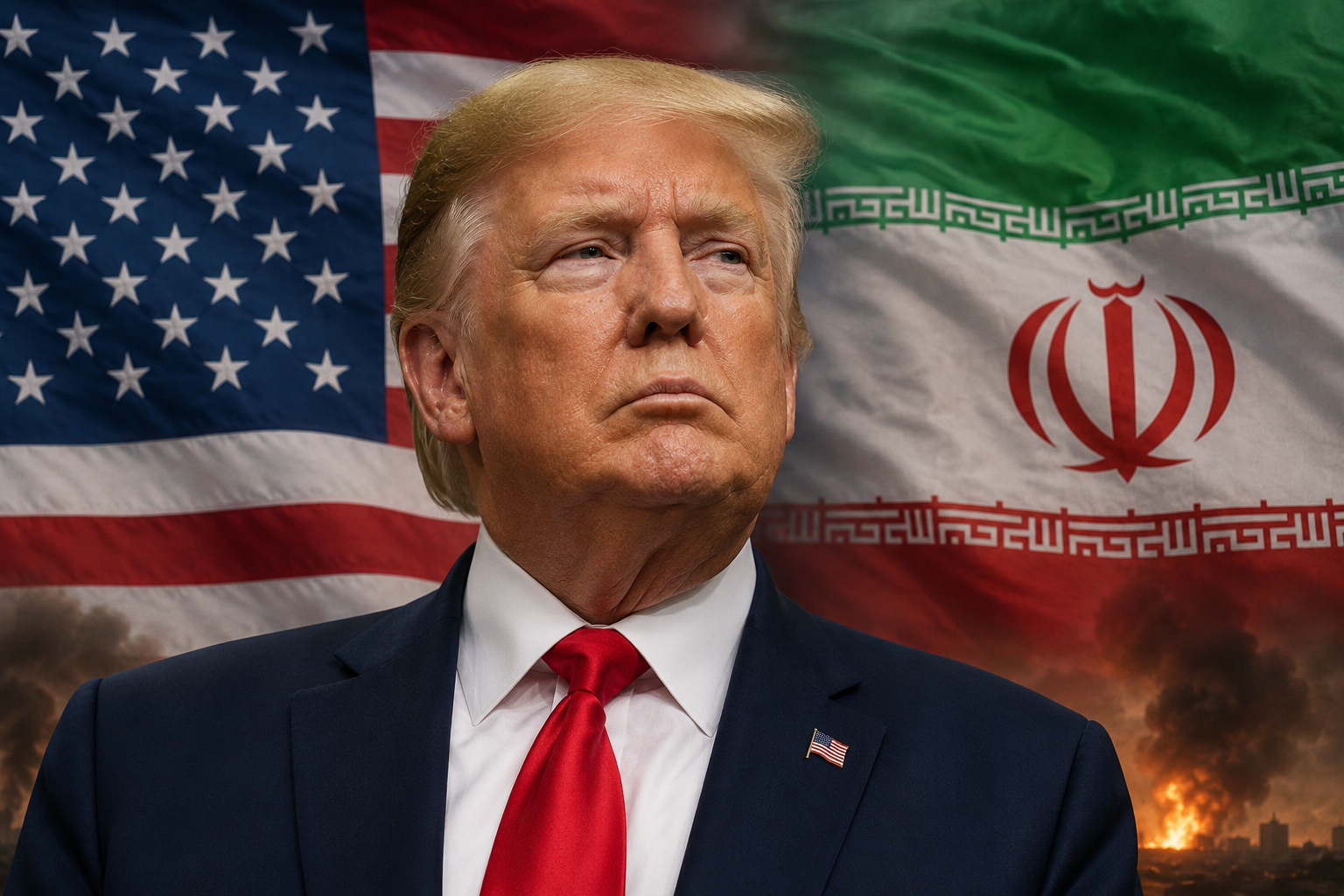
Efforts to secure a new agreement between the United States and Iran remain uncertain after President Donald Trump held a major White House meeting that concluded without any official announcement or breakthrough.
The meeting, held in the White House Situation Room, was described by Trump as an opportunity to make a "final determination" on a proposed framework that could extend the current ceasefire between the two countries. However, after several hours of discussions with senior advisers, no clear decision was announced.
According to US officials, American and Iranian negotiators had already reached a preliminary framework, known as a memorandum of understanding, which would extend the ceasefire for another 60 days. During that period, both sides would begin discussions about Iran's nuclear program and broader regional security issues.
Before the meeting, Trump outlined several conditions that he believes Iran must accept before a final agreement can move forward. He stated that Iran must permanently give up any possibility of obtaining nuclear weapons, reopen the Strait of Hormuz for unrestricted international shipping, and allow the removal and destruction of its enriched uranium stockpile.
Trump also indicated that he would be willing to lift the US naval blockade affecting Iranian shipping if a satisfactory agreement is reached. However, he emphasized that no money would be exchanged as part of the current framework.
The Strait of Hormuz remains one of the most important waterways in the world. Roughly one-fifth of global energy supplies normally pass through the narrow passage. Any disruption to shipping in the area can have a significant impact on international oil prices and global trade.
Despite reports that negotiators are close to a deal, Iranian officials have pushed back against several American claims. Iran continues to insist that its nuclear program is entirely peaceful and has repeatedly denied seeking nuclear weapons.
Iranian leaders also rejected suggestions that they are currently negotiating away their nuclear activities. Officials in Tehran say their main priority is ending hostilities and securing a lasting peace rather than discussing restrictions on their nuclear program.
The response from Iran became even stronger after Trump's latest comments. Mohsen Rezaei, an adviser to Iran's Supreme Leader, accused the US president of undermining diplomacy by making excessive demands while maintaining military pressure.
Rezaei argued that continuing the naval blockade and demanding the destruction of Iran's enriched uranium showed that Washington was not fully committed to genuine negotiations. He claimed that the United States was pursuing objectives beyond a simple ceasefire agreement.
Iranian media also disputed some of Trump's statements. Reports from sources close to the Iranian government suggested that the proposed framework does not include any provision requiring Iran to destroy its nuclear materials.
At the same time, Iran's Foreign Ministry stated that there are currently no negotiations taking place regarding the country's nuclear program. Officials insisted that any future discussions would focus first on ending the conflict and reducing tensions.
The United States, however, continues to view Iran's enriched uranium stockpile as a major concern. Washington argues that highly enriched uranium could potentially be used to produce nuclear weapons if enrichment levels continue to increase.
Vice President JD Vance recently acknowledged that negotiators remain divided over several key issues. He said discussions are continuing and that both sides are "very close" to an agreement, but important differences remain unresolved.
One of the biggest disagreements involves uranium enrichment. While the United States wants strict limits or the removal of Iran's enriched uranium, Tehran views enrichment as a sovereign right under international agreements governing peaceful nuclear energy.
The uncertainty surrounding the negotiations comes after months of military confrontation. Earlier this year, US and Israeli forces launched strikes against Iranian targets. Iran responded with attacks against Israel and several US-allied countries in the Gulf region.
The conflict disrupted shipping routes, increased regional instability, and pushed global oil prices sharply higher. International observers feared that the situation could escalate into a much larger regional war.
Although a ceasefire was eventually established, tensions remain high. Both the United States and Iran have accused each other of violating the agreement in recent weeks.
The latest dispute emerged after Iran's Revolutionary Guard claimed responsibility for an attack targeting a US military base in Kuwait. Iranian officials described the strike as retaliation for earlier attacks on Iranian facilities near the Strait of Hormuz.
US Central Command strongly condemned the incident and described it as a serious violation of the ceasefire agreement. American military officials warned that continued attacks could undermine ongoing diplomatic efforts.
Meanwhile, US Defense Secretary Pete Hegseth indicated that military options remain available if negotiations fail. Speaking at a security conference, he said American forces possess sufficient capabilities to resume operations if necessary.
As a result, diplomacy and military preparedness continue side by side. While negotiators work toward a possible agreement, both countries remain cautious and deeply distrustful of one another.
For now, the proposed ceasefire extension remains in limbo. The framework still requires approval from both President Trump and Iran's leadership. Whether the agreement succeeds or fails could have major consequences for regional security, global energy markets, and future US-Iran relations.
The coming days are expected to be critical as leaders in Washington and Tehran decide whether diplomacy can overcome years of conflict, mistrust, and competing strategic interests.
Summary
A high-level meeting led by US President Donald Trump ended without a final decision on a proposed agreement with Iran. While both countries are reportedly close to extending the current ceasefire, major disagreements remain over Iran's nuclear program, shipping access through the Strait of Hormuz, and the future of enriched uranium stockpiles.
Content

×
![]()