
The United States military has announced that its forces remain fully operational and on high alert across the Middle East as regional tensions continue following months of conflict involving Iran, Israel, and the United States.
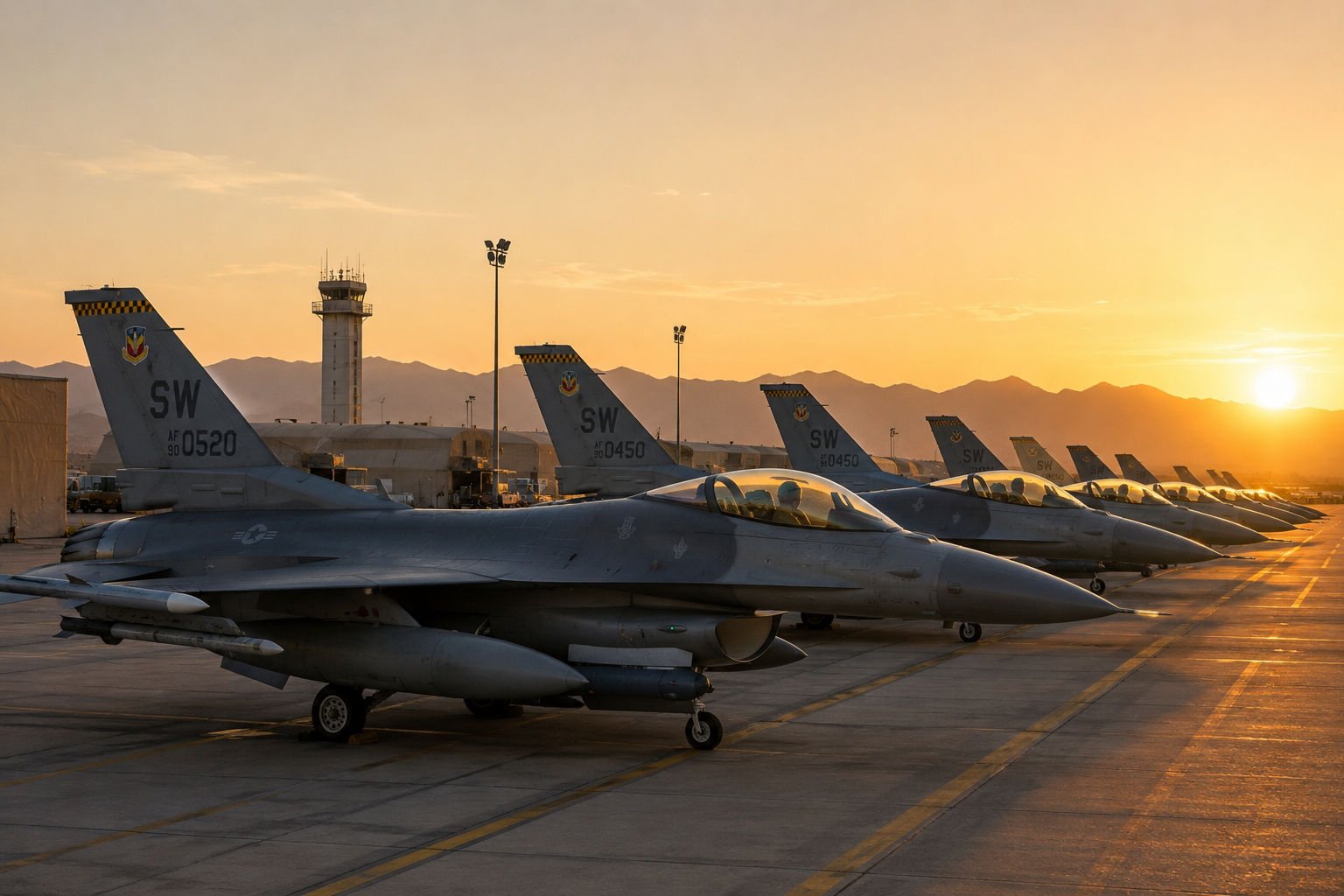
In a statement shared on social media platform X, US Central Command (CENTCOM) said that American forces remain "present and vigilant" throughout the region. The military command also released a photograph showing an F-16 fighter jet flying a patrol mission over the Middle East.
CENTCOM is responsible for overseeing US military operations across a vast area that includes the Middle East, Central Asia, and parts of South Asia. The command plays a major role in coordinating military activities, monitoring threats, and protecting American interests in one of the world's most strategically important regions.
The latest statement highlights Washington's determination to maintain a strong military presence despite ongoing diplomatic efforts aimed at reducing tensions with Iran. While negotiations continue regarding a possible extension of the current ceasefire, military leaders appear unwilling to reduce readiness levels until a more stable and lasting agreement is reached.
The image of the F-16 fighter jet was released as a visible demonstration of the United States' continued operational capabilities in the region. Fighter aircraft such as the F-16 are commonly used for surveillance missions, air patrols, rapid response operations, and the protection of military assets and allied forces.
Military analysts say the patrol flights serve multiple purposes. They help monitor regional developments, reassure US allies, deter potential attacks, and demonstrate that American forces remain capable of responding quickly to emerging threats.
The announcement comes during a sensitive period in US-Iran relations. Although both countries are discussing a possible agreement that could extend the current ceasefire, significant disagreements remain. Issues such as Iran's nuclear activities, regional security concerns, and maritime security in the Strait of Hormuz continue to be major obstacles in negotiations.
The ceasefire itself followed months of military escalation. Earlier this year, US and Israeli forces conducted strikes against Iranian targets. Iran responded with attacks against Israeli positions and facilities connected to US allies in the Gulf region. The exchanges raised fears of a wider regional conflict that could draw in additional countries and threaten global energy supplies.
One of the most significant concerns during the conflict was the security of the Strait of Hormuz. The narrow waterway serves as one of the world's most important oil shipping routes. Any disruption to traffic through the strait can have immediate effects on global energy markets and fuel prices.
Although a ceasefire reduced direct military confrontations, tensions have remained high. Both Washington and Tehran have accused each other of violating aspects of the agreement. These accusations have created uncertainty about whether the truce can hold over the long term.
Recent incidents have further complicated the situation. Iran's Revolutionary Guard has claimed responsibility for attacks targeting facilities linked to the United States and its allies, while US officials have condemned such actions as violations of the ceasefire. Each side continues to blame the other for increasing instability.
Against this backdrop, CENTCOM's statement serves as a reminder that military preparedness remains a central part of US policy in the region. American forces continue to operate from bases located across several Middle Eastern countries, conducting intelligence gathering, surveillance missions, training exercises, and security operations.
US officials say maintaining a strong military posture is necessary to protect American personnel, safeguard allies, and ensure freedom of navigation in key waterways. They argue that military readiness helps prevent further escalation by discouraging hostile actions from potential adversaries.
At the same time, the United States continues to pursue diplomatic solutions. President Donald Trump and senior administration officials have repeatedly stated that they prefer a negotiated settlement with Iran rather than a prolonged military confrontation. However, they have also emphasized that military options remain available if diplomacy fails.
For many countries in the region, the outcome of the ongoing negotiations will be crucial. A successful agreement could reduce tensions, improve regional stability, and help restore confidence in international shipping routes. Failure to reach an agreement, however, could increase the risk of renewed conflict and further economic uncertainty.
The latest statement from CENTCOM suggests that while diplomatic discussions continue behind closed doors, the US military is taking no chances. American forces remain deployed, alert, and prepared for any developments that may arise in the coming days and weeks.
As negotiations between Washington and Tehran move forward, the Middle East remains on edge, with military readiness and diplomatic efforts advancing side by side.
Summary
The United States military has reaffirmed that its forces remain deployed and alert throughout the Middle East as tensions with Iran continue despite ongoing diplomatic efforts. US Central Command (CENTCOM) said American troops are maintaining a strong presence in the region and remain prepared to respond to any threats. The statement comes as ceasefire talks between the US and Iran continue, while both sides accuse each other of violating previous agreements.
Content

×
![]()