
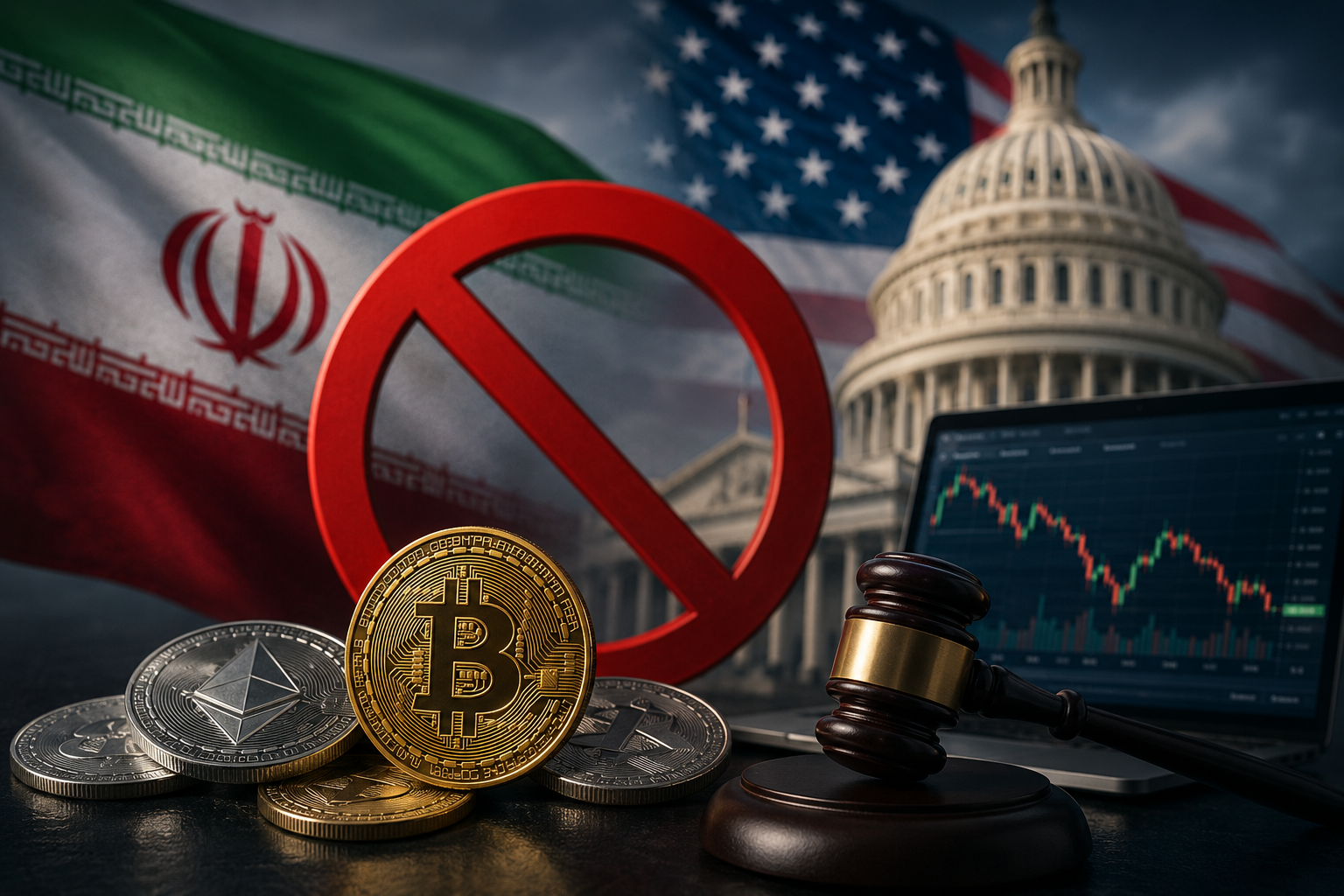
The United States has announced a new round of sanctions targeting some of Iran’s biggest cryptocurrency exchanges. The move is part of Washington’s ongoing effort to increase economic pressure on Iran and prevent the country from using digital assets to bypass international sanctions.
According to the US Department of the Treasury’s Office of Foreign Assets Control (OFAC), four major Iranian cryptocurrency exchanges have been added to its sanctions list. These exchanges are Nobitex, Bitpin, Wallex, and Ramzinex. The sanctions were officially announced on June 2, 2026.
US officials say the targeted exchanges played a role in helping Iran move money through digital currencies. Washington claims that these platforms were used to avoid sanctions restrictions and support activities that the US considers a threat to international security.
Among the companies listed, Nobitex received the most attention. It is widely known as Iran’s largest cryptocurrency exchange and is used by many people in the country for buying, selling, and storing digital assets such as Bitcoin and other cryptocurrencies.
The US Treasury also sanctioned several individuals connected to Nobitex. These include brothers Seyed Mohammad Ali Aghamir Mohammad Ali and Seyed Mohammad Aghamir Mohammad Ali, who are identified as key figures controlling the exchange. Another sanctioned individual is Amir Hossein Rad, the company’s chief executive officer.
In addition, Seyed Ali Khoee, who is linked to Nobitex, was also placed on the sanctions list. The US government says these individuals were involved in activities that supported the operation of the exchange and its financial network.
As a result of the sanctions, any assets these individuals or companies may have under US jurisdiction can be blocked. American citizens and businesses are generally prohibited from conducting transactions with sanctioned entities. The sanctions can also affect foreign companies that continue doing business with those listed.
The Treasury Department described the action as part of a broader effort to stop Iran from using alternative financial systems to avoid international restrictions. Officials argue that cryptocurrency has increasingly become a tool for countries facing sanctions because digital transactions can sometimes be harder to track than traditional banking activities.
Nobitex has rejected accusations that it has direct links to the Iranian government. The exchange has stated in the past that it operates as a private company serving customers who want access to digital financial services. The company denies involvement in activities that would justify international sanctions.
The other exchanges targeted by the sanctions include Bitpin, Wallex, and Ramzinex. These platforms are also among the best-known cryptocurrency exchanges operating inside Iran. They provide services that allow users to trade digital currencies and manage crypto assets.
US authorities believe these exchanges have helped create an alternative financial network that reduces the impact of international sanctions imposed on Iran. By using cryptocurrencies, businesses and individuals may be able to move funds outside traditional banking systems, making enforcement of sanctions more difficult.
The sanctions come at a time when cryptocurrencies continue to grow in popularity around the world. In countries facing economic restrictions, inflation, or banking challenges, digital currencies are often seen as an alternative way to store value and make international payments.
Iran has shown interest in digital assets for several years. The country has explored ways to use cryptocurrency and blockchain technology as part of its financial system. Some experts believe this interest increased because of the economic pressure created by international sanctions.
Supporters of cryptocurrencies argue that digital assets provide greater financial freedom and access to global markets. Critics, however, warn that they can also be used for money laundering, sanctions evasion, and other activities that governments seek to control.
The latest sanctions are expected to create new challenges for the targeted exchanges. International companies may become more cautious about dealing with them, and access to some financial services could become more limited. The sanctions may also affect users who rely on these platforms for cryptocurrency transactions.
The announcement highlights the growing focus of governments on digital finance. As cryptocurrencies become more important in the global economy, regulators and law enforcement agencies are paying closer attention to how digital assets are used across borders.
For the United States, the sanctions reflect a broader strategy of using economic measures to pressure Iran. Washington continues to argue that financial restrictions are necessary to limit activities it considers destabilizing. Iranian officials, meanwhile, often criticize such sanctions and say they unfairly target the country's economy and people.
The latest action shows that cryptocurrency exchanges are increasingly becoming part of international political and economic disputes. As governments develop new regulations for digital assets, the role of cryptocurrency in global finance is likely to remain a major topic of debate.
With Nobitex, Wallex, Bitpin, and Ramzinex now under US sanctions, the decision marks one of the most significant actions taken against Iran’s cryptocurrency sector and signals that digital asset platforms will remain under close international scrutiny in the future.
Summary
The United States has imposed new sanctions on several of Iran’s largest cryptocurrency exchanges, including Nobitex, Wallex, Bitpin, and Ramzinex. The US Treasury Department says these platforms were involved in helping Iran evade sanctions and support financial activities linked to designated groups. Several executives and owners connected to Nobitex were also added to the sanctions list. Nobitex has denied having direct ties to the Iranian government.
Content

×
![]()