
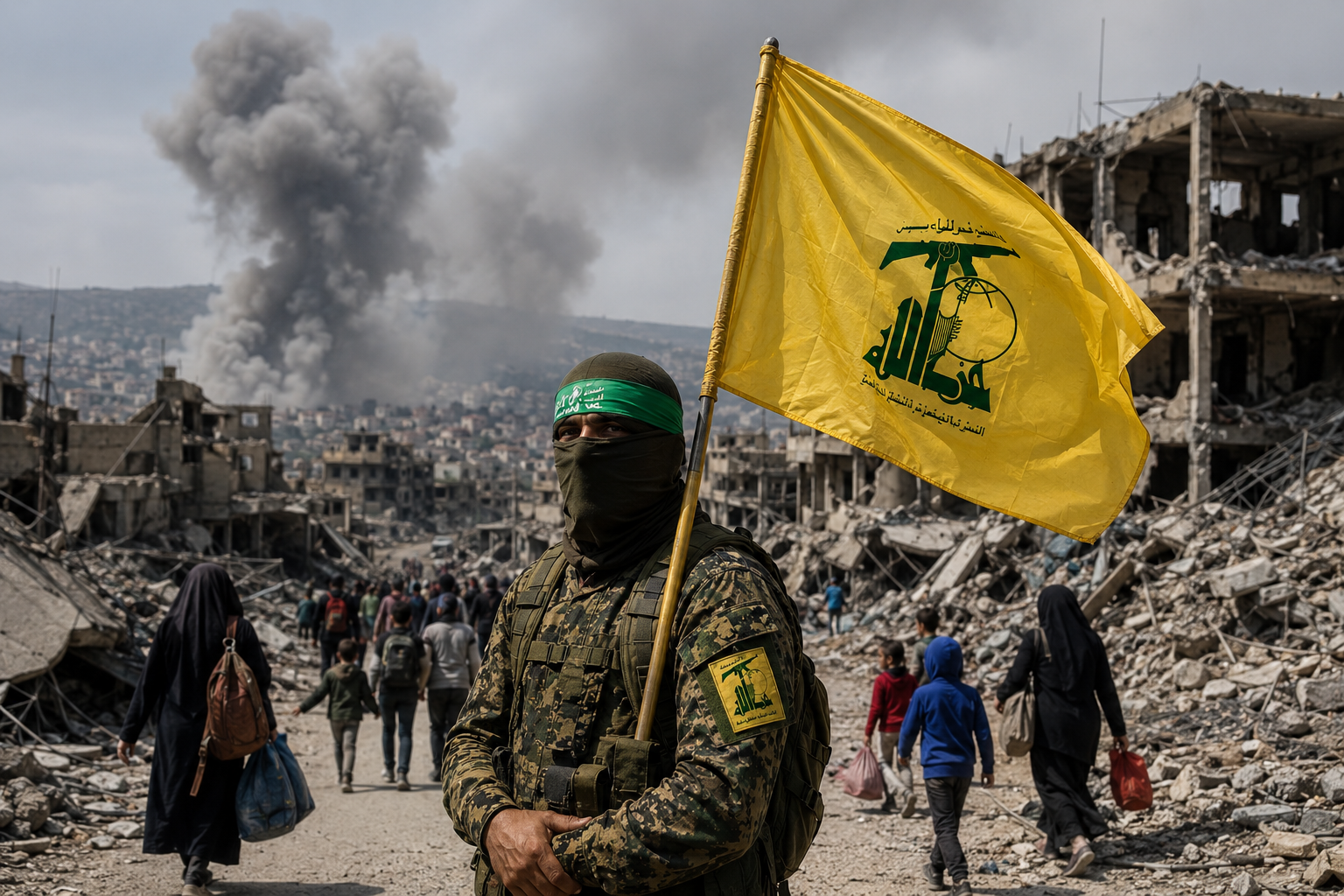
Hezbollah, the powerful Lebanese armed group and political movement, appears to be regaining influence despite suffering major setbacks in recent years. After losing many fighters, weapons, and its longtime leader Hassan Nasrallah in 2024, many analysts believed Hezbollah was close to collapse. However, the latest conflict involving Israel, Iran, and Lebanon has given the group a new opportunity to rebuild its image and strengthen support among its followers.
For months after a ceasefire agreement between Israel and Lebanon in late 2024, Hezbollah largely avoided direct attacks on Israel. During that period, Israel continued carrying out strikes inside Lebanon, saying it was targeting Hezbollah positions and preventing the group from rebuilding its military capabilities.
The situation changed dramatically on March 2, when fighting between Israel, the United States, and Iran escalated. Hezbollah responded by launching rockets into northern Israel, saying it was standing with Iran and resisting Israeli military actions. Since then, fighting has intensified across southern Lebanon.
Israeli forces have increased their military operations, carrying out airstrikes and ground operations against Hezbollah targets. According to Lebanese officials, thousands of people have been killed and many more have been forced to leave their homes. Entire communities in southern Lebanon have suffered extensive damage.
Despite these losses, Hezbollah leaders argue that they are defending Lebanon from Israeli aggression. Ibrahim Al Moussawi, a Hezbollah member of parliament, said the group felt compelled to act because it believed the Lebanese government was unable to protect the country.
Hezbollah supporters say the group is simply responding to Israeli military actions and occupation of Lebanese territory. They argue that resistance is necessary to defend their communities and prevent further Israeli advances.
The group has also adapted its military tactics. Israeli operations have reduced Hezbollah's ability to launch large numbers of rockets, but the organization has increasingly relied on explosive drones and other methods to target Israeli forces. Hezbollah claims these tactics have allowed it to continue fighting despite significant losses.
One of Hezbollah's greatest strengths remains its loyal support base, especially among many Shia Muslims in Lebanon. In areas such as the Beqaa Valley and southern Lebanon, many residents continue to view Hezbollah as their primary defender.
A Hezbollah fighter interviewed in eastern Lebanon said that Israeli attacks on civilians and continued military operations had strengthened his determination to fight. He insisted that the group would never surrender its weapons and that new leaders would always emerge whenever existing leaders were killed.
However, Hezbollah's actions remain highly controversial inside Lebanon. The country has a fragile political system that balances power among different religious communities. Many Lebanese fear that continued conflict could drag the country into further instability or even another civil war.
Lebanese Prime Minister Nawaf Salam has criticized Hezbollah's military actions and stated that armed operations outside state control are unacceptable. The government has repeatedly emphasized that only official state institutions should be responsible for security matters.
Lebanese President Joseph Aoun has also expressed concern that ordinary Lebanese citizens are paying the price for regional conflicts involving larger powers such as Iran and Israel. He argued that the Lebanese people deserve peace and should not have to rebuild their homes after every new war.
Public opinion remains divided. While many Lebanese view Israel as a hostile nation, some also criticize Iran's influence in Lebanon through Hezbollah. Surveys have shown that many citizens are unhappy with foreign involvement in the country's affairs.
Among Hezbollah's critics is Mona Jahamy, a schoolteacher from the southern city of Tyre. She blames both Israel's military actions and Hezbollah's decisions for the destruction experienced by ordinary families. After rebuilding her home following previous fighting, she now faces the possibility of losing everything again.
Jahamy compares Israel to a dangerous lion and argues that Hezbollah's actions repeatedly provoke a powerful enemy, bringing suffering to the Lebanese people. She believes the group should avoid confrontations that could trigger devastating military responses.
As the conflict continues, Hezbollah finds itself in a familiar role: presenting itself as a resistance movement fighting against Israeli military actions. Whether this renewed support will strengthen the organization in the long term remains uncertain.
What is clear is that Lebanon once again finds itself caught between regional powers, internal political divisions, and the continuing cycle of conflict. For millions of Lebanese civilians, the greatest hope remains an end to violence and a chance to live in peace without the fear of another destructive war.
Summary
Hezbollah, once seen as weakened after major losses and the death of its leader Hassan Nasrallah, is regaining influence in Lebanon. The group's renewed fighting against Israel, following the US-Israeli conflict with Iran, has helped it present itself as a defender of Lebanon. While many Lebanese support Hezbollah's resistance against Israel, others blame the group for dragging the country into another destructive war.
Content
×
![]()