
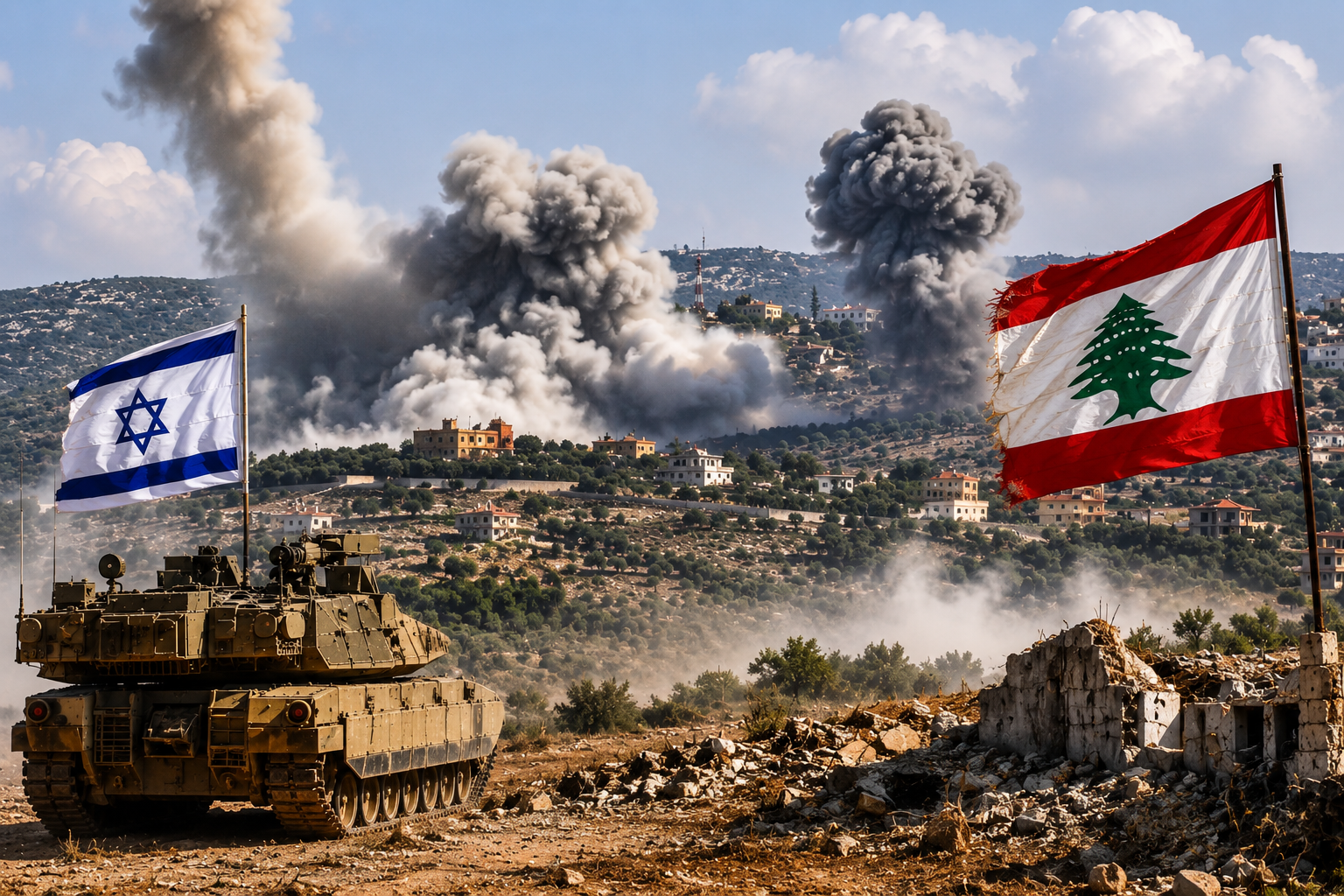
The debate over the future of the ceasefire in Lebanon has intensified after comments from a former US diplomat and a senior Hezbollah official highlighted major disagreements about the conflict and how it should be managed.
Henry Ensher, a former United States ambassador to Algeria, believes that the Trump administration is currently allowing Israel significant freedom to carry out military operations in southern Lebanon. According to Ensher, Washington's main concern is preventing attacks on Beirut, the Lebanese capital, rather than stopping military actions in other parts of the country.
Speaking to Al Jazeera, Ensher said it appears that the US administration has decided that Israel can continue operating in southern Lebanon for the time being. He explained that as long as fighting remains limited to areas near the Israeli-Lebanese border and does not threaten larger regional stability, the United States is unlikely to strongly oppose Israeli military actions.
Ensher suggested that American policy is focused on preventing a major escalation that could affect Beirut or draw the entire region into a larger conflict. In his view, if Hezbollah launches attacks from southern Lebanon and Israel responds against Hezbollah positions in the area, the US administration may consider that situation manageable.
His comments come at a time when tensions remain high along the border between Israel and Lebanon. Although efforts have been made to reduce violence through ceasefire agreements and diplomatic negotiations, clashes and military operations continue to occur. Many observers fear that any major incident could quickly lead to a wider conflict involving multiple countries and armed groups.
Meanwhile, Hezbollah has strongly rejected the idea that ceasefire arrangements should only apply to specific parts of Lebanon. Ibrahim Al Moussawi, a Hezbollah official and member of the Lebanese parliament, said that any ceasefire must cover the entire country.
In an interview with Al Jazeera, Al Moussawi questioned why peace efforts should be limited to Beirut or the southern suburbs of the capital while other areas continue to face military threats. He argued that a true ceasefire should be comprehensive and apply equally to all regions of Lebanon.
According to Al Moussawi, the Lebanese people deserve security regardless of where they live. He said that limiting ceasefire protections to certain locations creates an unfair situation and fails to address the broader challenges facing the country.
The Hezbollah lawmaker also responded to recent comments made by Lebanese President Joseph Aoun. The president had suggested that Iran was using Lebanon as a bargaining tool during discussions and negotiations with the administration of US President Donald Trump.
Al Moussawi strongly rejected those remarks. He described the accusation as incorrect and insisted that Lebanon is not being used by Iran as leverage in international negotiations. He argued that Iran has been supporting Lebanon rather than exploiting it for political gain.
According to Al Moussawi, Lebanon no longer holds the kind of strategic role that would allow it to significantly influence negotiations between Iran and the United States. He said that Iran is in a position to help Lebanon, but Lebanon is not in a position to help Iran achieve its goals.
The exchange of comments reflects broader disagreements within Lebanon about the country's foreign relationships, security policies, and the role of regional powers. Lebanon has long been affected by tensions between larger countries in the Middle East, and many political groups hold different views on how the nation should respond.
Supporters of Hezbollah often view Iran as an important ally that provides political and military support. Critics, however, argue that close ties with Tehran can draw Lebanon into regional conflicts that do not directly serve Lebanese interests.
At the same time, international efforts to maintain stability in Lebanon continue. Diplomatic discussions involving the United States, regional governments, and international organizations are focused on preventing a wider war and encouraging long-term security arrangements.
However, significant challenges remain. The continued presence of armed groups, ongoing border tensions, and deep political divisions within Lebanon make it difficult to achieve a lasting solution. Both Israel and Hezbollah continue to accuse each other of actions that threaten security and stability.
As discussions about ceasefires and regional diplomacy continue, the future of southern Lebanon remains uncertain. While some officials believe limited arrangements can prevent a larger conflict, others insist that only a nationwide ceasefire can bring meaningful peace.
For now, the situation remains fragile. Military activity, political disagreements, and regional rivalries continue to shape events on the ground. Whether diplomatic efforts can lead to a broader and more durable peace will depend on the willingness of all sides to engage in dialogue and reduce tensions.
The coming weeks may prove crucial as international mediators, Lebanese leaders, and regional powers work to prevent further escalation. Many people in Lebanon hope that these efforts will eventually lead to a complete ceasefire that protects civilians across the entire country and opens the door to greater stability and recovery.
Summary
A former US diplomat says the Trump administration is allowing Israel to continue military operations in southern Lebanon as long as attacks do not threaten Beirut. Meanwhile, Hezbollah lawmaker Ibrahim Al Moussawi argues that any ceasefire should cover all of Lebanon, not just certain areas. He also rejected claims that Iran is using Lebanon as leverage in negotiations with the United States.
Content
×
![]()