
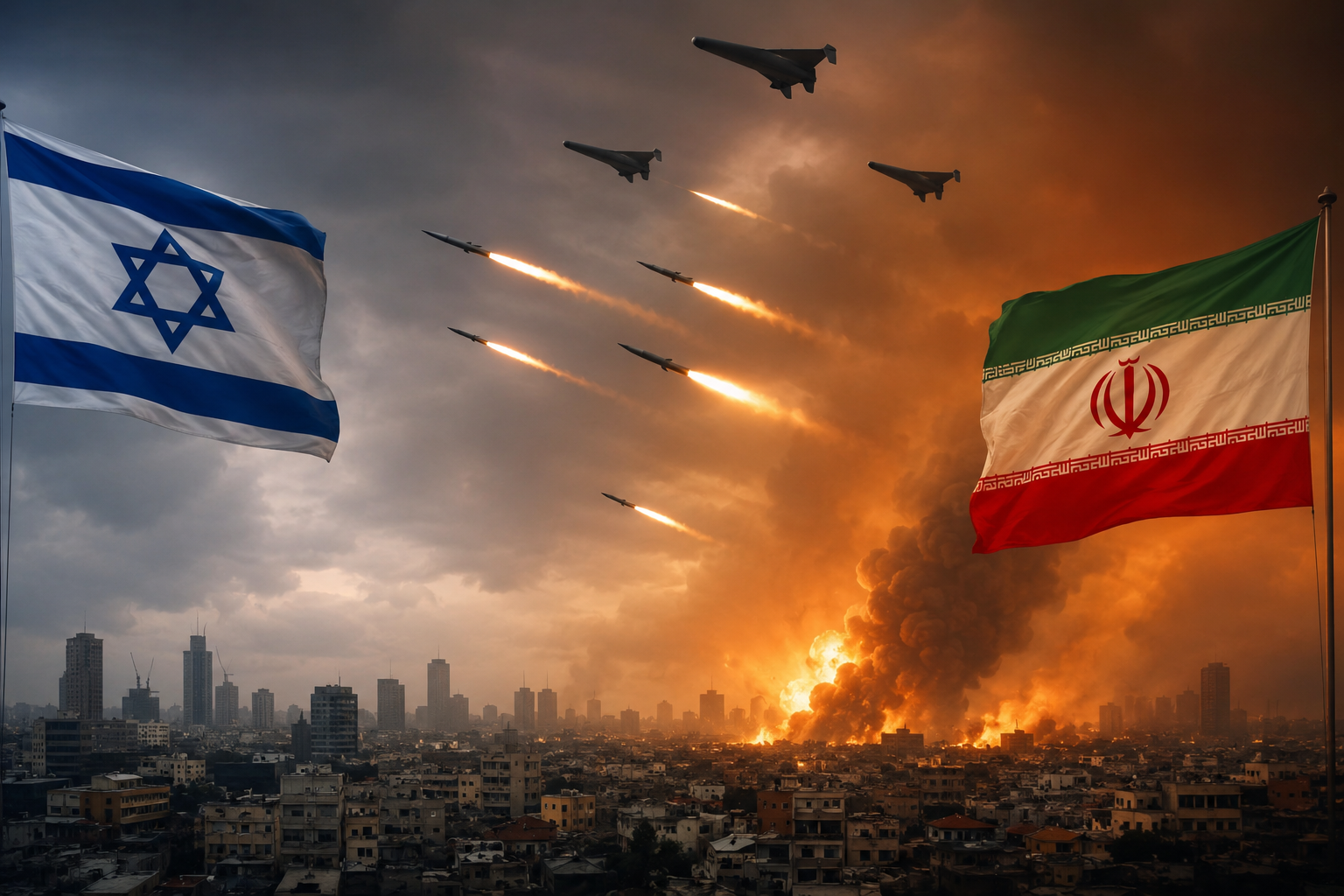
The Middle East has entered another period of heightened tension after Iran launched a large-scale missile and drone attack against Israel. The strikes came shortly after Israel carried out air raids on the southern suburbs of Beirut, an area widely considered a stronghold of Hezbollah, the powerful Lebanese armed group backed by Iran.
The latest developments are the result of days of growing tensions between Israel, Iran, and Hezbollah. The situation had already been fragile, with repeated exchanges of threats and military actions creating fears that the region could be moving toward a wider conflict.
The immediate trigger for the latest escalation appears to have been Israel's decision to strike Beirut's southern suburbs once again. Iranian officials had warned in advance that any new Israeli attack on those areas would be met with a response. When Israel proceeded with the operation, Tehran followed through on its warning by launching missiles and drones toward Israeli territory.
According to reports, the tension had reached such a level that the United States became deeply concerned about the possibility of a larger war breaking out. President Donald Trump reportedly urged Israeli Prime Minister Benjamin Netanyahu to avoid actions that could further inflame the situation. American officials feared that renewed Israeli strikes in Lebanon could undermine efforts to maintain stability and prevent the conflict from spreading.
Netanyahu is said to have agreed to exercise restraint, but only under certain conditions. Israel wanted guarantees that Hezbollah would stop firing rockets into northern Israel. Hezbollah, however, continued its attacks, arguing that it was responding to Israeli military actions in Lebanon.
In an attempt to reduce tensions, the United States helped mediate talks between Israel and Lebanon. Those discussions resulted in a new ceasefire agreement aimed at stopping hostilities and preventing further violence. However, the ceasefire quickly appeared weak and ineffective.
Despite the agreement, clashes and attacks continued. Rockets were reportedly fired from Lebanon into Israel, while Israeli forces maintained military pressure against Hezbollah positions. As a result, the ceasefire failed to bring a meaningful halt to the fighting.
The situation worsened dramatically when Israel launched fresh strikes on Beirut's southern suburbs. Israeli officials said the attacks were a response to ongoing rocket fire from Hezbollah. For Israel, the strikes were presented as a defensive measure intended to protect its citizens from continued attacks.
Iran viewed the situation differently. Tehran argued that Israel had crossed a red line by attacking Beirut again and decided to respond directly. Within hours of the Israeli operation, Iran launched a barrage of missiles and drones at Israel.
The attack marked one of the most significant direct confrontations between the two countries in recent months. Iranian military officials stated that the operation was intended to send a strong message to Israel. Iran's Revolutionary Guards reportedly announced that military actions could continue for several days, raising concerns that the crisis might deepen further.
At the same time, some analysts believe the Iranian attack may have been carefully calibrated. Rather than launching an all-out assault, Iran may have intended to demonstrate its willingness to retaliate while avoiding a conflict that could spiral into a full-scale regional war. Whether that assessment proves correct will largely depend on Israel's response.
The next steps taken by the Israeli government are now being closely watched around the world. Israel faces a difficult decision. A limited response could help prevent further escalation and create space for diplomatic efforts. On the other hand, a strong military retaliation could trigger another cycle of attacks and counterattacks between the two countries.
Many experts warn that a prolonged exchange of strikes between Iran and Israel could have serious consequences for the entire region. Countries across the Middle East are already dealing with political instability, security challenges, and economic pressures. A broader conflict could disrupt trade routes, affect global energy markets, and create new humanitarian crises.
The role of the United States is also expected to be crucial in the coming days. Washington has been attempting to balance its support for Israel with efforts to prevent a wider regional conflict. American officials are likely to continue engaging with both allies and regional partners in hopes of reducing tensions and encouraging restraint.
President Trump has repeatedly emphasized the importance of avoiding a larger war. While the United States remains committed to Israel's security, it also recognizes the risks associated with an uncontrolled escalation involving multiple countries and armed groups.
For Lebanon, the situation remains especially dangerous. The country has already endured years of economic hardship and political instability. Renewed fighting involving Hezbollah and Israel threatens to place even greater pressure on Lebanese civilians, many of whom are already struggling with difficult living conditions.
The latest events also highlight Hezbollah's central role in the regional conflict. The group has become a key factor in the broader confrontation between Iran and Israel. As long as fighting continues between Hezbollah and Israel, there is a constant risk that tensions could draw Iran more directly into the conflict.
Ultimately, the coming days may determine whether the region moves toward de-escalation or further violence. Diplomatic efforts are continuing, but military actions on the ground are creating new challenges for negotiators.
Iran has now acted on its warning by launching attacks on Israel. The focus has shifted to Jerusalem, where leaders must decide how to respond. Whatever choice is made could shape the future of the conflict and influence stability across the Middle East.
For now, uncertainty remains high. The situation is changing rapidly, and the risk of further escalation continues to concern governments, analysts, and ordinary people across the region. The world is watching closely as one of the Middle East's most dangerous rivalries enters another critical phase.
Summary
Iran has launched missiles and drones at Israel following Israeli airstrikes on Beirut's southern suburbs. The attack marks a major escalation in regional tensions involving Iran, Israel, Hezbollah, Lebanon, and the United States. While Iran says it is responding to Israeli actions, the world is now watching closely to see how Israel reacts and whether the conflict could expand into a larger regional war.
Content

×
![]()