
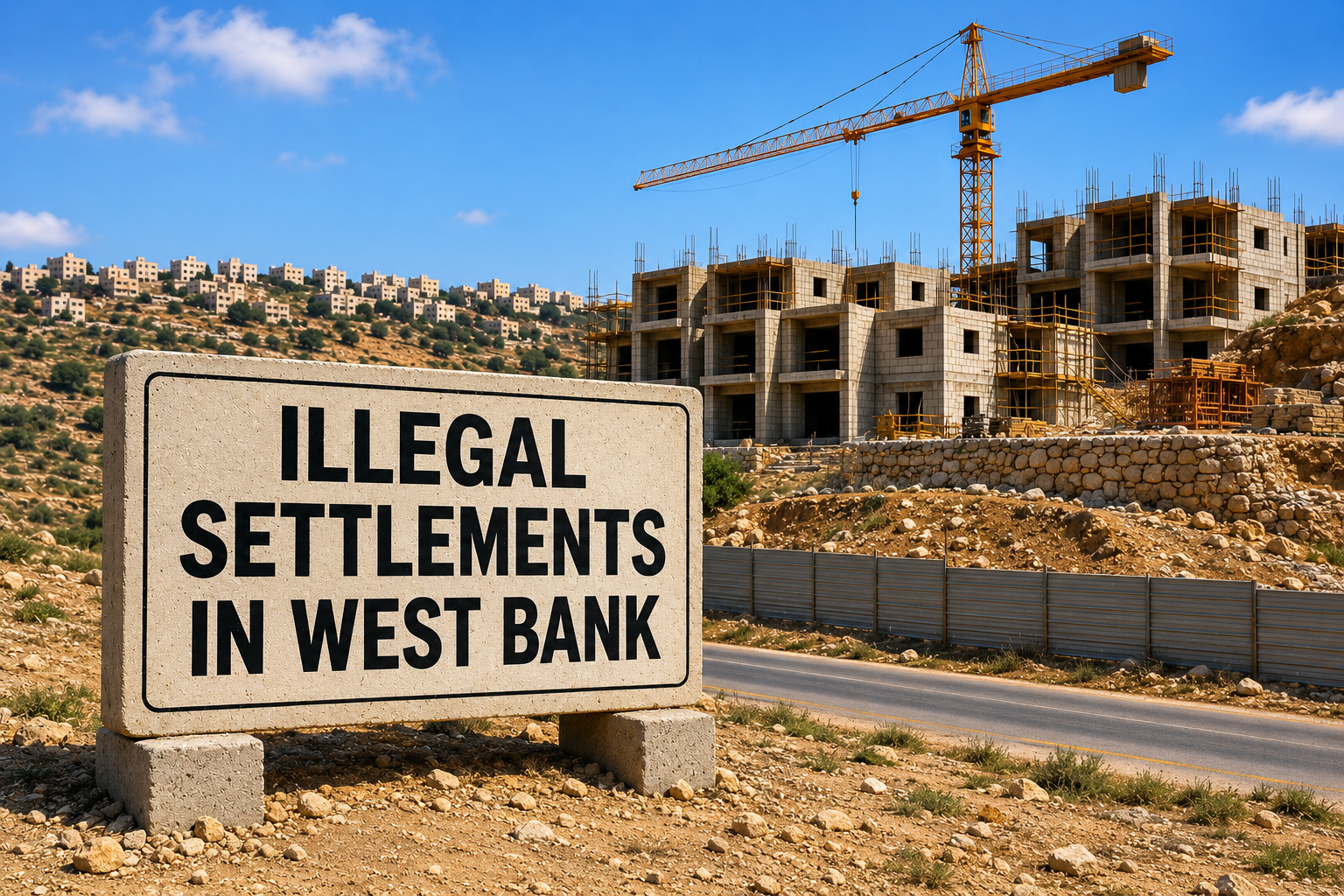
The Israeli government is reportedly preparing to approve a major plan that would provide more than $350 million in funding for the construction and expansion of 61 Israeli settlements in the occupied West Bank.
The report was first highlighted by Axios journalist Barak Ravid, who said the proposal could soon be approved by the Israeli cabinet. According to the report, the funding would support infrastructure, housing, and development projects in settlements located across the West Bank.
The timing of the reported move has attracted attention because it comes while much of the international community is focused on the escalating tensions involving Iran, Israel, and the United States. Governments across Europe, the Middle East, and Washington have been concentrating on the growing regional security crisis, while developments in the Palestinian territories have received less public attention.
The West Bank is a territory that Palestinians seek as part of a future independent Palestinian state. Israel has occupied the West Bank since the 1967 Middle East war. Over the years, Israeli governments have approved the construction of numerous settlements in the area, where hundreds of thousands of Israeli settlers now live.
Palestinians and many countries around the world consider these settlements illegal under international law because they are built on land captured during the 1967 conflict. The United Nations and many international organizations have repeatedly stated that settlement expansion undermines efforts to achieve a two-state solution, in which Israel and a future Palestinian state would exist side by side in peace.
Israel, however, disputes some of these legal interpretations and argues that it has historical, religious, and security ties to the territory. Israeli leaders have often defended settlement construction, saying it is necessary for security and reflects the rights of Jewish communities to live in the area.
If approved, the new funding package would represent one of the latest efforts by Israel to strengthen and expand its presence in parts of the West Bank. Supporters of the plan may argue that it will improve infrastructure, transportation, public services, and housing for Israeli residents already living in settlements.
Critics, however, say the move could further increase tensions between Israelis and Palestinians. Palestinian officials have frequently argued that settlement expansion reduces the amount of land available for a future Palestinian state and makes peace negotiations more difficult.
The issue of settlements has long been one of the most controversial topics in the Israeli-Palestinian conflict. Peace talks between the two sides have repeatedly stalled over disagreements regarding borders, security arrangements, the status of Jerusalem, refugees, and settlement construction.
International reactions to the reported plan are expected to be mixed. Some countries have consistently opposed settlement expansion and may issue statements criticizing the move if it is formally approved. European governments have often expressed concern that continued settlement growth threatens the possibility of a negotiated peace agreement.
The United States has also taken different positions on settlements over the years depending on the administration in power. While some American administrations have strongly criticized settlement construction, others have taken a less confrontational approach toward Israeli policies in the West Bank.
The reported proposal comes during a period of heightened instability across the Middle East. Ongoing military confrontations involving Israel, Iran, and armed groups in the region have raised concerns about a broader conflict. As governments focus on security developments, Palestinian leaders fear that issues related to the occupation and settlements may receive less international attention.
Human rights organizations have also voiced concerns about settlement growth in the past. They argue that continued expansion can lead to land disputes, restrictions on Palestinian movement, and increased tensions between local communities. Israeli officials, on the other hand, maintain that settlements are an important part of the country's security and national interests.
For many Palestinians living in the West Bank, reports of new settlement funding are likely to be viewed as another setback to hopes for an independent state. Palestinian leaders have repeatedly called on the international community to take stronger action against settlement expansion and to support efforts aimed at ending the occupation.
Meanwhile, supporters of the Israeli government's approach believe that strengthening settlement communities is a legitimate policy that supports economic growth, housing needs, and security objectives.
As of now, the reported plan has drawn significant attention because of both its size and timing. If the Israeli cabinet formally approves the funding package, it could become a new source of diplomatic tension between Israel and countries that oppose settlement expansion.
The development highlights how the Israeli-Palestinian conflict remains an unresolved issue even as other crises dominate international headlines. While regional tensions involving Iran continue to capture global attention, decisions regarding settlements in the West Bank are likely to remain a major point of debate among governments, international organizations, and both Israeli and Palestinian communities.
The coming days will reveal whether the proposal moves forward and what reactions it generates from regional leaders, international partners, and organizations involved in efforts to promote peace in the Middle East. Regardless of the outcome, the issue of settlements remains one of the most sensitive and contested aspects of the decades-long Israeli-Palestinian conflict.
Summary
The Israeli government is expected to approve a plan worth more than $350 million to build 61 new Israeli settlements in the occupied West Bank. The reported decision comes at a time when much of the world's attention is focused on the growing conflict involving Iran, Israel, and the United States. The move is likely to draw criticism from Palestinians and many countries that consider Israeli settlements in occupied territories illegal under international law.
Content


×
![]()