
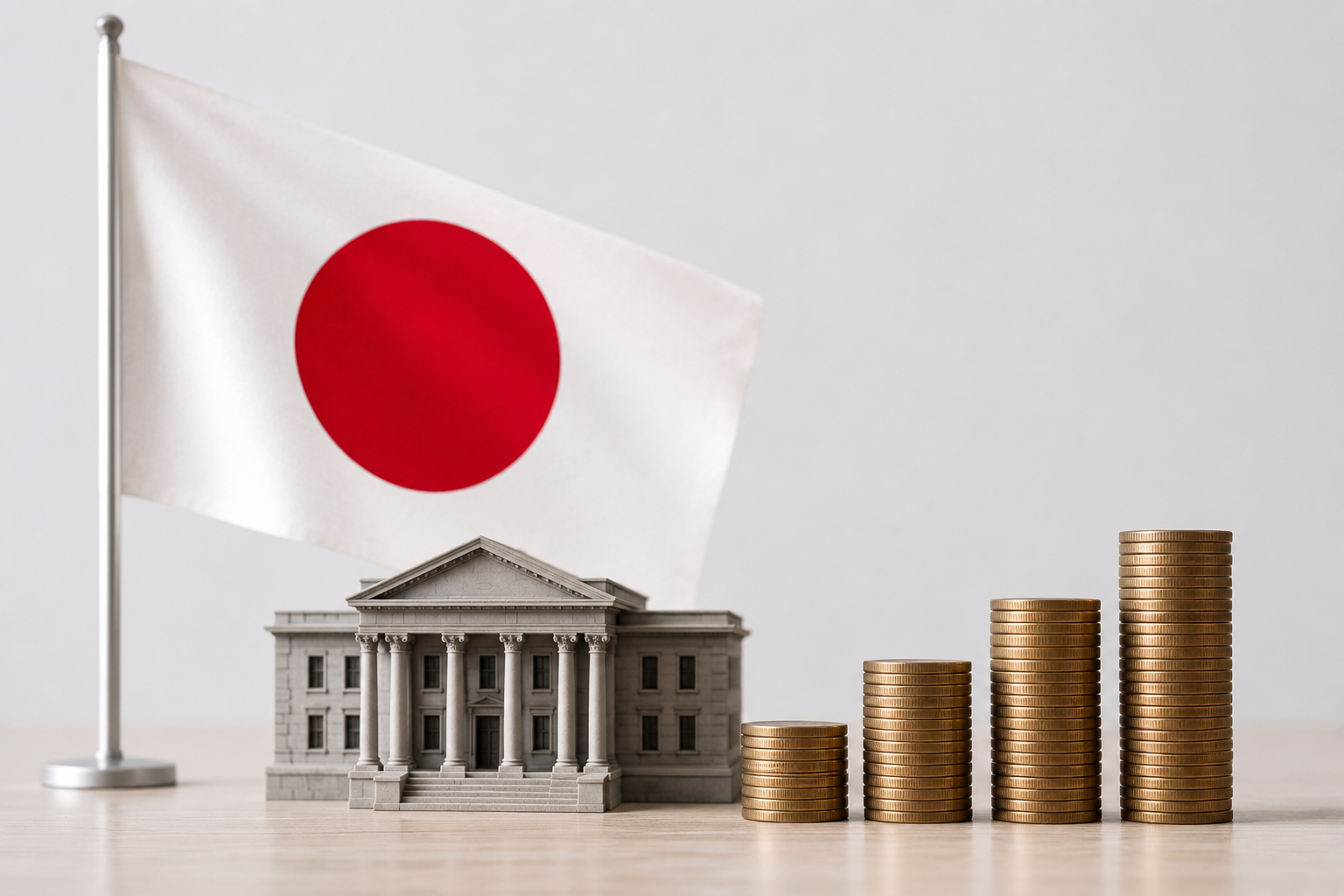
Japan's central bank, the Bank of Japan (BOJ), has increased its main interest rate to 1%, the highest level since 1995. The decision marks another major step in the country's effort to return to a more normal economic policy after decades of extremely low interest rates.
The BOJ raised its policy rate from 0.75% to 1% on Tuesday. The increase comes as Japan faces rising prices, especially for energy, following recent tensions in the Middle East and higher global oil costs.
For many years, Japan kept interest rates close to zero. After the country's property and stock market bubble burst in the 1990s, the economy struggled with weak growth and falling prices, a situation known as deflation. To encourage spending and investment, the BOJ maintained very low interest rates for more than two decades.
However, economic conditions have started to change. Inflation has become more common, and prices have been rising steadily. Because of this, the central bank believes emergency measures are no longer necessary.
Economist Jesper Koll said Japan is now entering an inflationary period after around twenty years of deflation. According to him, the BOJ wants to return to a more normal monetary policy and gradually move away from crisis-era measures.
The BOJ first raised interest rates in March 2024, marking its first increase in 17 years. Since then, it has continued to increase rates slowly as inflation pressures have grown.
One of the biggest reasons behind the latest rate hike is the rise in energy costs. Japan imports most of its oil and natural gas, making it highly vulnerable to disruptions in global energy markets. Recent conflicts in the Middle East pushed oil prices higher, increasing costs for businesses and households across the country.
Data released recently showed that Japan's wholesale prices rose by more than 6% in May compared with the previous year. This was the fastest increase in three years and highlighted the growing pressure on the economy.
Although Japan's overall inflation rate was 1.4% in April, below the BOJ's target of 2%, policymakers are concerned that inflation could rise further in the future. The central bank warned that long-term inflation expectations are increasing and that prices could move above its target if action is not taken.
At the same time, raising interest rates is not without risks. Higher rates make borrowing more expensive for businesses and consumers. Companies may delay investments, while households could face higher loan and mortgage payments. The Japanese government, which has a large amount of debt, could also see borrowing costs rise.
Because of these risks, the BOJ faces a difficult balancing act. It wants to control inflation without slowing economic growth too much.
The central bank said the chances of a major economic slowdown caused by the Iran conflict have decreased thanks to government support measures. These measures include programs aimed at reducing the impact of higher fuel prices on households and businesses.
BOJ Governor Kazuo Ueda, who plays a key role in interest rate decisions, was unable to attend this week's meeting because he is receiving treatment in hospital for an infected liver cyst. Despite his absence, his recent comments have shown growing support for higher interest rates if inflation risks continue to rise.
Earlier this month, Ueda said policymakers should carefully consider raising rates if inflation risks become greater than the risks to economic growth.
Japan's Prime Minister Sanae Takaichi has previously expressed concerns about higher interest rates because they could slow economic activity. She has generally supported increased government spending to help the economy. However, since becoming prime minister, she has not publicly opposed the BOJ's recent decisions to raise rates.
The latest increase was widely expected by financial markets after the BOJ raised rates to around 0.75% in December.
Another reason behind the rate hike is the Japanese yen. The currency has weakened against major currencies such as the US dollar and the euro in recent years. Higher interest rates can help strengthen the yen by making Japanese investments more attractive to global investors.
Experts say a stronger yen could help reduce the cost of imports, especially energy imports, which would ease inflation pressures.
Even after the increase, Japan's interest rate remains relatively low compared with many other major economies. Interest rates in countries such as the United States, the United Kingdom, and Australia remain significantly higher.
Still, economists believe Japan's move could signal a broader shift in the global economy. After years of low rates and economic stimulus, central banks around the world are increasingly focused on controlling inflation and maintaining price stability.
For Japan, the latest rate increase represents a historic moment. It reflects the country's transition away from decades of ultra-low interest rates and suggests that policymakers are becoming more confident about the economy's future. While challenges remain, the BOJ believes the time has come to slowly return monetary policy to more normal levels.
Summary
Japan's central bank has raised its main interest rate from 0.75% to 1%, the highest level in 31 years. The move comes as rising energy prices and inflation continue to affect the economy. The Bank of Japan says higher rates are needed as the country moves away from decades of low inflation and slow growth.
Content



×
![]()