
More than 1,000 Palestinians have been killed in Gaza since a ceasefire agreement between Israel and Hamas was reached in October 2025, according to figures released by the Palestinian Health Ministry. The ministry said that 1,005 people have died in Israeli attacks since the deal was announced, raising concerns about the effectiveness of the ceasefire and the continuing humanitarian crisis in the Gaza Strip.
The ceasefire was brokered by the United States and was intended to reduce fighting and create conditions for a longer-term peace process. Although major military operations have decreased compared to the height of the war, violence has not completely stopped. Air strikes, military operations, and clashes have continued in different parts of Gaza, resulting in further casualties and destruction.
Humanitarian organizations say the situation in Gaza remains extremely difficult. Many families who hoped the ceasefire would bring safety and stability continue to face danger and uncertainty. Aid workers report that civilians are still struggling to access basic necessities such as food, clean water, medicine, and shelter.
Fikr Shalltoot, Gaza director at Medical Aid for Palestinians, said the latest death toll marks another tragic milestone for the people of Gaza. She noted that many families who believed the worst period of the conflict had ended are still losing loved ones and dealing with the consequences of ongoing violence.
The ceasefire agreement was expected to move into a second phase that would involve the withdrawal of Israeli troops from Gaza and discussions about the future of Hamas's military capabilities. However, those steps have not been fully implemented. Negotiations have faced significant challenges, and both sides remain divided on key issues.
According to reports, Israel has expanded its control over parts of Gaza since the ceasefire began. Data cited in the report suggests that Israeli forces now control around 64 percent of the territory, compared to the level expected under the original agreement. This has created additional tensions and concerns among Palestinians living in the area.
Recent developments have also forced more civilians to leave their homes. Last week, families living in eastern Gaza City reportedly fled after Israeli forces expanded a military zone marked by yellow concrete barriers. The move added to the displacement crisis affecting much of Gaza's population.
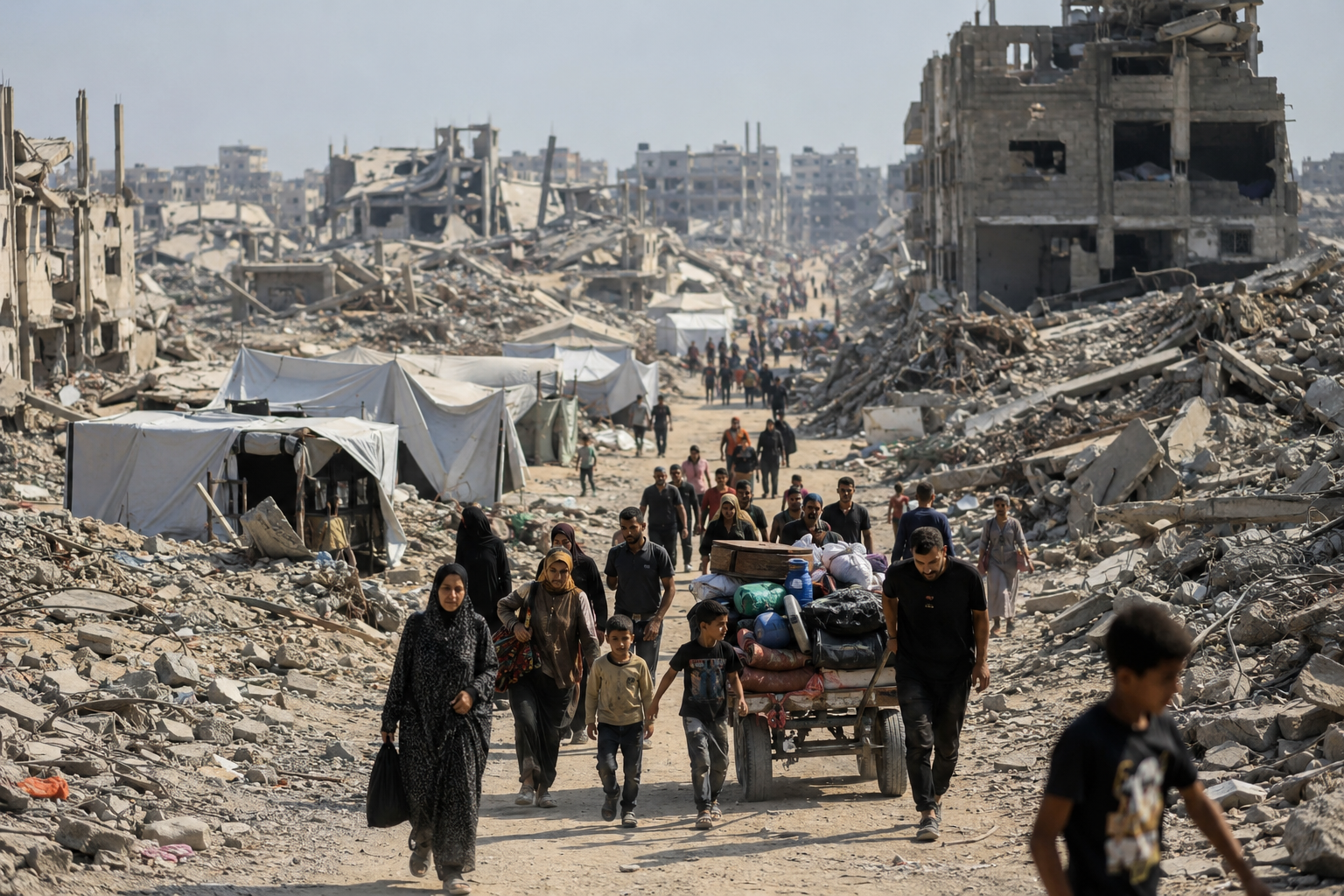
Displacement remains one of the biggest challenges facing the territory. Large numbers of people are living in temporary shelters, tents, schools, or damaged buildings after being forced to leave their homes during the conflict. Many have been displaced multiple times and have limited access to essential services.
The healthcare system in Gaza is also under severe pressure. According to humanitarian agencies, only 20 of Gaza's 37 hospitals are partially functioning, and none are operating at full capacity. Medical facilities continue to face shortages of supplies, equipment, fuel, and trained staff. Doctors and nurses are struggling to provide care to patients under extremely difficult conditions.
Aid groups argue that the ceasefire alone has not solved Gaza's humanitarian problems. They say restrictions on aid deliveries and continued insecurity have made it difficult to provide assistance to people in need. Humanitarian organizations continue to call for greater access for relief supplies and stronger international efforts to protect civilians.
The conflict has left much of Gaza in ruins. Residential neighborhoods, roads, schools, hospitals, and public infrastructure have suffered extensive damage. Reconstruction efforts have been slow due to ongoing political disagreements, security concerns, and limited access to building materials.
Earlier this month, Hamas official Husam Badran said the group was not prepared to give up its weapons immediately. He stated that decisions regarding Hamas's military arsenal would require broader discussions with other Palestinian factions. This issue remains one of the most difficult topics in negotiations over Gaza's future.
The war has had a devastating impact on the population. According to figures cited in the report, more than 73,000 people have been killed since the conflict began in October 2023. The vast majority of Gaza's residents have been affected by displacement, loss of property, economic hardship, and the destruction of essential services.
International organizations continue to urge all parties to work toward a lasting solution that protects civilians and allows humanitarian assistance to reach those in need. Aid agencies stress that without a stable peace agreement and improved access to resources, the suffering of Gaza's population is likely to continue.
As Gaza passes the milestone of more than 1,000 deaths since the ceasefire, many residents remain uncertain about what the future holds. While the agreement reduced the scale of fighting, the territory continues to face serious humanitarian, political, and security challenges. For many families, daily life remains focused on survival, rebuilding, and hoping for a lasting end to the conflict.
Summary
More than 1,000 Palestinians have been killed in Gaza since a US-brokered ceasefire between Israel and Hamas was agreed in October 2025, according to the Palestinian Health Ministry. While the agreement reduced large-scale fighting, violence has continued, humanitarian conditions remain severe, and much of Gaza is still devastated by war. Aid groups say civilians continue to suffer from shortages of food, medicine, and shelter.
Content



×
![]()