
West Bank Children Living in Fear as Military Raids Continue
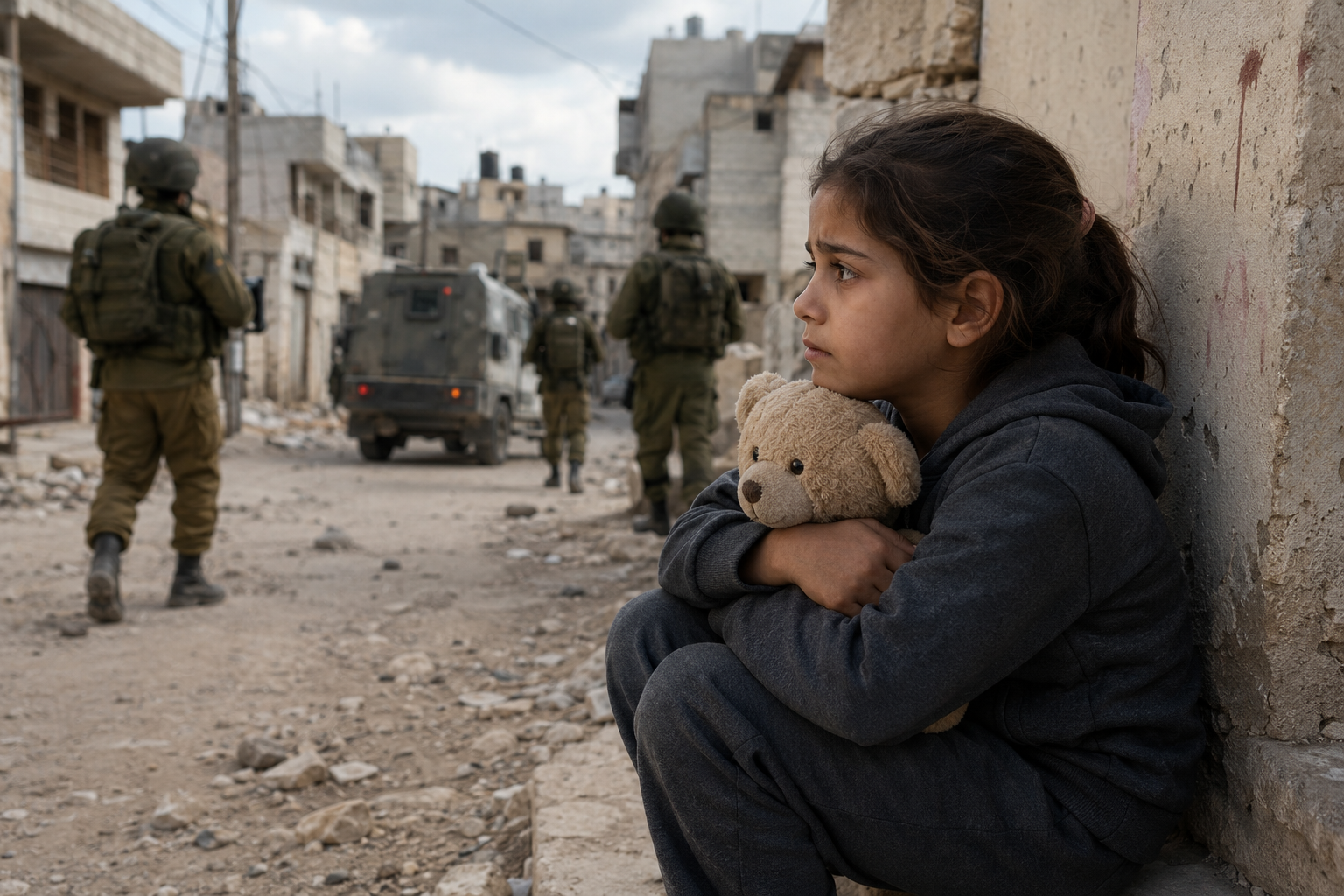
Children are supposed to spend their days learning, playing, and enjoying time with family and friends. However, for many Palestinian children living in the occupied West Bank, life is very different. Frequent military raids, violence, and uncertainty have become part of their everyday lives.
A recent United Nations (UN) report highlights the difficult situation facing Palestinian children in both Gaza and the West Bank. The report describes how years of conflict and military operations have affected thousands of young people, leaving many with emotional and psychological scars.
In the Dheisheh refugee camp near Bethlehem, children shared stories of how military raids have become a normal part of life. Fourteen-year-old Yanal explained that whenever soldiers enter the camp, there is often nowhere to go. He remembered playing football when soldiers suddenly arrived, turning a normal day into a frightening experience.
Another child, 13-year-old Mustafa, recalled being caught in a military operation while walking to his grandfather's house. He said live ammunition and tear gas were used nearby, forcing people to run for safety. According to Mustafa, military raids happen so often that he can no longer remember the first time he saw soldiers in his neighborhood.
His sister, 12-year-old Diyar, described how her daily activities are often interrupted. During one military raid, she was attending a piano lesson when soldiers entered the area. She said that whenever military forces arrive, residents expect tear gas, injuries, and sometimes deaths. As a result, many families stay indoors and wait until the situation becomes calm again.
For children like Diyar, the constant uncertainty affects every part of life. She explained that when military operations begin, all plans are canceled. Children cannot safely go outside, attend activities, or visit friends. "Our life stops," she said, describing how fear takes over the community.
The UN report found that military raids in the West Bank have increased significantly in recent years. Thousands of operations were carried out during the first months of 2025 alone. These raids often involve arrests, searches, and clashes that affect entire communities.
According to the report, children are among those most affected. Some have been injured or killed during military operations, while others have experienced detention or the arrest of family members. The report also discusses attacks on schools and restrictions that make education more difficult for many children.
Psychologists say the emotional impact of these experiences can be severe. Unlike a single traumatic event, many Palestinian children face repeated exposure to violence and fear. Experts describe this as continuous traumatic stress because the danger never fully disappears.
Children may struggle with anxiety, nightmares, difficulty concentrating, and other emotional challenges. Some become frightened by ordinary sounds, fearing that another raid is beginning. Others lose skills they had already learned or become withdrawn from social activities.
Five-year-old Khour is one example of how deeply these experiences can affect young children. Both of her parents were arrested in separate incidents. She remembers waking up one night after hearing voices and believing her father had finally returned home. Instead, she found soldiers inside the house.
Today, Khour lives without her parents and often looks at family photographs. She speaks about wanting her mother and father to return home. Her story reflects the emotional pain experienced by many children whose families have been separated by arrests and detention.
The UN report also points to the long-term effects of conflict across generations. Many Palestinian families are descendants of refugees who were displaced decades ago. Experts say that memories of past hardships are often passed from parents to children, creating a cycle of fear and insecurity that continues over time.
Community workers and psychologists emphasize the importance of stability for children. Safe homes, supportive families, schools, and regular routines help young people recover from difficult experiences. However, maintaining that stability is challenging in areas where violence and military operations occur frequently.
Despite these hardships, many children continue to attend school, pursue hobbies, and dream about a better future. They hope for a time when they can live without fear and enjoy the same opportunities as children elsewhere in the world.
Human rights organizations and international agencies continue to call for greater protection of children affected by conflict. They stress that all children, regardless of where they live, deserve safety, education, healthcare, and the chance to grow up in peace.
The experiences of children in the West Bank serve as a reminder of the human cost of ongoing conflict. Behind every statistic is a child with hopes, dreams, and a desire for a normal life. For many families, the greatest wish is simple: a future where children can live safely, attend school without interruption, and enjoy the childhood they deserve.
Summary
Children in the occupied West Bank face frequent military raids, violence, and uncertainty. A recent United Nations report says many Palestinian children have been killed, injured, detained, or deeply affected by the ongoing conflict. For many children, daily life is interrupted by fear, making it difficult to enjoy a normal childhood, attend school, or feel safe at home.
Content


×
![]()