
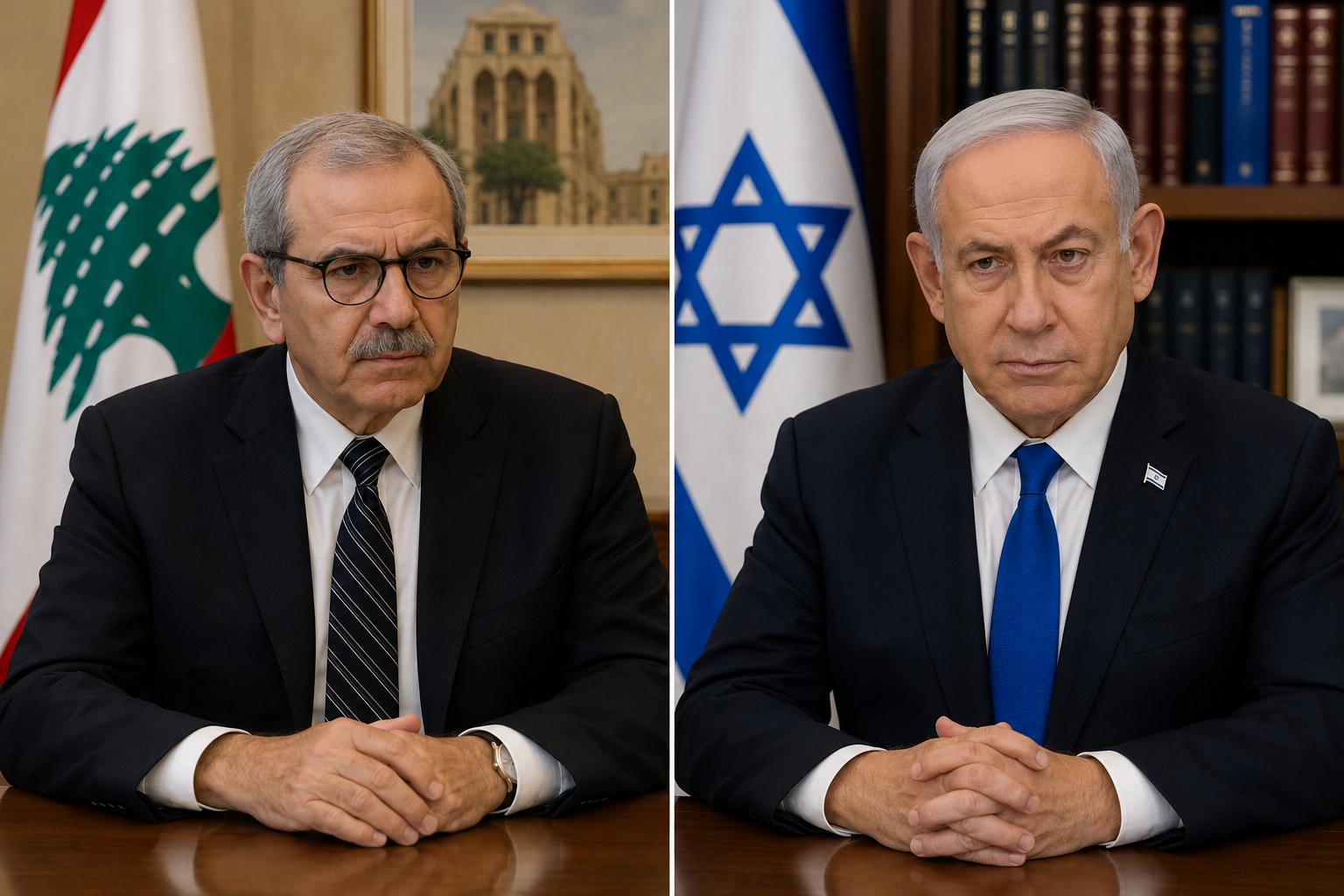
Lebanese Prime Minister Nawaf Salam has welcomed the newly signed framework agreement, saying it is an important step toward restoring Lebanon's sovereignty and securing the withdrawal of Israeli forces from Lebanese territory.
In a statement shared on social media platform X, Salam said the main goal of the agreement is to achieve Israel's complete withdrawal from all areas of Lebanon. He stressed that Lebanon wants to regain full control over its territory and ensure that citizens who were forced to leave their homes because of conflict can return safely.
According to Salam, the agreement is not only about ending military tensions but also about restoring the authority of the Lebanese state across the entire country. He said Lebanon's armed forces should be responsible for maintaining security and extending the state's authority over all Lebanese territories.
The prime minister emphasized that the Lebanese government remains committed to the principles outlined in its ministerial statement, which was approved by parliament. One of the key points of that statement is that decisions regarding war and peace should be made only by the Lebanese state. Salam said this principle remains a national priority and is an important part of the framework agreement.
He noted that strengthening state institutions is necessary for long-term stability and security. By ensuring that official state institutions are responsible for security matters, Lebanon hopes to create a more stable environment for its citizens and prevent future conflicts.
Salam also expressed gratitude to the international community for helping bring the agreement to life. He specifically thanked the United States, Arab countries, and friends of Lebanon around the world whose diplomatic efforts contributed to reaching the deal. According to him, international support played a key role in facilitating discussions and helping both sides move toward an agreement.
The Lebanese leader said he looks forward to the day when Israeli forces begin withdrawing from Lebanese territory. He described this moment as an important milestone that could allow thousands of displaced people to return to their homes safely and with dignity.
Many communities in southern Lebanon have been heavily affected by years of conflict and insecurity. Families have faced displacement, damage to property, and economic hardship. Salam said the return of residents is one of the most important objectives of the agreement because it would help restore normal life in affected regions.
He added that reconstruction efforts should begin as soon as conditions allow. Large parts of the country's infrastructure, including homes, roads, and public facilities, have suffered damage over the years. Rebuilding these areas will require significant resources and cooperation between the Lebanese government and international partners.
The framework agreement comes at a time when Lebanon continues to face serious economic and political challenges. The country has been struggling with a prolonged financial crisis, high levels of public debt, and pressure on public services. Government officials hope that improved security conditions could help create opportunities for recovery and development.
Supporters of the agreement believe it could reduce tensions, improve stability, and open the door for economic reconstruction. They argue that a peaceful environment is essential for attracting investment, rebuilding communities, and improving living conditions for citizens.
However, observers note that implementing such agreements can be complex. Success will depend on all parties honoring their commitments and maintaining dialogue throughout the process. International monitoring and diplomatic engagement may also be needed to ensure that the agreement is carried out effectively.
For many Lebanese citizens, the most important outcome would be a lasting period of peace and stability. The possibility of returning home, rebuilding damaged communities, and moving forward after years of uncertainty has raised hopes among people affected by the conflict.
Prime Minister Salam's comments reflect the Lebanese government's belief that the framework agreement can serve as a pathway toward restoring national sovereignty and strengthening state institutions. He said Lebanon remains committed to working with international partners and regional allies to ensure the agreement succeeds.
As discussions continue and implementation begins, attention will focus on whether the agreement can deliver on its key promises: the withdrawal of Israeli forces, the return of displaced residents, the restoration of state authority, and the launch of reconstruction efforts. For many in Lebanon, these goals represent an opportunity to turn a new page and build a more secure and stable future.
Summary
Lebanese Prime Minister Nawaf Salam says the new framework agreement is designed to achieve Israel's withdrawal from all Lebanese territory, restore Lebanon's full sovereignty, and allow displaced residents to return home safely. He thanked the United States, Arab countries, and international partners for helping reach the agreement and expressed hope that reconstruction efforts can begin soon.
Content
×
![]()