
The ceasefire between Israel and Lebanon remains under pressure as new incidents continue to be reported in southern Lebanon. While the agreement has helped reduce large-scale fighting in recent days, fresh military activity shows that peace in the region is still far from secure.
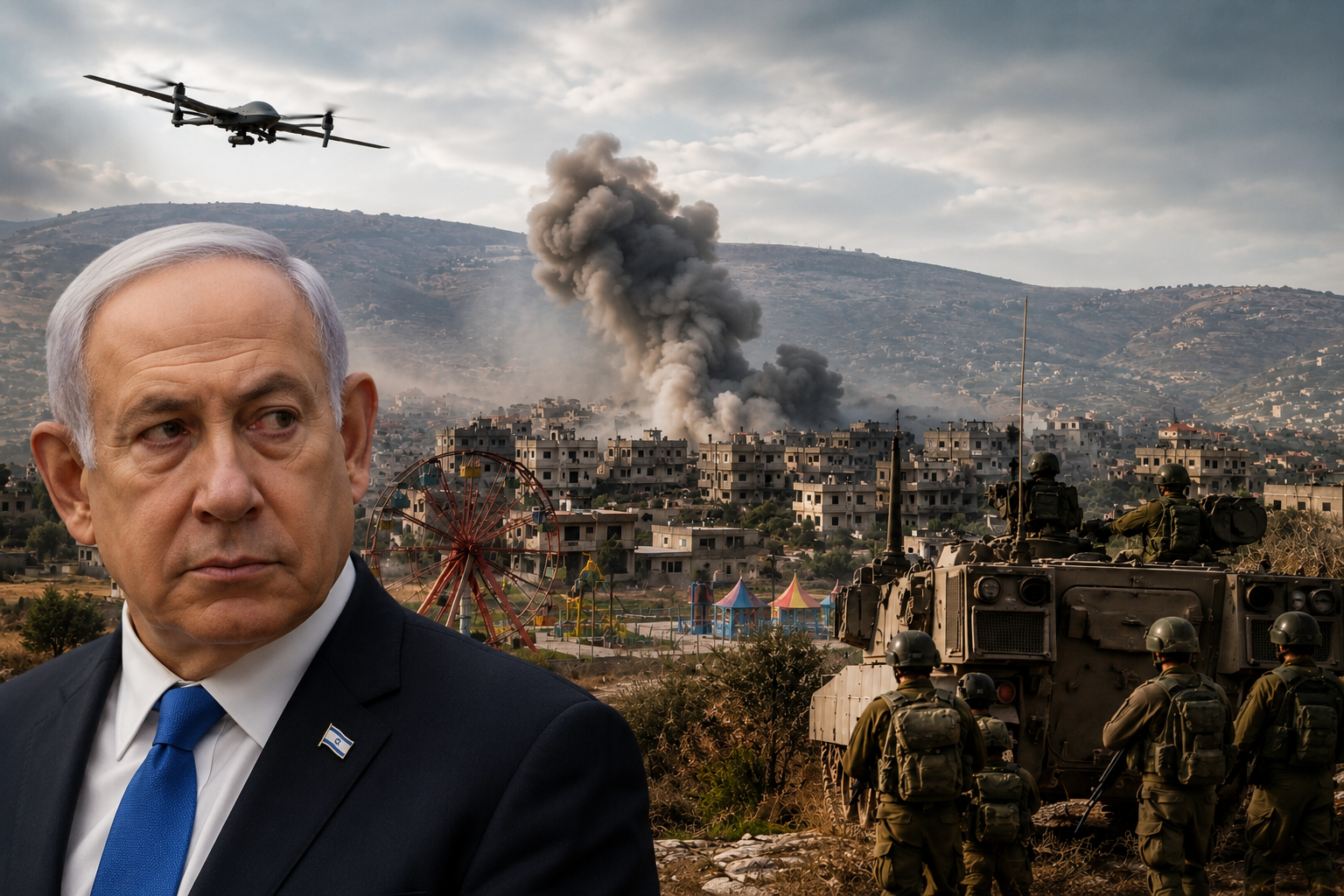
On Saturday, reports emerged of an Israeli drone strike near the city of Nabatieh in southern Lebanon. According to local sources, the attack took place in the area of Nabatieh al-Fawqa, near an intersection close to an amusement park. Details about casualties or damage were not immediately available, but the incident has renewed fears that the ceasefire could be at risk.
The latest strike serves as a reminder that the situation remains extremely fragile. Although the ceasefire has largely held over the past week, sporadic attacks and military operations have continued to occur. Residents in southern Lebanon have been living under constant uncertainty, unsure whether the calm will last or if a wider conflict could return.
In addition to the drone strike near Nabatieh, reports from Lebanon’s National News Agency indicated that Israeli forces were also active in the Hasbaiyya district, located further east. According to the reports, Israeli troops moved farther north in the area while being supported by machine-gun fire. These movements have increased concerns among local communities and officials who fear that any military action could trigger a new round of violence.
The ceasefire agreement was intended to reduce tensions and create conditions for stability after months of conflict. In many areas, the level of fighting has decreased significantly compared to previous weeks. Residents have been able to return to some daily activities, and humanitarian organizations have worked to assist communities affected by the violence.
However, the continued reports of attacks and military operations suggest that both sides remain cautious and prepared for further confrontation. Analysts say that ceasefires in conflict zones are often difficult to maintain because even small incidents can quickly escalate into larger clashes.
Throughout the past week, several incidents have been reported despite the overall reduction in hostilities. Local media and officials have confirmed that a number of people were killed in separate events during the ceasefire period. These deaths have highlighted the challenges facing efforts to maintain peace and prevent further bloodshed.
For many residents of southern Lebanon, the situation remains tense. Families who were displaced by earlier fighting are hoping for lasting stability, but repeated reports of military activity have made it difficult for people to feel secure. Schools, businesses, and public services continue to operate under the shadow of uncertainty.
International observers have repeatedly called on all sides to respect the ceasefire and avoid actions that could increase tensions. Diplomatic efforts are continuing behind the scenes, with regional and international actors urging restraint and emphasizing the importance of preventing another escalation.
Experts warn that the coming days will be critical for the future of the ceasefire. If incidents such as drone strikes and troop movements continue, confidence in the agreement could weaken. On the other hand, if all parties exercise restraint and avoid further confrontations, the truce may have a chance to develop into a more stable and lasting arrangement.
For now, the ceasefire remains in place, but the latest events in Nabatieh and Hasbaiyya demonstrate how delicate the situation remains. While the reduction in fighting has provided some relief to civilians, ongoing military activity shows that tensions between Israel and Lebanon have not disappeared.
As residents watch developments closely, many are hoping that leaders on all sides will prioritize stability and prevent a return to the widespread violence that has caused suffering across the region. Until then, the ceasefire remains fragile, with every new incident serving as a test of whether peace can hold.
Summary
Despite a ceasefire agreement that has reduced fighting between Israel and armed groups in Lebanon, new Israeli attacks and military movements in southern Lebanon are raising concerns about the stability of the truce. Reports of drone strikes and troop activity show that tensions remain high, leaving residents worried that violence could escalate again.
Content


×
![]()