
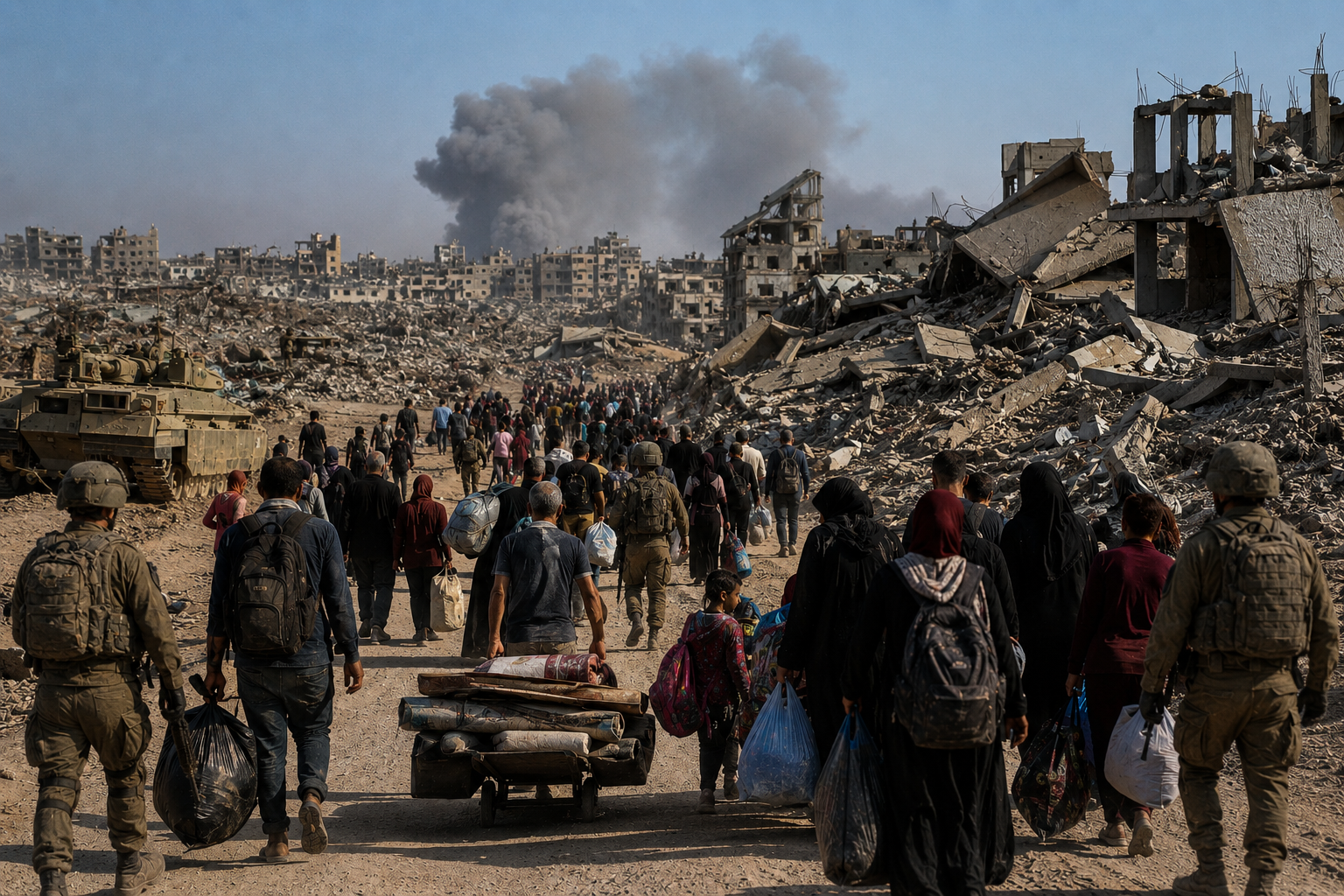
Israel has expanded its military zone inside the Gaza Strip, increasing the area where Palestinian civilians face movement restrictions and displacement. According to reports, the expansion includes an additional 11 percent of Gaza under the United Nations-designated "Orange Line" military zone. As a result, approximately 64 percent of the territory is now affected by Israeli military restrictions, leaving only about 36 percent of Gaza available for more than two million residents.
The move has raised concerns among humanitarian organizations and local residents who say the shrinking civilian areas are making daily life even more difficult. Families who have already been displaced multiple times during the conflict are once again being forced to leave their homes and search for safer locations.
Many Palestinians living in affected areas have reported receiving warnings to evacuate as military operations continue. Temporary shelters, schools, and public buildings are becoming increasingly crowded as people seek refuge from the fighting. Humanitarian groups have warned that the limited space available for civilians is putting additional pressure on already strained resources, including food, water, medical supplies, and shelter.
The latest expansion comes amid ongoing tensions despite a ceasefire agreement that was brokered in October 2025. Although the ceasefire significantly reduced large-scale fighting, both sides have accused each other of violations. Sporadic attacks and military operations have continued in different parts of Gaza, preventing a full return to normal life.
At the same time, Gaza's Health Ministry has released updated casualty figures from the conflict. According to the ministry, at least 73,054 Palestinians have been killed and more than 173,480 injured since the war began in October 2023. The ministry also reported that more than 1,000 people have been killed since the ceasefire took effect, while thousands more have suffered injuries.
The Israeli military announced on Sunday that its forces had killed three Palestinian police officers in Gaza. Israeli officials said the operation targeted individuals they considered security threats. However, Gaza's Interior Ministry condemned the attack, saying the officers were carrying out civilian policing duties and accusing Israel of undermining stability in the territory.
Palestinian officials argue that attacks on police personnel make it harder to maintain public order and provide basic services to civilians. They say such incidents contribute to growing insecurity and create additional challenges for communities already struggling with the consequences of war.
Humanitarian agencies continue to express concern about the living conditions in Gaza. Large parts of the territory have suffered extensive damage to homes, roads, hospitals, schools, and public infrastructure. Many residents remain dependent on humanitarian aid for food, clean water, and medical care.
International organizations have repeatedly called for increased humanitarian access and stronger protection for civilians. Aid groups say restrictions on movement and ongoing security concerns have complicated efforts to deliver assistance to those most in need. They warn that any further displacement could worsen an already severe humanitarian crisis.
The expansion of the military zone has also renewed debate within the international community about the future of Gaza and the prospects for a lasting peace. Several governments and international organizations have urged all parties to respect international law, protect civilians, and work toward a sustainable political solution.
Meanwhile, residents across Gaza continue to face uncertainty about their future. Many families have been displaced multiple times since the conflict began and remain unsure when they will be able to return home. Parents worry about the safety of their children, while local businesses struggle to operate under difficult conditions.
Despite ongoing diplomatic efforts, the situation remains fragile. The combination of military operations, humanitarian challenges, and political disagreements continues to create instability throughout the region. Observers say that without meaningful progress toward a long-term settlement, civilians on both sides will remain vulnerable to renewed violence.
As the conflict enters another critical phase, international attention remains focused on Gaza. Humanitarian agencies, regional governments, and global leaders continue to monitor developments closely, hoping that conditions can improve and that a more durable peace can eventually be achieved. For the millions of people living in Gaza, however, daily survival remains the immediate priority as they face continued displacement, uncertainty, and the lasting effects of years of conflict.
Summary
Israel has expanded its military-controlled area in Gaza, increasing restrictions across much of the territory. According to reports, about 64 percent of Gaza is now under Israeli military restrictions, leaving only 36 percent of the enclave available for more than two million Palestinians. The development comes as Gaza's Health Ministry reports a rising death toll and continued violence despite a ceasefire agreement reached in 2025.
Content

×
![]()