
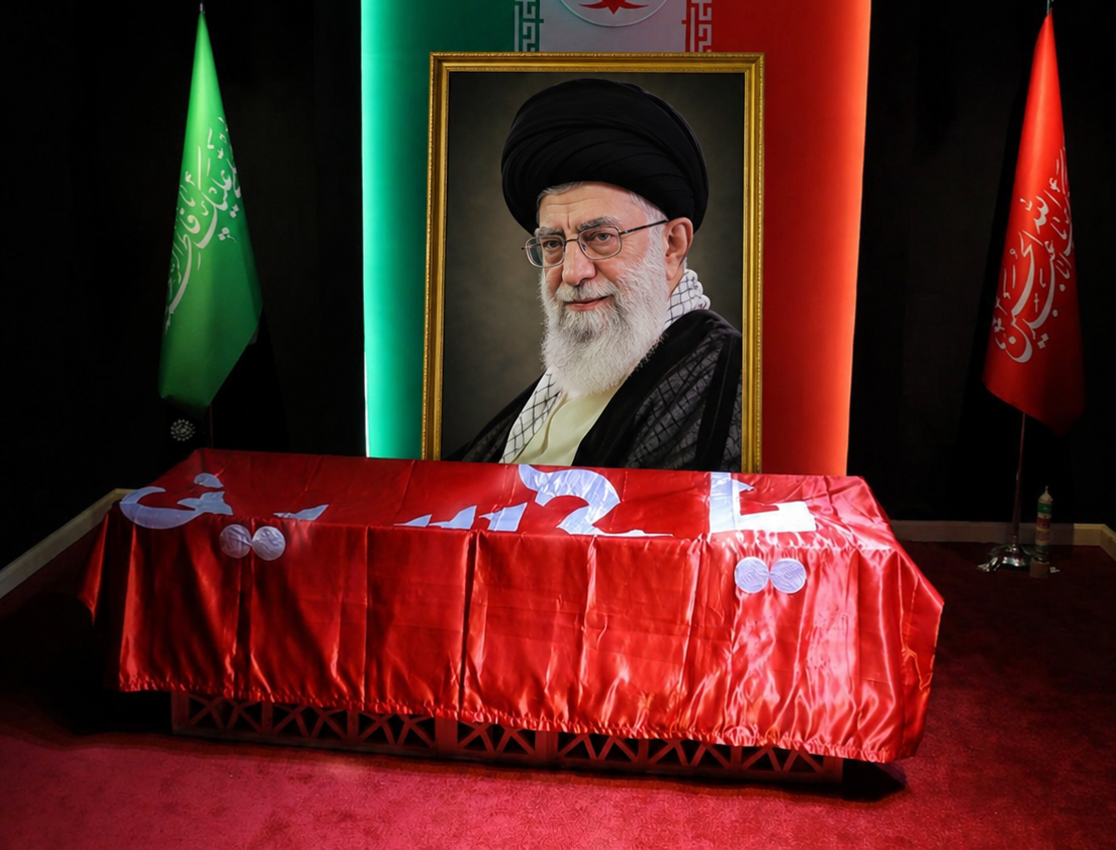
Iran has started official mourning ceremonies for Supreme Leader Ayatollah Ali Khamenei before his planned burial at the Imam Reza Shrine in the city of Mashhad on July 9. During the ceremonies, a red flag from the famous shrine was placed over his coffin. This act carries deep religious meaning for many Shia Muslims and has become one of the most talked-about moments of the farewell events.
The red flag comes from the Imam Reza Shrine, one of the holiest places in Iran and one of the most important religious sites for Shia Muslims around the world. By placing this flag over Khamenei's coffin, Iranian religious leaders are sending a message that they see his death as an act of sacrifice and martyrdom.
According to reports, Ayatollah Ali Khamenei was killed in a US-Israeli strike at the beginning of the conflict that started in February. Iran has blamed both the United States and Israel for the attack and has described Khamenei as a martyr who died while defending the country and its values.
Political analyst Nader Hashemi, an associate professor of Middle East and Islamic politics at Georgetown University, explained the meaning of the red flag. He said it represents the sacrifice of Imam Hussein, also known as Hussein ibn Ali, the grandson of Prophet Muhammad.
Imam Hussein is one of the most respected figures in Shia Islam. He was killed in the Battle of Karbala in the year 680 CE after standing against what he believed was injustice. His death is remembered every year during the month of Muharram and is considered a symbol of courage, sacrifice, and the fight for justice.
Hashemi said the Iranian government is trying to connect Khamenei's death with the story of Imam Hussein. By using the red flag from the Imam Reza Shrine, officials are presenting Khamenei as someone who also sacrificed his life in a struggle against powerful enemies.
For many Shia Muslims, symbols such as the red flag carry deep emotional and religious importance. The flag is often linked with the memory of Imam Hussein and serves as a reminder that justice should be defended even at great personal cost. Because of this meaning, the flag placed on Khamenei's coffin has attracted attention both inside Iran and around the world.
Thousands of people are expected to take part in mourning ceremonies before Khamenei's burial. Religious leaders, government officials, military commanders, and ordinary citizens have gathered to pay their respects. Public events have included prayers, speeches, and processions honoring the late Supreme Leader.
The Imam Reza Shrine in Mashhad is expected to become the final resting place for Khamenei. The shrine attracts millions of visitors every year and is considered one of the most sacred locations in Shia Islam. Being buried there is seen as a great honor.
Iranian leaders have continued to describe Khamenei as a national and religious figure whose influence shaped the country for many years. They say his legacy will continue through the country's political and religious institutions.
At the same time, the reported assassination has increased tensions in the Middle East. Iran has strongly condemned the alleged attack and accused the United States and Israel of carrying out a targeted killing. The two countries have not publicly accepted responsibility for the reported strike.
The mourning ceremonies are taking place during a period of heightened regional tensions, with many countries closely watching developments. Analysts believe the symbolism used during the funeral events is intended to strengthen national unity and reinforce the government's message that Khamenei died as a martyr.
The image of the red flag covering the coffin has become one of the most powerful symbols of the funeral ceremonies. For supporters of the Iranian leadership, it represents faith, sacrifice, and resistance. For observers outside Iran, it highlights how religious symbols continue to play a major role in the country's politics and public life.
As Iran prepares for Khamenei's burial on July 9, large crowds are expected to continue gathering in Mashhad and other cities to remember the longtime Supreme Leader. The ceremonies are likely to remain an important moment in Iran's recent history, combining religious tradition, national mourning, and political symbolism.
Summary
Iran has begun mourning ceremonies for Supreme Leader Ayatollah Ali Khamenei after his reported death in a US-Israeli strike earlier this year. A red flag from the Imam Reza Shrine was placed over his coffin, a powerful symbol in Shia Islam representing sacrifice and martyrdom. Officials and religious leaders say the gesture connects Khamenei's death with the story of Imam Hussein, who was killed at the Battle of Karbala. Khamenei is expected to be buried at the Imam Reza Shrine in Mashhad on July 9.
Content
×
![]()