
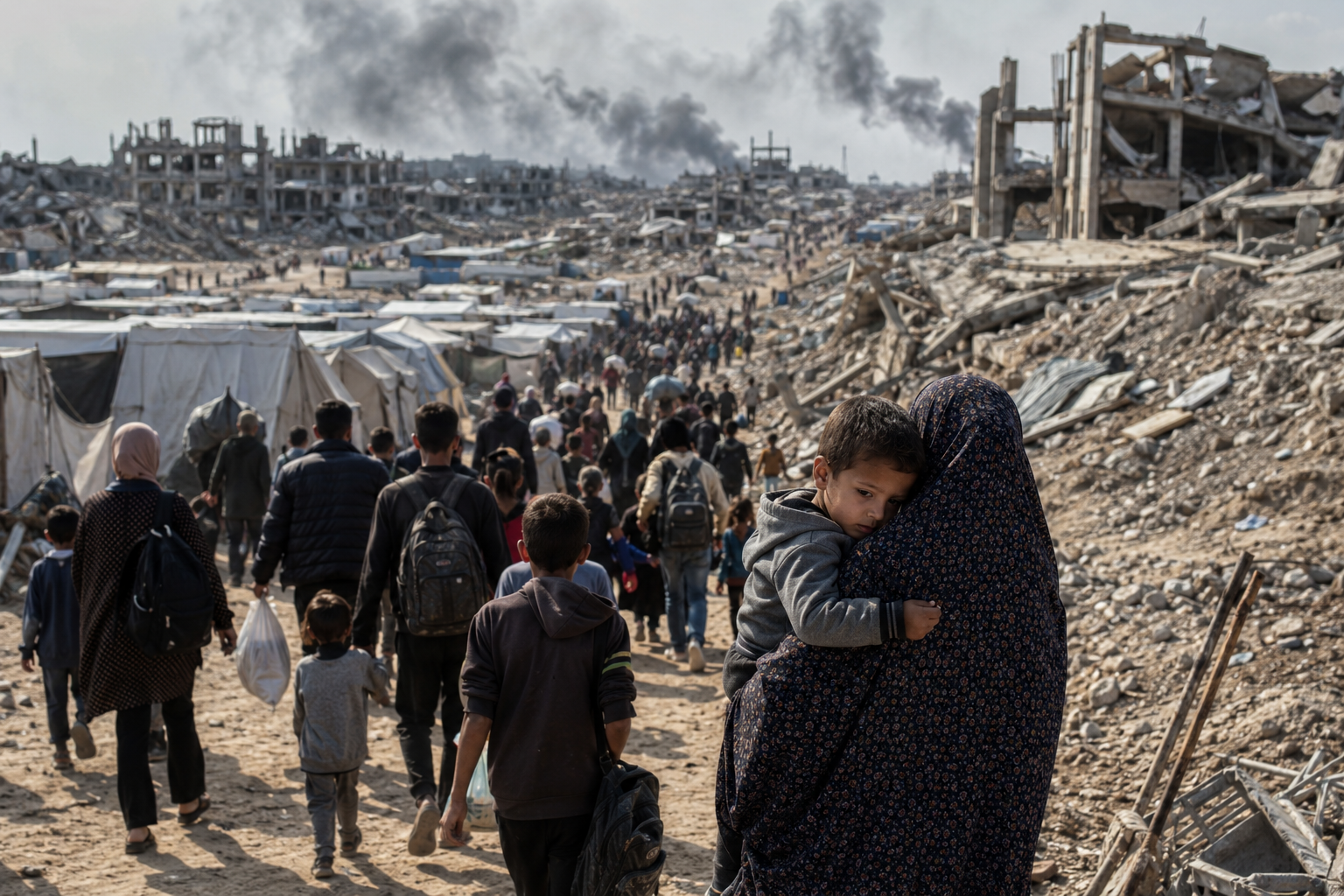
The United Nations (UN) and several humanitarian organizations have raised serious concerns about the growing areas under Israeli military control in the Gaza Strip. They say that the expansion of these areas is putting the lives of civilians at greater risk and making it much harder to deliver food, medicine, and other essential supplies to people in need.
According to a UN and NGO-led coordination group, Israeli forces have enforced access restrictions in these areas by using lethal force. The report says that airstrikes and exchanges of gunfire have also taken place in locations where Israeli troops are deployed, increasing the danger for civilians living nearby.
The UN said that between October 10, 2025, and early April 2026, it verified the deaths of 196 Palestinians in Israeli attacks near areas where Israeli soldiers were stationed. Among those killed were 18 women and 43 children. The organization said these figures are based on verified reports, while noting that the actual number of casualties may be higher.
Humanitarian agencies say that strict Israeli restrictions are making it extremely difficult to deliver aid across Gaza. Many trucks carrying food, clean water, medical supplies, and fuel have been delayed or prevented from reaching people who urgently need help. Relief organizations say these delays have slowed or stopped life-saving work in many areas.
Aid workers are also facing serious risks while carrying out their missions. Some humanitarian organizations reported that their staff members have been killed during the conflict. Because of these security concerns, several aid groups have reduced or temporarily suspended their operations, leaving many families without regular assistance.
The humanitarian situation in Gaza continues to worsen. Most Palestinians living in the territory have been displaced several times since the conflict began. Many families have been forced to leave their homes repeatedly as fighting spread to different parts of Gaza. They are now crowded into smaller areas where there is limited access to food, clean water, healthcare, electricity, and shelter.
Hospitals and medical facilities are under severe pressure as they try to treat injured people while dealing with shortages of medicine, equipment, and fuel. Aid organizations warn that children, elderly people, and those with chronic illnesses are among the most vulnerable.
The UN and humanitarian organizations stressed that civilians must be protected under international humanitarian law. They called on all parties involved in the conflict to avoid targeting civilians and civilian infrastructure. They also urged that humanitarian workers be allowed to operate safely without fear of attack.
The organizations further called for safe and unrestricted humanitarian access across the Gaza Strip. They said aid must be allowed to reach everyone in need quickly and without unnecessary obstacles. According to the UN, protecting civilians and ensuring the delivery of humanitarian assistance are essential steps to reduce suffering during the conflict.
The UN continues to monitor the situation closely and has repeated its appeal for greater protection of civilians, respect for international law, and increased humanitarian access. Humanitarian groups say that without immediate improvements, the living conditions for millions of people in Gaza could become even more severe, increasing the risk of hunger, disease, and further loss of life.
Summary
The United Nations and humanitarian organizations say that the expansion of Israeli-controlled areas in Gaza is making life more dangerous for civilians. They warn that many Palestinians have been forced to move several times, aid deliveries are being blocked, and relief workers are struggling to reach people in need. The UN is calling for the protection of civilians and safe access for humanitarian aid.
Content

×
![]()