
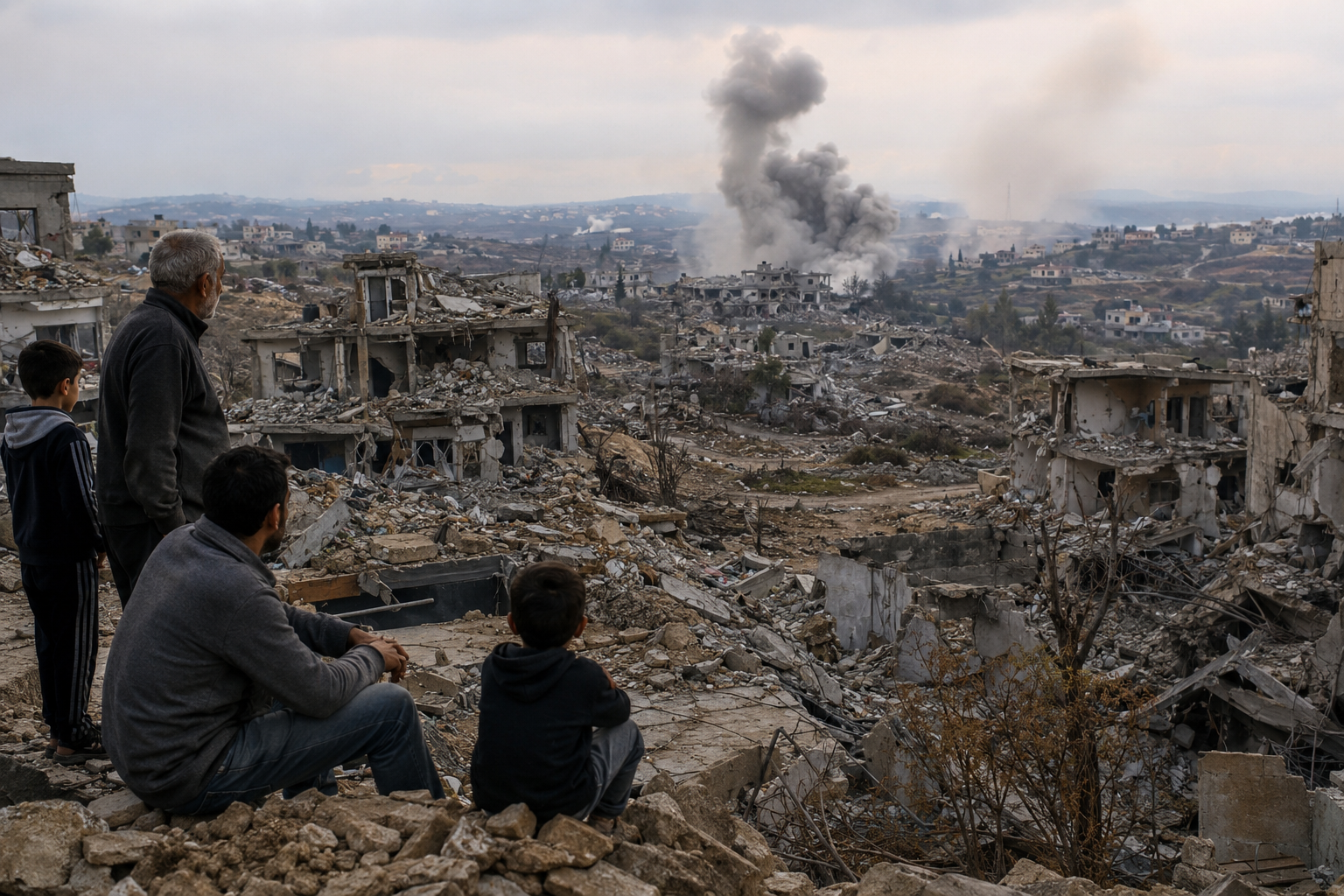
More than 90,000 homes in southern Lebanon have been damaged or destroyed after months of Israeli attacks, according to a government survey. The large-scale destruction has left many families without safe places to live and has forced hundreds of thousands of people to remain away from their homes. Many villages have suffered heavy damage, making it difficult for people to return and rebuild their lives.
Reports say that more than 600,000 people have still not been able to return to southern Lebanon because of the continuing violence and security concerns. Many families have been living in temporary shelters or with relatives in other parts of the country while waiting for conditions to improve. However, continued military activity has made their return uncertain.
Residents living near the affected areas say they regularly hear explosions coming from nearby villages. Some people can even see their hometowns from a distance but are unable to reach them because of the danger. For many families, watching their homes and neighborhoods being damaged has been heartbreaking.
One resident, Hussein Sabra, said he can see his hometown of Hadatha from the nearby town of Tibnine but cannot safely return. He described the emotional pain of watching the place where he grew up being destroyed. He said it is difficult to see not only homes disappear but also the memories and history connected to those places.
Videos shared by the Israeli military have shown buildings being demolished in parts of southern Lebanon. Israeli officials say their military operations are aimed at addressing security threats in border areas. However, humanitarian organizations and rights groups have expressed concern about the destruction of civilian property and the impact on local communities. Some rights groups argue that certain actions may violate international humanitarian law and have called for independent investigations.
The widespread damage has created a major financial challenge for Lebanon, which has already been facing a serious economic crisis for several years. Government officials estimate that rebuilding damaged homes, roads, schools, and other infrastructure will cost more than $1 billion. Many families simply do not have the money needed to repair or rebuild their homes.
Because of limited financial resources, many residents are only making small repairs to houses that are still standing. They are fixing broken windows, repairing damaged walls, and covering damaged roofs just enough to make the buildings safe to live in. However, many people worry that renewed fighting could destroy these repairs if violence continues.
Ahmed Hamza, a resident of Tibnine, said that families are doing whatever they can to make their homes livable again. At the same time, they remain concerned that another round of violence could undo all their efforts. This uncertainty has made it difficult for people to plan for the future.
Those who have managed to return to their villages say daily life remains stressful. Explosions can still be heard in some areas, and many residents live with constant fear. Parents say their children become frightened whenever they hear loud sounds. Some children struggle to sleep because they worry another attack could happen.
Abu Hussein, another resident of Tibnine, explained that the sound of explosions often shakes homes and leaves families feeling unsafe. He said children become especially scared whenever they hear blasts nearby. Many families hope the violence will end soon so their children can grow up in peace instead of fear.
The destruction has also affected schools, farms, businesses, and public services in many communities. Farmers have found it difficult to work their land, while shop owners have lost customers because many people have left the area. This has created additional economic problems for families who already faced financial hardship.
Humanitarian organizations continue to call for the protection of civilians and for safe access to affected communities. Aid groups say families need food, medical care, shelter, clean water, and financial assistance to recover from the damage. They also stress the importance of protecting civilians and allowing displaced people to return safely when conditions permit.
International attention remains focused on the situation in southern Lebanon, where many people continue to wait for lasting peace. Residents say they want nothing more than to return to normal life, rebuild their homes, and provide a safe future for their children.
For now, thousands of families remain uncertain about when they will be able to return home permanently. While some have started repairing damaged buildings, many others are still waiting for improved security before taking that step. The future of these communities will depend on both the security situation and the support available for rebuilding the areas affected by months of conflict.
Summary
Thousands of families in southern Lebanon are facing difficult conditions after months of Israeli attacks damaged or destroyed more than 90,000 homes. Many people are still unable to return to their villages because of ongoing violence. Residents who have returned say they live in fear as explosions continue nearby. The Lebanese government says rebuilding the damaged areas will cost more than $1 billion, while humanitarian organizations remain concerned about the safety of civilians.
Content


×
![]()