
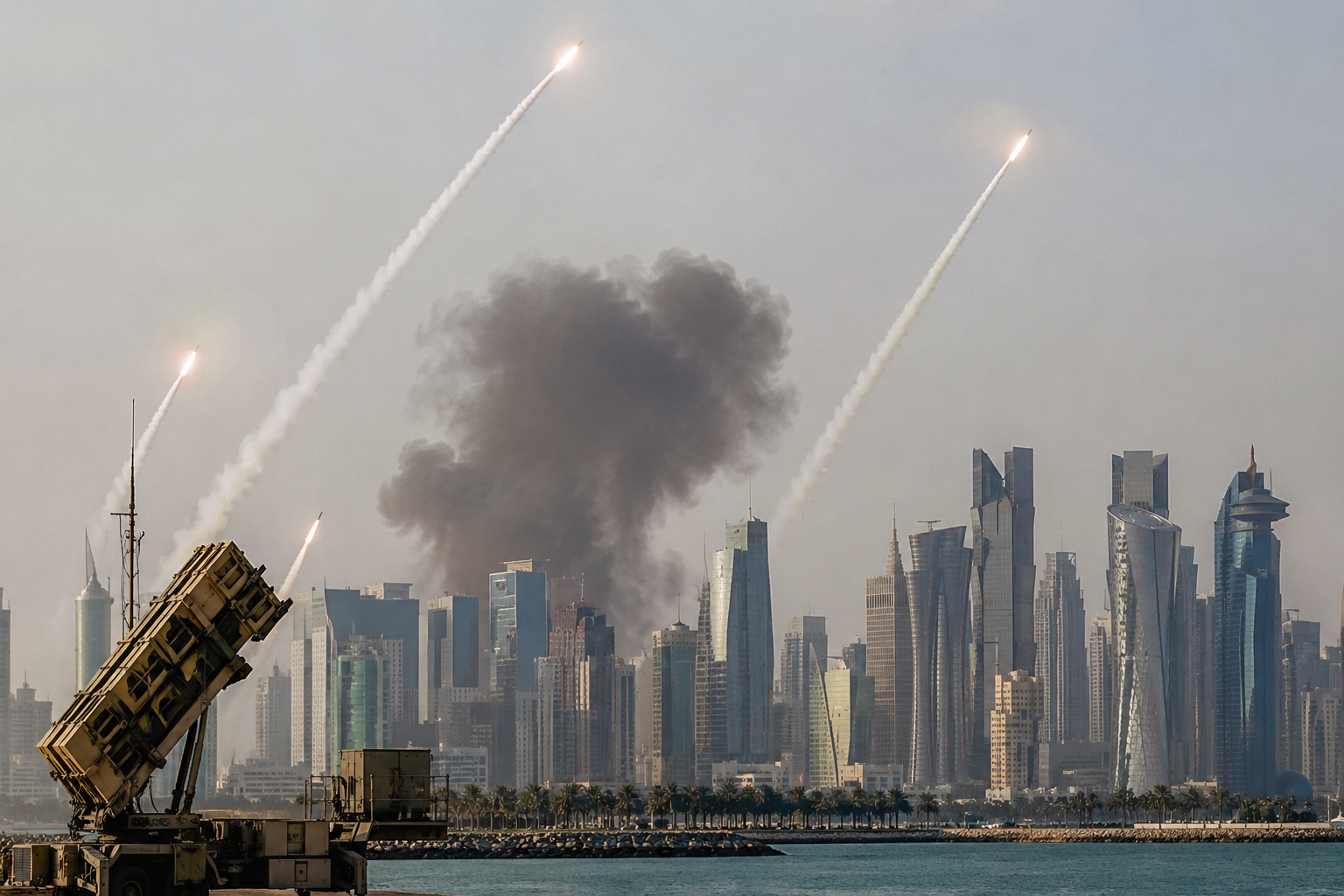
The conflict between Iran and the United States has become serious again, bringing new security concerns to countries across the Gulf region. After fresh US airstrikes on Iranian military targets along Iran's southern coast, Iran responded by launching missiles and drones at US military bases located in Bahrain, Qatar, Kuwait, Oman, the United Arab Emirates (UAE), and Jordan.
As the attacks continued, air defense systems were activated across the Gulf. Many incoming missiles and drones were intercepted before reaching their targets, but the new attacks have raised questions about whether Gulf countries can continue defending themselves if the conflict lasts for a long time.
The latest fighting comes only weeks after the United States and Iran signed an agreement aimed at reducing tensions following months of war. However, both sides now accuse each other of breaking that agreement, especially after fighting resumed around the Strait of Hormuz, one of the world's most important shipping routes for oil and gas.
Iran has also been accused of attacking commercial ships near Oman, while the United States says it has targeted Iranian military positions that threatened shipping in the Strait of Hormuz. In response, Iran launched another wave of missiles and drones at locations where US forces are based.
Although Iran says it is targeting US military facilities, many of the attacks pass through Gulf countries' airspace. Some missiles and drones have fallen on their territory, creating risks for civilians. According to reports, falling debris from intercepted missiles has already caused injuries in some areas.
One of the biggest reasons Gulf countries are involved is the large US military presence in the region. The United States has military bases in Bahrain, Qatar, Kuwait, Saudi Arabia, the UAE, Jordan and several other Middle Eastern countries. Around 50,000 American troops are stationed across the region.
Experts say this creates a difficult situation. On one hand, these US bases make Gulf countries possible targets for Iranian attacks. On the other hand, American military forces and advanced defense systems help protect these countries from incoming missiles and drones.
Over the years, Gulf countries have spent billions of dollars building powerful air defense systems. Saudi Arabia and the UAE operate advanced THAAD and Patriot missile defense systems supplied by the United States. Qatar uses Patriot systems along with NASAMS, while Kuwait also operates Patriot batteries and several other missile defense platforms. Bahrain recently received upgraded Patriot missile systems, and Oman uses NASAMS along with French and Russian-made air defense equipment.
These systems have successfully intercepted many Iranian missiles and drones during recent attacks. Military experts say the interception rate has been very high, showing that Gulf countries have built strong defensive networks.
However, there is still a major challenge. Iran has developed large numbers of low-cost Shahed drones that are much cheaper to produce than the expensive interceptor missiles used to destroy them. Some reports estimate that a Shahed drone costs only around $30,000 to build, while interceptor missiles used by Gulf countries and the United States can cost several million dollars each.
This creates an economic problem. Even if Iran does not destroy major targets, it can force its opponents to spend huge amounts of money defending themselves. Experts believe that if the conflict continues for months, missile supplies could become limited, making defense more difficult.
Military analysts also say the current battle is no longer just about weapons but about endurance. Iran may try to keep Gulf countries and US forces under constant pressure by launching repeated attacks that require expensive defensive responses.
Because of these concerns, Gulf countries are increasing military cooperation with one another. They are sharing radar information, tracking missiles across borders and improving communication between their defense systems. Leaders hope that better cooperation will strengthen regional security if future attacks continue.
At the same time, many Gulf countries are also trying to reduce their dependence on the United States by developing their own defense industries and signing military agreements with other countries. Some have expanded defense partnerships with European nations, South Korea and other allies. Saudi Arabia has also strengthened military cooperation with Pakistan under a mutual defense agreement signed last year.
Despite the ongoing attacks, Gulf countries are also trying to maintain diplomatic relations with Iran. The UAE restored diplomatic ties with Tehran in 2022, while Saudi Arabia and Iran normalized relations in 2023 through an agreement brokered by China. Many regional leaders believe diplomacy remains important because the countries must continue living alongside one another after the conflict ends.
The conflict is also creating economic risks. The Strait of Hormuz is one of the world's busiest oil shipping routes, and any disruption could affect global energy supplies. Countries such as Qatar, Kuwait, Bahrain and the UAE depend heavily on exports that pass through the strait. Continued fighting could increase oil prices, disrupt international trade and slow economic growth across the region.
Analysts say that while both Iran and the United States continue exchanging attacks, neither side appears to be seeking a full-scale regional war. Instead, they believe both governments are carefully responding to each other's actions while avoiding a conflict that could become much larger.
Even so, experts warn that every new attack increases the risk of miscalculation. A single major strike causing heavy civilian casualties or severe damage to critical infrastructure could quickly push the region into a wider war.
For now, Gulf countries remain on high alert. Their advanced air defense systems have prevented many attacks from causing major damage, but the renewed fighting has shown that security challenges remain serious. Regional leaders continue to support diplomatic efforts while strengthening military cooperation, hoping to protect their people, maintain economic stability and prevent another prolonged conflict in the Middle East.
Summary
Iran has launched a new wave of missile and drone attacks targeting US military bases in Gulf countries after fresh US airstrikes on Iranian positions. Air defense systems in Bahrain, Qatar, Kuwait, Oman, the UAE and Jordan have been activated to stop the attacks. Although many missiles and drones have been intercepted, experts warn that continued fighting could put pressure on Gulf countries because defending against cheap Iranian drones with expensive interceptor missiles is costly. At the same time, Gulf nations are trying to balance security, diplomacy and economic stability while avoiding a wider regional war.
Content

×
![]()