
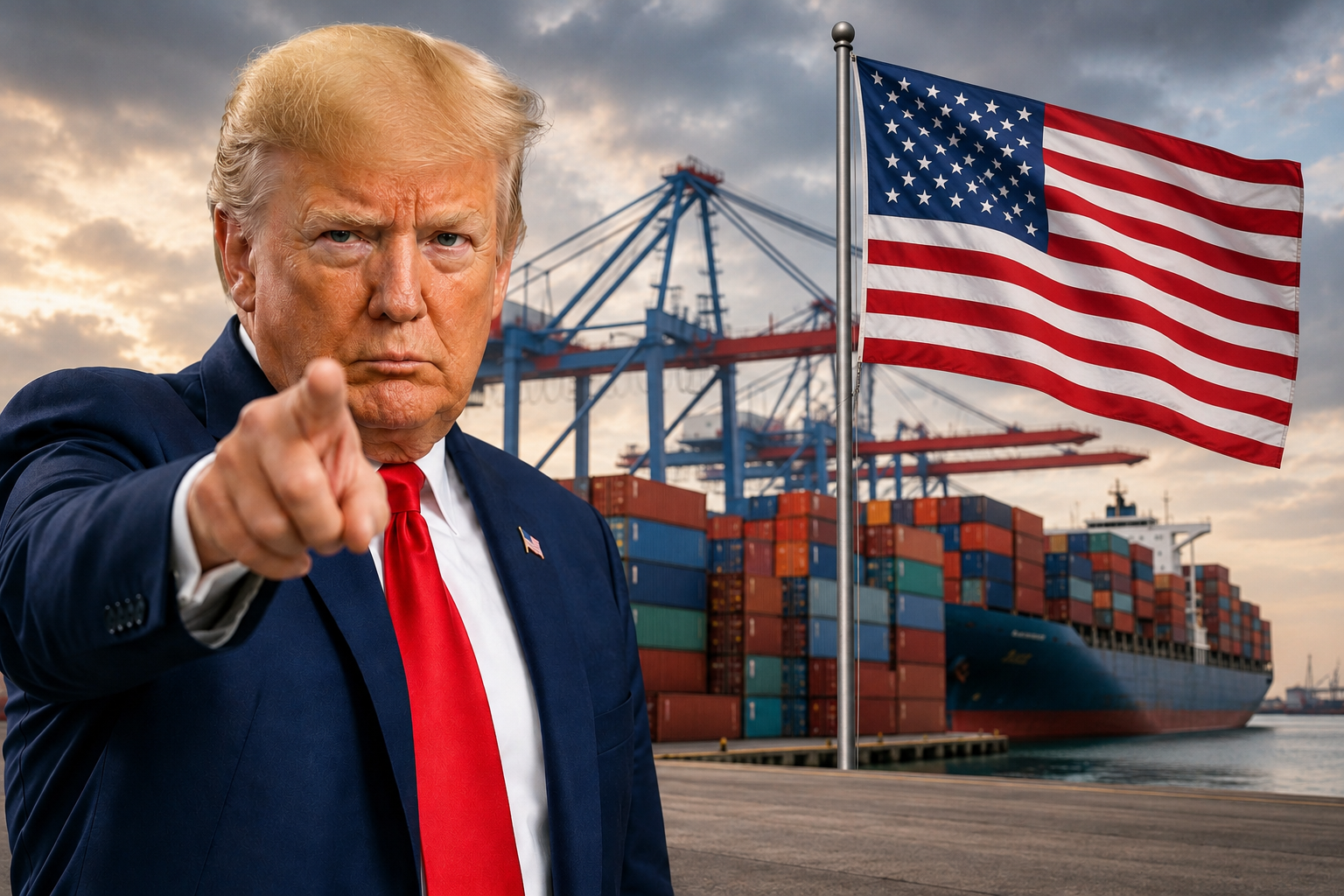
The United States has announced a new round of tariffs on goods imported from around 60 countries and trading partners. The decision was made by President Donald Trump's administration, which says the move is meant to fight forced labour in global supply chains and protect American workers.
The new tariffs came into effect on Friday after a temporary 10% tariff introduced earlier expired. The latest duties range from 10% to 12.5%, depending on whether a country has agreed to strengthen laws banning imports made with forced labour.
The countries affected include some of America's biggest trading partners such as China, the European Union, Canada, Japan, India, and the United Kingdom. Together, these countries account for nearly all goods imported into the United States.
According to the Office of the US Trade Representative, countries that have promised to introduce and enforce bans on products made with forced labour will face a 10% tariff. Countries that have not made such commitments will face the higher 12.5% tariff.
The Trump administration says forced labour is both a human rights issue and an unfair trade practice. Officials argue that companies using forced labour can produce goods at lower costs, making it difficult for American businesses and workers to compete.
US Trade Representative Jamieson Greer said the new tariffs are designed to improve working conditions around the world while also protecting US industries. He welcomed countries that have already agreed to strengthen their laws and encouraged others to do the same.
The tariffs are being imposed under Section 301 of the Trade Act of 1974, which allows the United States to respond to trade practices considered harmful to American commerce. Earlier this week, the Trump administration also used another law to place a 50% tariff on many Canadian products.
The latest action is another step in President Trump's long-running trade strategy. Since returning to office, Trump has continued to argue that tariffs help protect American jobs, reduce dependence on foreign goods, and encourage companies to manufacture products inside the United States.
Earlier, the US Supreme Court ruled that many of Trump's earlier global tariffs had been imposed using the wrong legal authority. Following that decision, the White House began using different trade laws to continue its tariff policy.
Many countries have criticized the new tariffs. Brazil called the decision unfair and politically motivated. Brazilian officials said the United States is using workers' rights as an excuse to support protectionist trade policies. Brazil also announced that it may respond with its own trade measures under its reciprocity laws and look for new export markets.
Japan also expressed disappointment, saying its trade policies follow international rules and that the new tariffs are regrettable. Australia described the measures as completely unjustified and said it would continue discussions with Washington to remove the tariffs.
Trade experts believe the new tariffs could increase costs for businesses that rely on imported products. Companies may have to pay more to bring goods into the United States, and those higher costs could eventually be passed on to consumers through higher prices.
Some experts also believe the economic impact may be smaller than expected because certain products are exempt from the new tariffs. However, many businesses will still need to adjust their supply chains or find new suppliers to reduce additional costs.
Analysts say the tariffs may also encourage countries to strengthen trade relationships with other markets instead of relying heavily on the United States. Many governments are expected to increase trade agreements with Asia, Europe, and other regions to reduce their dependence on the US market.
The United States has already been involved in several trade disputes under Trump's second term. Washington recently imposed separate tariffs on products from Canada and Brazil and has continued its trade tensions with China. Although the tariff dispute with China is currently paused, relations remain uncertain.
The Trump administration has also used tariffs as a tool to pressure countries on issues beyond trade. In the past, tariffs have been linked to immigration, border security, and other foreign policy goals.
Officials say investigations into trade practices are continuing, and more countries could face additional tariffs in the future. The administration is currently examining several nations over claims of unfair manufacturing practices and industrial overcapacity.
Supporters of the tariffs argue that they will help protect American jobs, encourage fair competition, and push companies around the world to eliminate forced labour from their supply chains. They believe stronger trade rules will create a more level playing field for businesses that follow ethical labour standards.
Critics, however, warn that tariffs often increase costs for companies and consumers rather than foreign governments. They also argue that higher import taxes can slow economic growth, reduce international trade, and create uncertainty for businesses around the world.
As global trade tensions continue to rise, many countries will closely watch how these new tariffs affect international markets and diplomatic relations. Governments are expected to continue negotiations with Washington while also exploring alternative trading partners to reduce the impact of the new US measures.
The coming months will be important in determining whether these tariffs lead to new trade agreements, further disputes, or additional economic pressure on businesses and consumers worldwide.
Summary
The United States has introduced new tariffs on imports from around 60 trading partners, including China, the European Union, India, Japan, Canada, and the UK. The Trump administration says these countries have not done enough to stop goods made with forced labour from entering global supply chains. The new tariffs range from 10% to 12.5% and are expected to increase trade tensions, raise costs for businesses, and affect consumers worldwide.
Content
×
![]()