
SpaceX Rocket Debris Set to Crash Into the Moon, NASA Says There Is No Danger to Earth
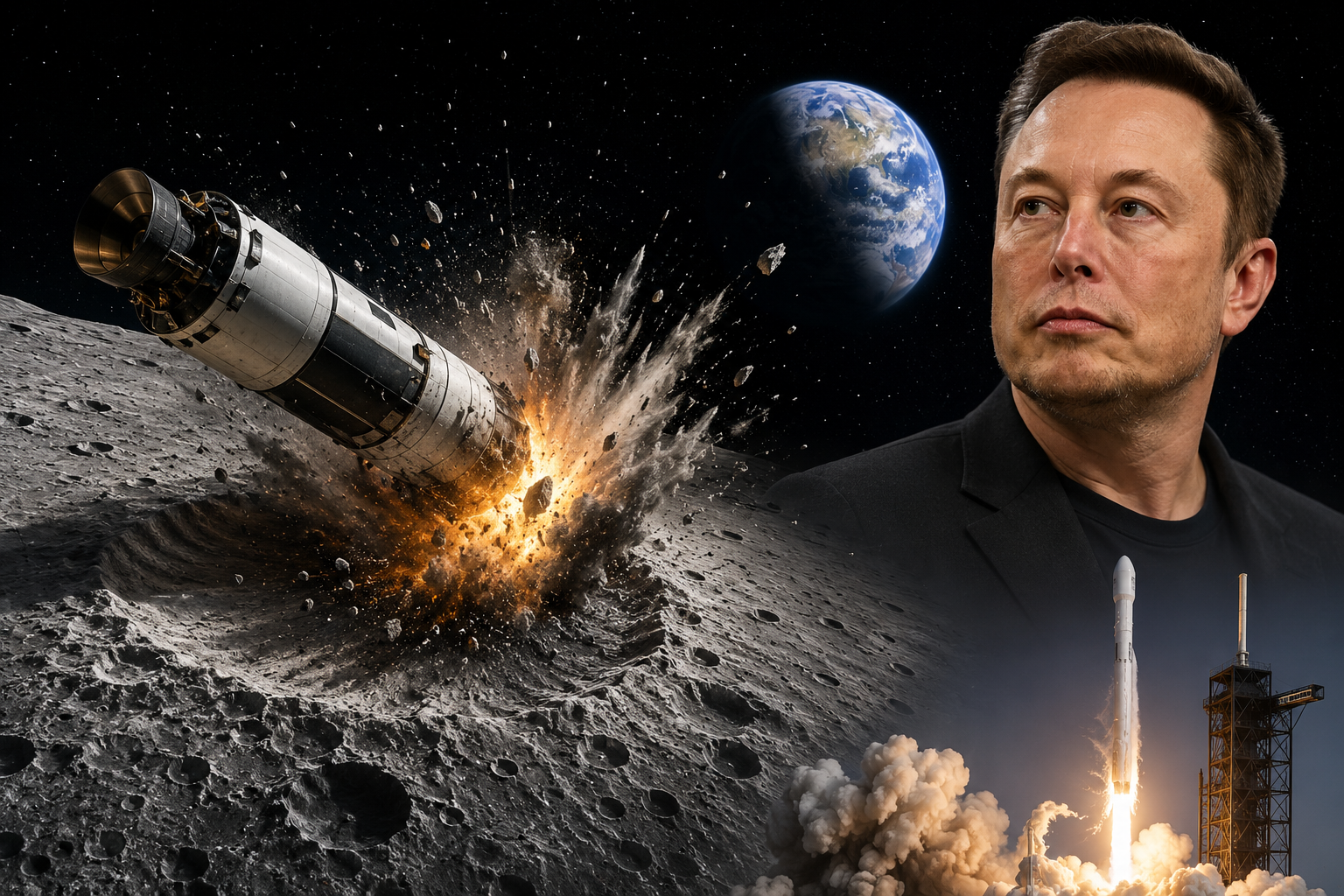
A large piece of a SpaceX Falcon 9 rocket is expected to crash into the Moon after spending around 18 months drifting through space. According to NASA, the impact will not pose any danger to Earth and will instead provide scientists with a valuable chance to learn more about the Moon and space collisions.
The object is the upper stage of a Falcon 9 rocket, which was launched in January 2025. The rocket successfully carried two lunar landers toward the Moon. After completing its mission, the upper stage separated from the spacecraft and was left floating in space. Since then, it has become a piece of space debris, also known as space junk.
Over time, the rocket stage continued to travel through space in a long orbit around Earth and the Moon. The gravity of the Earth, the Moon, and the Sun slowly changed its path. Even the tiny pressure from sunlight affected its movement. These small forces gradually pushed the rocket stage onto a collision course with the Moon.
Scientists say the rocket debris is currently traveling at around 5,400 miles per hour (about 8,690 kilometers per hour). It is expected to strike the Moon at approximately 07:35 BST.
The rocket stage weighs about 4,000 kilograms (8,800 pounds) and is roughly the size of a five-story building. When it crashes into the Moon, the impact is expected to throw nearly one million kilograms of lunar dust and rock into space. This material will eventually fall back onto the Moon's surface.
NASA has confirmed that the collision is not a threat to Earth. The Moon is located about 384,400 kilometers (238,855 miles) away from Earth, and any debris created by the impact will remain around the Moon. There is no risk of the debris reaching Earth or causing damage to people or satellites.
Although the impact sounds dramatic, events like this are not unusual on the Moon. The Moon has no thick atmosphere to protect it, so it is regularly hit by asteroids, meteoroids, and other objects from space. These impacts are one of the main reasons the Moon's surface is covered with thousands of craters.
This event is special because scientists know exactly what object is going to hit the Moon and when it will happen. That makes it much easier for researchers to observe the impact and study its effects.
Experts say the collision will likely not be visible with the naked eye from Earth. However, observatories and people with powerful telescopes may be able to see a brief flash of light when the rocket hits the Moon's surface.
NASA and astronomers around the world plan to collect information from the impact. They will study the size of the new crater, the amount of dust thrown into space, and how the Moon's surface reacts to such a collision. The findings could improve our understanding of the Moon's soil and help scientists prepare for future lunar missions.
Studying impacts like this is important because several countries and private companies are planning to send astronauts and spacecraft back to the Moon in the coming years. Learning how the Moon's surface responds to collisions can help engineers design safer equipment and better protect future missions.
Space debris has become a growing concern as more rockets and satellites are launched into space each year. While many rocket parts burn up in Earth's atmosphere after completing their missions, some remain in orbit or travel deeper into space. Scientists continue to track these objects to understand where they might end up and whether they could pose any future risks.
In this case, experts stress that there is no reason for public concern. The rocket debris is simply following the path created by gravity and natural forces in space. Instead of creating a danger, the event will provide a rare scientific opportunity.
The expected crash also highlights the importance of improving space debris management in the future. As space activity increases, agencies and private companies are working on ways to reduce the amount of junk left behind after launches.
For now, all eyes will be on the Moon as scientists wait to observe the impact. While most people will not be able to see it without special equipment, researchers hope the event will reveal new information about the Moon and help improve future space exploration.
The collision serves as a reminder that even after a rocket completes its mission, its journey through space may continue for years. In this case, a discarded rocket stage that once helped carry spacecraft toward the Moon is now set to become part of the Moon's long history of impact craters, offering scientists another chance to learn more about our closest neighbor in space.
Summary
A discarded part of a SpaceX Falcon 9 rocket is expected to crash into the Moon after drifting through space for about 18 months. NASA says the impact is not dangerous to Earth and will give scientists a chance to study what happens when a large object hits the Moon.
Content




×
![]()