
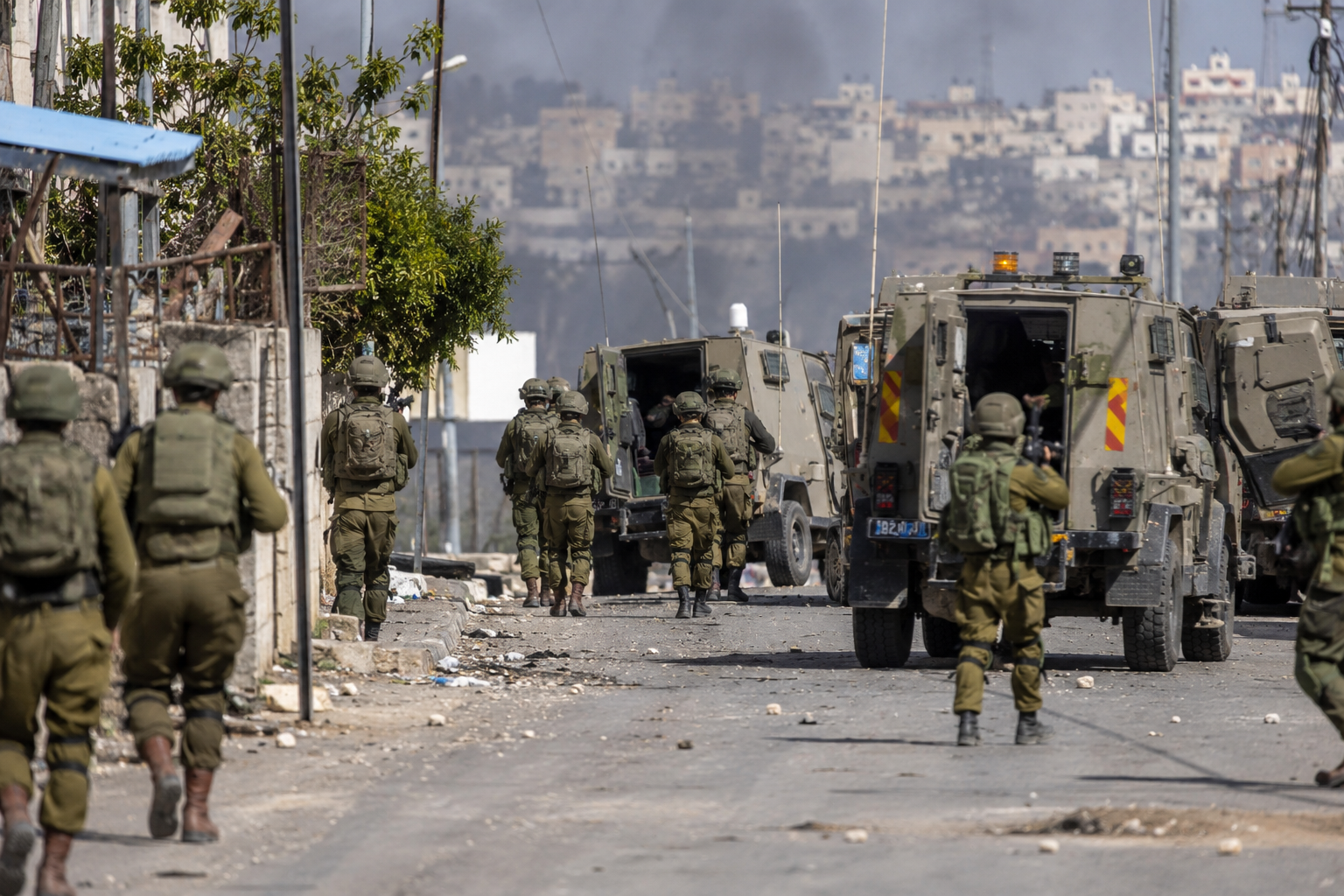
Israeli forces have started a large military operation in the Qalandiya refugee camp, located between Ramallah and occupied East Jerusalem in the occupied West Bank. The operation began with a heavy military presence and is expected to continue for several days, according to the Israeli military.
The Israeli army says the purpose of the raid is to remove what it describes as "terrorist infrastructure" inside the refugee camp. Israeli officials claim the operation is part of ongoing efforts to improve security and prevent attacks. Because of the operation, many roads leading into the camp have been closed, and soldiers have set up checkpoints in the area.
Qalandiya is one of the most important refugee camps in the occupied West Bank because of its location. It connects Ramallah and other northern West Bank cities with occupied East Jerusalem and areas farther south. Any military activity in this area can affect thousands of people who travel through it every day for work, school, medical care, and other daily needs.
Journalists have not been allowed to enter the refugee camp during the operation. However, residents have shared their experiences with local media and humanitarian organizations. Many people say Israeli soldiers entered their homes, searched rooms, questioned family members, and caused damage to furniture and personal belongings during the searches.
Some residents also reported that soldiers temporarily used private homes as places to question and investigate people. According to local accounts, several people were detained for questioning, while others were released after being interviewed.
Medical workers who responded to the area said they treated several injured people during the raid. They reported that some injuries were caused during confrontations with soldiers, while at least two people were said to have been seriously beaten. Ambulance crews continued to provide emergency medical assistance as the operation continued.
The military activity has created fear and uncertainty among families living in the refugee camp. Many parents kept their children inside their homes, while some local businesses remained closed because of the security situation. Residents are worried that the operation could continue for several more days, making daily life even more difficult.
The raid comes during Israel's election season, making the operation politically significant as well as a security issue. Some Israeli government officials have recently spoken about expanding military operations in refugee camps across the occupied West Bank. They argue that stronger military action is needed to stop armed groups and improve security.
Israel's defence minister has said he wants Israeli forces to maintain control over refugee camps in the occupied West Bank, similar to previous operations carried out in Jenin and Tulkarem. Those earlier operations caused widespread destruction in parts of the camps and forced more than 30,000 Palestinians to leave their homes. Many of those displaced families have still not been able to return.
Because of those past operations, many people in Qalandiya fear that their camp could face similar destruction or long-term military control. Residents worry that they may also be forced to leave their homes if the operation continues or expands.
Palestinian officials have strongly criticized the Israeli operation. They accuse Israel's right-wing government of using military actions in the occupied West Bank to gain political support before elections. According to Palestinian leaders, these operations are being presented as political achievements to appeal to voters who support tougher security measures.
Some Palestinian officials also expressed concern about the future of the UNRWA vocational training centre in Qalandiya. The centre provides education and job training for hundreds of Palestinian refugees. They fear that Israeli control over the area could affect the centre's work and reduce services for local residents.
UNRWA has long provided education, healthcare, and humanitarian assistance to Palestinian refugees across the region. Any disruption to its facilities could affect many families who depend on these services.
The situation has also drawn attention from humanitarian organizations, which continue to monitor developments closely. Aid groups have called for the protection of civilians and urged all sides to avoid actions that could place non-combatants at risk. They have also stressed the importance of allowing medical workers to safely reach injured people during military operations.
Tensions remain high across the occupied West Bank, where Israeli military raids have become more frequent over the past several years. Violence involving Israeli forces, Palestinian armed groups, and civilians has increased, leading to casualties, arrests, and damage to homes and infrastructure.
As the operation in Qalandiya continues, residents remain uncertain about what will happen next. Many families hope the raid will end quickly and that they will be able to return to normal life without further destruction or displacement. Israeli authorities maintain that the operation is necessary for security, while Palestinian officials continue to argue that it is causing unnecessary suffering and is being influenced by political considerations.
The coming days are expected to determine how long the military operation will last and what impact it will have on the people living in Qalandiya and the surrounding areas. Both local residents and international observers continue to watch the situation closely as events unfold.
Summary
Israeli forces have launched a major military raid in the Qalandiya refugee camp in the occupied West Bank. Residents say homes have been searched, property has been damaged, and several people have been injured. Israeli officials say the operation is targeting armed groups, while Palestinian officials claim the raid is politically motivated during Israel's election season.
Content
×
![]()