
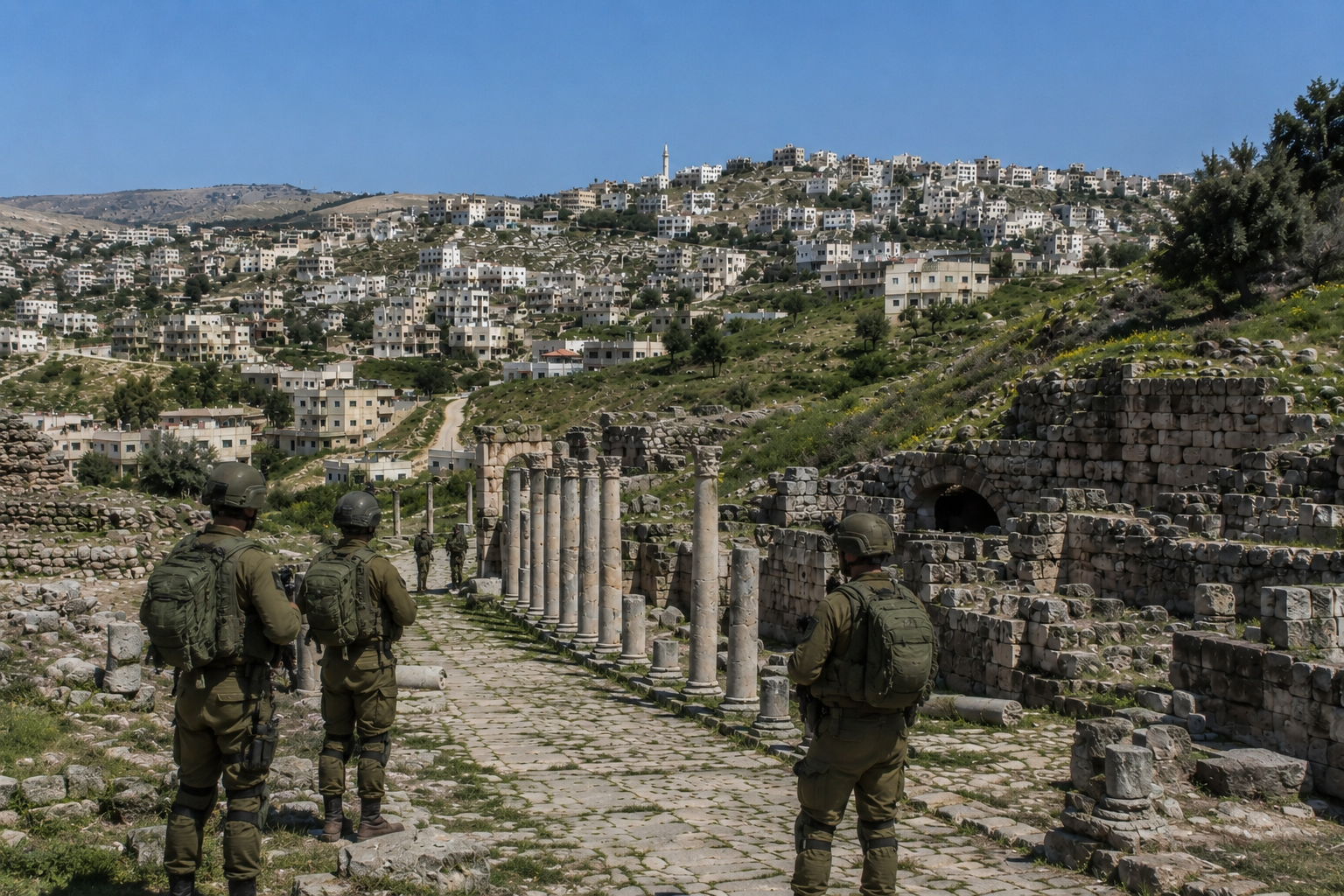
An important archaeological site in the occupied West Bank has become the centre of a growing dispute between Palestinian residents, Israeli authorities and international organisations.
The site is Sebastia, an ancient area located in the hills of the northern West Bank. It contains ruins from several periods of history, including the ancient Jewish period, Roman times, the Crusader period and the Ottoman era.
For Palestinian families living around Sebastia, however, the land is more than an archaeological site. Many families have farmed the surrounding land for generations, growing crops such as olives and using the land as an important source of income.
One Palestinian landowner, Abu Mudif, says Israeli authorities have informed him that his land is included in a large area of around 450 acres that is being taken for what Israel says is the protection and development of the archaeological site.
For him, losing the land is not simply a financial problem. He says the land is deeply connected to his family and identity and describes the loss as feeling like his "soul" is being taken away.
Palestinian residents are also worried that new restrictions could prevent them from farming or using their own land. Some landowners say they have been told that people will not be allowed to plough or use parts of the land once the development plans move forward.
A local restaurant owner, Nahed Sakha, also fears that his business could be affected. Residents believe that plans to change the entrance to the archaeological site could move visitors away from the village, hurting local shops and businesses.
The controversy has received international attention. UNESCO recently added Sebastia to its World Heritage List and also placed it on the List of World Heritage in Danger. UNESCO said one of the major threats to the site is the planned creation of the "Samaria" or "Shomron" national park, which could divide parts of the protected area.
The situation is complicated by the way the West Bank is divided into different administrative areas. Parts of Sebastia fall under Area B, where Palestinians have civil control while Israel maintains security control. Other parts fall under Area C, which is under full Israeli civil and security control.
Israeli authorities have also allocated around 113 million shekels for expanding control over archaeological sites in the West Bank. Some of the projects involve sites located in areas where the Palestinian Authority has administrative responsibilities.
Israeli activist Alon Arad, who works with the organisation Emek Shaveh, says archaeology should benefit all communities living around the sites. He argues that local Palestinian residents and the municipality should be involved in decisions about development and tourism.
According to the plans, the entrance to Sebastia's archaeological site could eventually be moved to another side of the large site. Palestinian residents fear this could reduce their connection to the ruins and limit the economic benefits they receive from tourists.
Israel rejects the idea that its actions are intended to erase Palestinian history. Israeli Foreign Minister Gideon Saar has argued that international decisions cannot change the historical connection of Jewish people to the West Bank.
Supporters of Israel's archaeological policies say the country has a responsibility to protect important historical and religious sites. Shmuel Browns, who has worked at the Herodium archaeological site, says Israel believes it must protect the area's archaeology, artifacts and history.
Sebastia is not the only site facing controversy.
At Herodium, a large ancient fortress-palace built by King Herod near Bethlehem, Israeli authorities have also begun taking control of around 80 acres of land. Israel says the purpose is to preserve and develop the archaeological site.
However, the Israeli organisation Peace Now has raised legal concerns about land expropriation in the West Bank. It argues that international law and previous Israeli court decisions place limits on taking Palestinian land for settlement purposes or for the exclusive benefit of Israeli citizens.
The issue has also reached Israel's parliament. Earlier this year, a proposed law would have transferred greater control over archaeological sites in the West Bank to Israel's heritage ministry. The proposal would also have given authorities broader powers to take land for archaeological preservation.
The bill passed its first reading in parliament in May but has since been put on hold because elections are approaching.
Critics say the proposed law shows how archaeology could become connected to wider political and territorial goals. They argue that excavations and historical narratives can be used to strengthen claims over land and increase Israeli control.
Israeli authorities and supporters of the policy, however, say the main goal is protecting important archaeological sites and preserving history.
For Palestinian residents of Sebastia, the concern is more immediate. They fear that archaeological development could gradually restrict their access to land that their families have used for generations.
The dispute therefore goes beyond ancient ruins. It involves land, history, tourism, identity and political control. As development plans continue, Palestinian residents and their supporters fear that protecting archaeology could come at the cost of their connection to the land.
The Sebastia dispute highlights a much wider conflict in the West Bank, where historical sites and archaeological discoveries are closely connected to modern political and territorial disputes.
Summary
Israel is facing accusations that it is using archaeology and the protection of ancient historical sites as a reason to take control of Palestinian land in the occupied West Bank. The controversy is especially strong around the ancient site of Sebastia, where Israeli authorities plan to take control of about 450 acres of land and develop a large national park. Palestinian landowners say the move could separate them from land their families have used for generations. Critics argue that archaeology is being used not only to protect history but also to strengthen Israeli control and settlement activity in the area.
Content




×
![]()