
A senior United Nations human rights official has warned that the ceasefire in Gaza is not bringing the peace and safety that people were hoping for.
Ajith Sunghay, who heads the Office of the UN High Commissioner for Human Rights in the occupied Palestinian territory, said that although a ceasefire has officially been declared, violence and serious human rights problems are still continuing.
Speaking to Al Jazeera, Sunghay said the situation does not look like a real ceasefire on the ground. According to him, there have been many reported violations of international humanitarian and human rights law since the war began in October 2023.
The UN official said his office has recorded around 1,150 people killed since the ceasefire announcement. He said most of those killed were civilians.
According to the figures mentioned by Sunghay, people have continued to die because of bombardments, naval strikes and gunfire in different parts of Gaza. The attacks are taking place even though a ceasefire is officially supposed to be in place.
Sunghay said the situation is especially difficult because Palestinians are currently able to access only around 30 percent of the Gaza Strip. Much of the territory remains under Israeli military control or is otherwise inaccessible to Palestinians.
He also said that the military control line inside Gaza continues to move. This makes it difficult for people to know where they can safely live, travel or seek help.
The UN has repeatedly raised concerns about the continued violence. Sunghay said the UN High Commissioner for Human Rights has spoken about the issue several times and warned that the current situation is not what a genuine ceasefire should look like.
“This is not the kind of ceasefire we want to see,” Sunghay said.
A normal ceasefire is generally expected to reduce or stop fighting and give civilians a chance to live safely, receive humanitarian assistance and begin rebuilding their lives. However, the UN official's comments suggest that many people in Gaza are still experiencing the effects of war despite the ceasefire announcement.
The humanitarian situation also remains extremely serious.
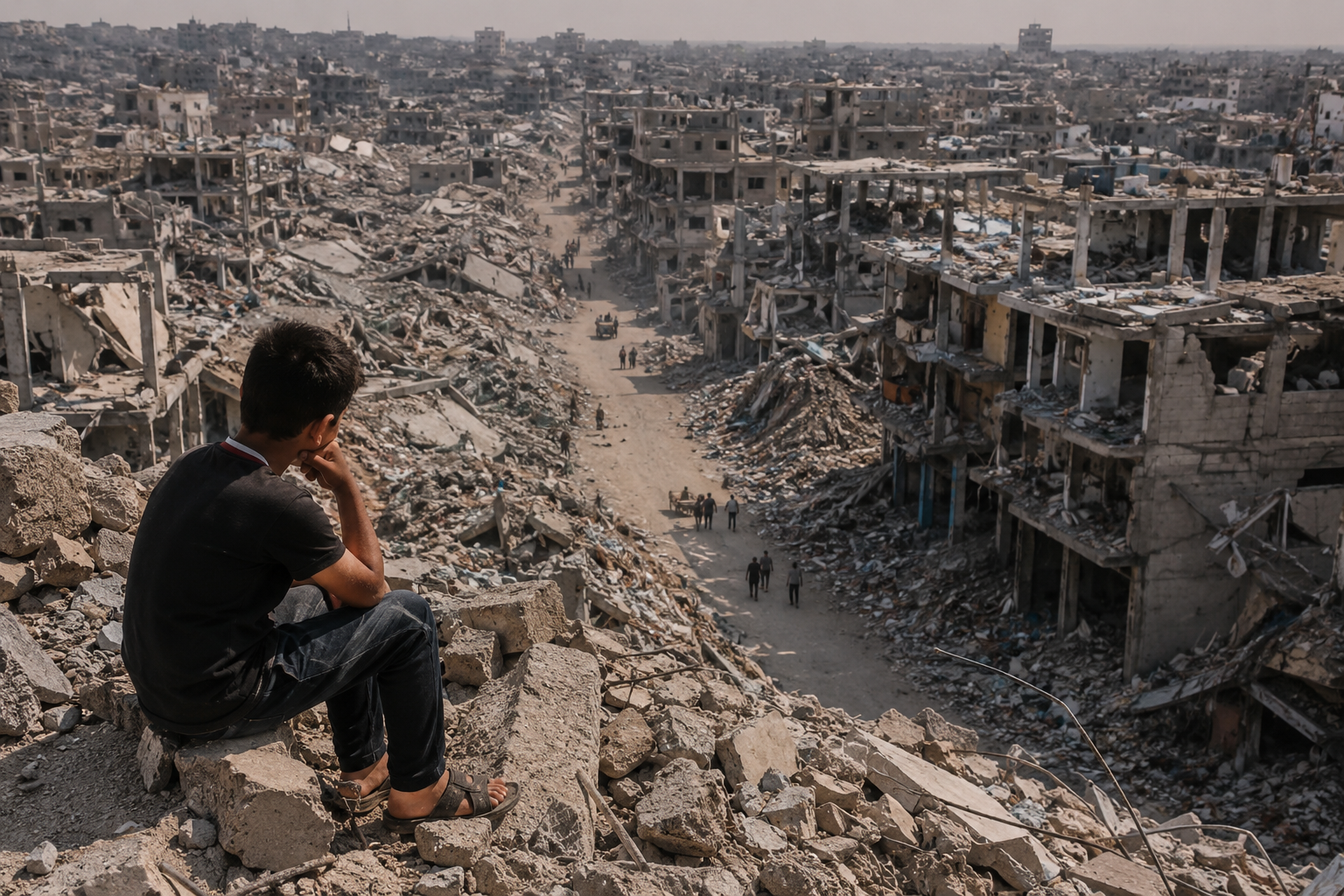
After nearly 1,000 days of war, Gaza's population continues to face major difficulties. Large numbers of people have been displaced from their homes, while access to food, clean water, medical care, shelter and other basic needs remains a major concern.
The limited area available to Palestinians has also increased pressure on civilians. With only part of Gaza accessible, many people are living in crowded and difficult conditions.
Sunghay was also asked whether international efforts, including reports to the UN Security Council and the International Criminal Court (ICC), have made a meaningful difference.
He said there have been some small steps and minor changes, but they have not been enough to make people in Gaza feel that their situation has truly improved.
The comments highlight the gap between diplomatic announcements and the reality faced by civilians.
For people living in Gaza, the most important issue is not simply whether a ceasefire has been declared. They need the violence to stop, safe areas to be respected, humanitarian aid to reach those who need it and restrictions on movement to be reduced.
The UN official said the larger crisis has not ended. He stressed that urgent action is still needed to protect civilians and improve the humanitarian situation.
The continuing deaths also raise concerns about whether the ceasefire can hold in the long term. If attacks and other forms of violence continue, civilians may remain at risk even while diplomatic efforts describe the situation as a ceasefire.
For Palestinians in Gaza, the priority remains basic safety and access to essential services. Many have already spent years living through war and displacement, and the continuing violence makes it difficult for them to rebuild their lives.
Sunghay's warning therefore sends a clear message: a ceasefire announcement alone is not enough. A real ceasefire must bring an actual reduction in violence and allow civilians to live safely.
The UN is continuing to call for stronger action, but Sunghay says the measures taken so far have not produced enough change for people on the ground.
As the humanitarian crisis continues, international pressure and diplomatic efforts remain focused on protecting civilians, stopping further deaths and creating conditions for lasting peace in Gaza.
Summary
A senior UN human rights official says the ceasefire in Gaza exists mostly on paper, while people continue to be killed and face severe humanitarian conditions. Ajith Sunghay says about 1,150 Palestinians have been killed since the ceasefire was announced, with most reportedly civilians. He says continued bombardments, naval attacks and gunfire show that the situation has not returned to normal. The UN is calling for urgent action because people in Gaza remain trapped in a small part of the territory and continue to face serious humanitarian problems.
Content
×
![]()