
For many people in Gaza, getting basic medical treatment has become extremely difficult. The healthcare crisis may no longer receive as much international attention as during major attacks on hospitals, but the medical system continues to suffer. Hospitals have been damaged, clinics have closed, and many people living in displacement camps cannot easily reach the few health facilities that are still operating.
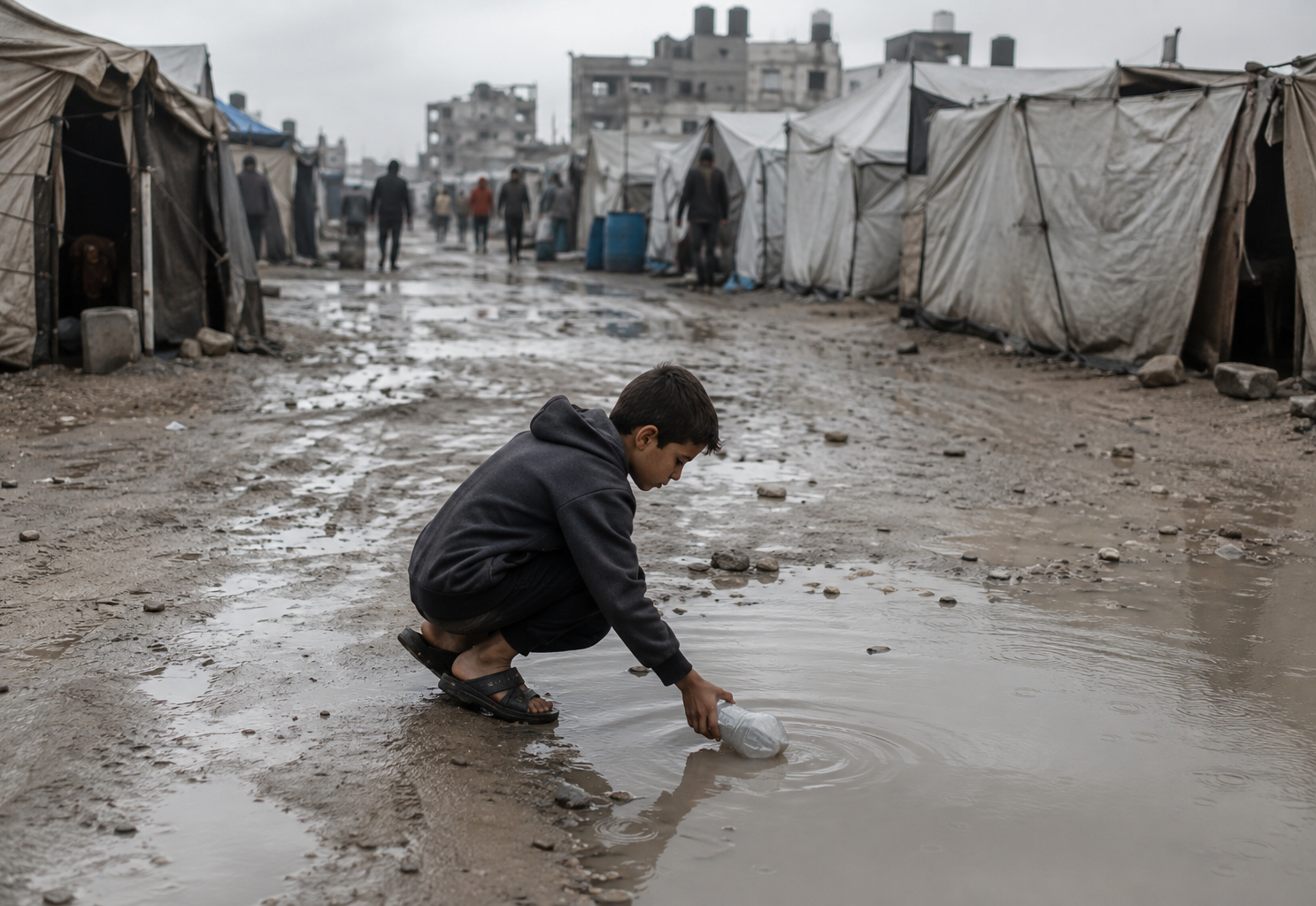
The situation is especially serious for families forced to live in temporary camps. Many of these people have lost their homes, belongings and sources of income during the war. They now live in tents or damaged buildings, often without proper sanitation, clean drinking water or regular medical services. These harsh living conditions can cause diseases to spread more easily and can make existing health problems much worse.
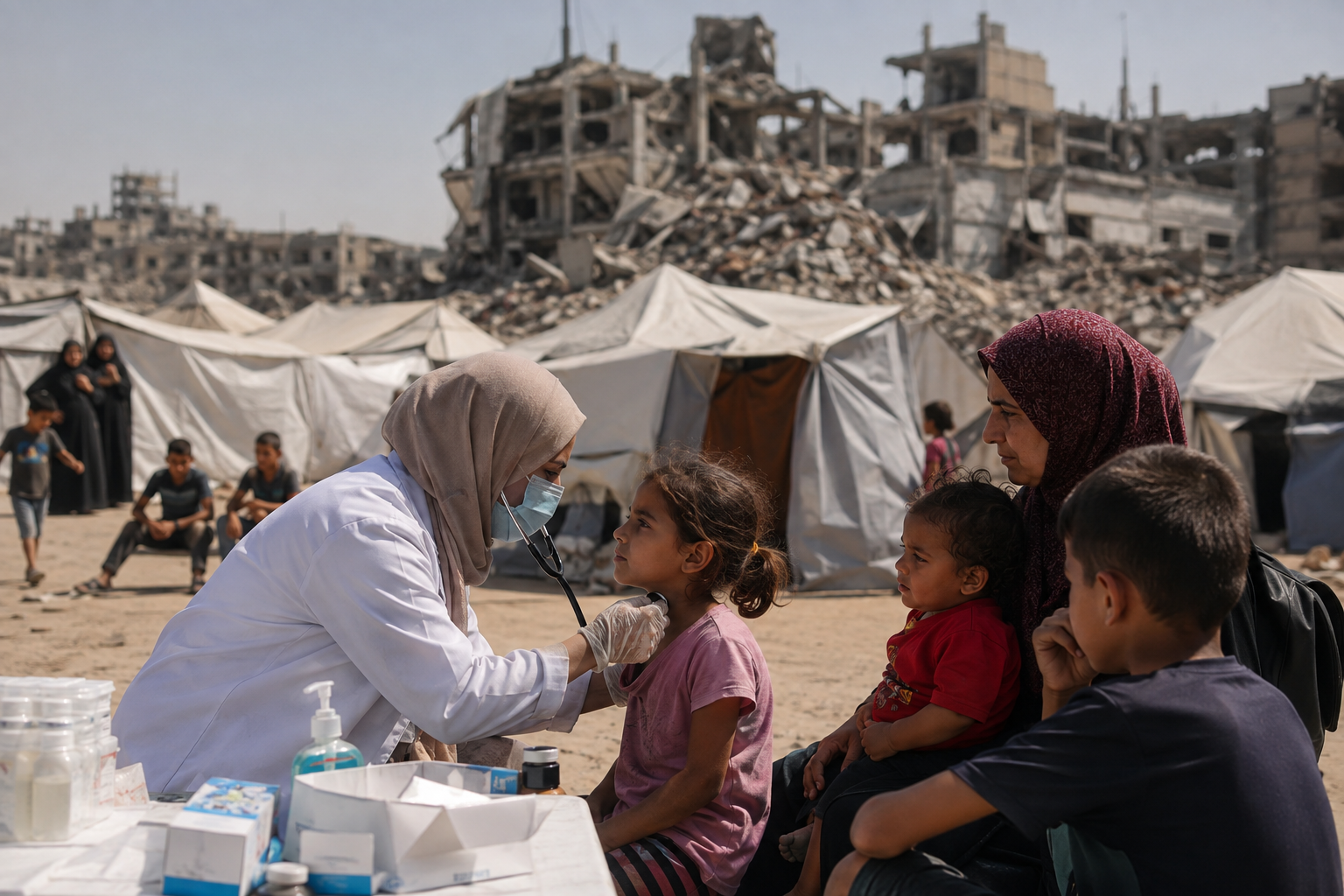
According to the article, a group of local medical workers recently visited an informal displacement camp at the site of the heavily damaged Hassan Salama school in Gaza City. Hundreds of displaced Palestinians are living there in tents because they have nowhere else to go. The camp reportedly has no organisation managing it and no regular medical services.
A small team of medics from a local private clinic visited the camp and provided free basic check-ups for one day. At least 150 patients came for treatment. The medical workers saw people suffering from high blood pressure, diabetes, kidney problems, hepatitis and scabies. They also treated children with illnesses such as chickenpox, diarrhoea, gastroenteritis and respiratory infections.
Even though the medical team could only provide basic care, the patients were very grateful. For many people in displacement camps, seeing a doctor has become a difficult and expensive journey. Some patients are weak from poor living conditions, while others are injured or unable to walk long distances. Extreme heat, exhaustion and lack of transportation make the problem even worse.
The article describes the case of a 46-year-old man who suffered a serious foot injury from shrapnel. He also had high blood pressure but could not easily get medical help. A nearby hospital was only partially functioning and mainly providing services for children and cancer patients. Walking to another hospital was not possible because of his injury.
To reach the nearest health facility, the man would have needed to pay around $8 for transportation. For many families living in displacement camps, this is a large amount of money. People are already struggling to buy food and other basic necessities. As a result, some sick people delay visiting a doctor even when they urgently need treatment.
Delaying medical care can have serious consequences. Without proper medicine and regular treatment, diseases such as high blood pressure and diabetes can become more dangerous. Infections can also worsen when people cannot receive treatment quickly. Poor sanitation, unsafe water and overcrowded living conditions create even more health risks, especially for children, older people and those with chronic illnesses.
The article argues that Gaza needs urgent action to rebuild its healthcare system. This does not only mean repairing major hospitals. Basic health clinics are also needed, particularly in areas where displaced families are living. Medical teams must be able to reach people who cannot travel long distances for treatment.
Before the war, UNRWA played an important role in providing basic healthcare to Palestinian refugees in Gaza. It operated 22 clinics across the Gaza Strip. However, according to the article, only six of those clinics are currently operational. The article also says that only 19 of Gaza’s 34 hospitals are partially functioning.
The word “partially” is important because many of these hospitals cannot provide all the services they once offered. Some hospital wards are damaged or closed, while shortages of medicine, equipment and medical staff have reduced the care available to patients.
Gaza reportedly has only about 2,200 inpatient beds available for a population of around 2 million people. Before the war, Al Shifa Hospital alone had around 700 beds. Today, the shortage of hospital space shows how badly Gaza’s healthcare system has been damaged.
Many important services, including laboratory tests, surgeries and specialised treatments, are no longer easily available. Some facilities lack medical supplies, while others do not have enough healthcare workers to provide all necessary services.
The result is that something as basic as visiting a doctor or getting medicine has become difficult for many Palestinians. People living in displacement camps are among those suffering the most because they are often far from medical facilities and have little money for transportation.
The article calls for a major healthcare intervention in Gaza. Hospitals need to be rebuilt, but basic clinics and mobile medical services are also urgently needed. Healthcare must reach the people who are most vulnerable instead of expecting sick and injured people to travel long distances.
For Gaza’s displaced population, access to healthcare is no longer something that can be taken for granted. Until medical facilities, supplies and basic services are restored, many people will continue to face the painful reality that getting treatment for an illness or injury has become a privilege rather than a basic right.
Summary
Gaza’s healthcare system is continuing to collapse, especially for Palestinians living in displacement camps. Many hospitals and clinics have been damaged or destroyed, while the few facilities still working can only provide limited services. Poor sanitation, unsafe water, extreme weather, lack of medicine and high transportation costs are making it difficult for sick and injured people to get treatment. Before the war, UNRWA operated 22 clinics across Gaza, but only six are currently functioning, according to the article. The situation has made basic healthcare difficult to access for many of Gaza’s most vulnerable people.
Content
×
![]()