
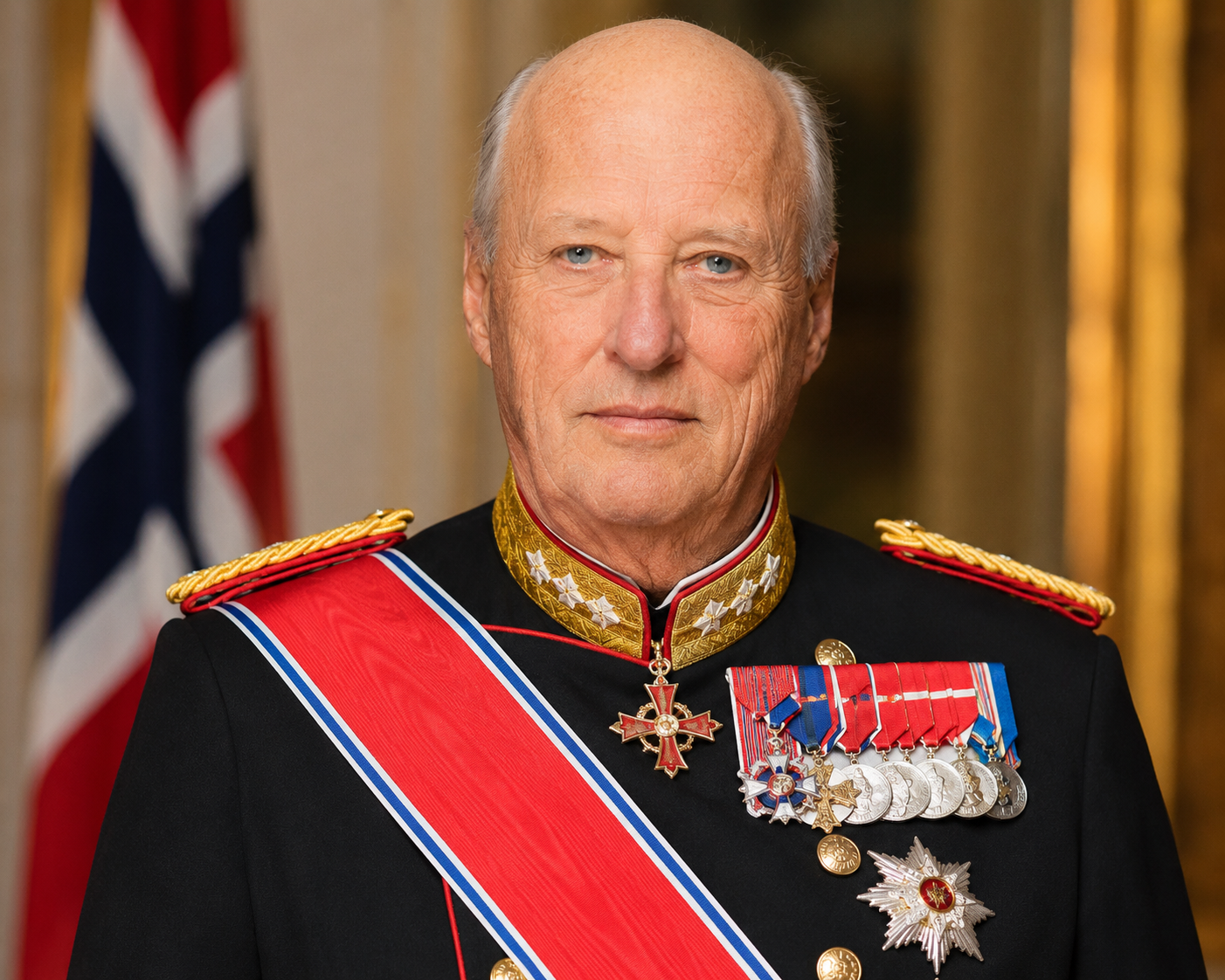
Norway is mourning the death of King Harald V, who passed away on Friday, August 28, 2026, at the age of 89. The Norwegian Royal Court announced that the king died peacefully at Oslo University Hospital Rikshospitalet in Oslo at 6:35 a.m. local time.
King Harald had been receiving medical treatment in hospital after suffering health problems. He was admitted on August 17 with haemolytic anaemia, a condition in which red blood cells are destroyed faster than the body can replace them. His condition later became more serious, and reports said he also developed a bacterial infection in his blood.
Born on February 21, 1937, Harald was the first Norwegian prince born in Norway in more than five centuries. During World War II, when Nazi Germany occupied Norway, he left the country as a young child with his mother and sisters and spent part of the war in the United States. The royal family returned to Norway after the war ended in 1945.
Harald became king on January 17, 1991, following the death of his father, King Olav V. He remained on the throne for more than 35 years. Although Norway is a constitutional monarchy where political power belongs to elected institutions, Harald played an important symbolic role and represented the country at home and abroad.
He became known as a warm, humble and modern monarch. He supported greater openness and inclusion in Norwegian society and was widely respected for his response to national tragedies, including the 2011 terrorist attacks. He was also an accomplished sailor and represented Norway in Olympic sailing competitions.
King Harald married Queen Sonja in 1968. Their marriage was notable because Sonja was a commoner, breaking with traditional royal expectations. They had two children, Crown Prince Haakon and Princess Märtha Louise.
Following Harald’s death, his son Crown Prince Haakon automatically became Norway’s new monarch. Haakon, 53, now takes the throne and begins a new chapter for the Norwegian royal family.
King Harald leaves behind a long legacy of service, stability and connection with the Norwegian people. His death marks the end of one of Norway’s most recognizable royal eras.
Summary
Norway’s King Harald V has died at the age of 89. The Royal Palace said he died peacefully at Oslo University Hospital on Friday, August 28, 2026, at 6:35 a.m. local time. Harald had been Norway’s king since 1991 and was Europe’s oldest reigning monarch. His son, Crown Prince Haakon, has now become Norway’s new king.
Content



×
![]()