
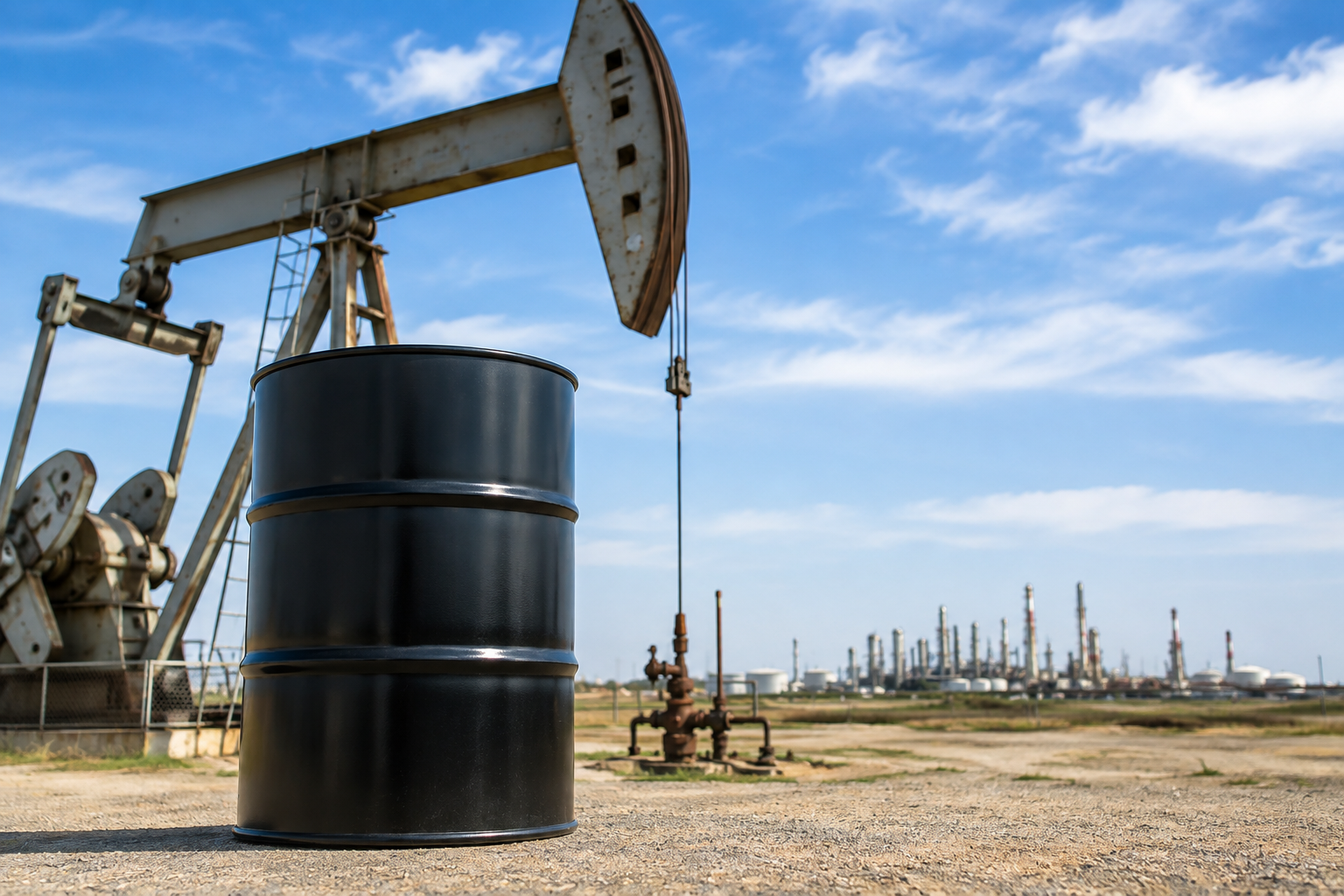
Oil prices have risen sharply after new attacks between the United States and Iran increased concerns about a longer conflict in the Middle East.
Brent crude futures, an important international oil price, rose $1.18, or about 1.3 percent, to $91.67 a barrel. US West Texas Intermediate (WTI) crude also increased by $1.27, or about 1.48 percent, reaching $87.03 a barrel.
The latest rise comes after the US and Iran exchanged missile strikes. The renewed fighting has created new fears that the conflict could continue for a long time. Traders are worried that a longer war could disrupt oil production and transportation in the region.
Oil markets are particularly focused on the Strait of Hormuz, a narrow but extremely important waterway between Iran and Oman. Before the conflict began in late February, around one-fifth of the world's oil supplies passed through the strait.
Any major disruption in the Strait of Hormuz could have a serious effect on global energy markets. If oil shipments are delayed or blocked, countries that depend heavily on imported energy could face higher costs. This could also push up fuel prices for consumers around the world.
Analysts say the latest missile exchanges are increasing expectations that the conflict may not end quickly. PVM analyst John Evans said the continuing attacks suggest the fighting could keep going even if it does not become a permanent war.
At the same time, diplomatic efforts are continuing. Qatar and Oman have been trying to help negotiate an agreement that could allow the Strait of Hormuz to reopen and reduce tensions. However, those efforts have so far failed to produce a clear breakthrough.
For now, traders are closely watching developments between the US and Iran. Any sign of further attacks could send oil prices higher, while a successful diplomatic agreement could reduce pressure on the market.
If the conflict continues, higher oil prices could eventually affect transportation, electricity, manufacturing and household costs in many countries. The situation therefore remains important not only for oil traders but also for the wider global economy.
Summary
Oil prices have climbed above $90 a barrel as renewed fighting between the United States and Iran increases fears of a longer conflict. Brent crude reached $91.67 a barrel, while US West Texas Intermediate rose to $87.03. Investors are also watching the Strait of Hormuz, a key route for global oil supplies. Efforts by Qatar and Oman to reopen the waterway have not yet produced a deal.
Content


×
![]()