
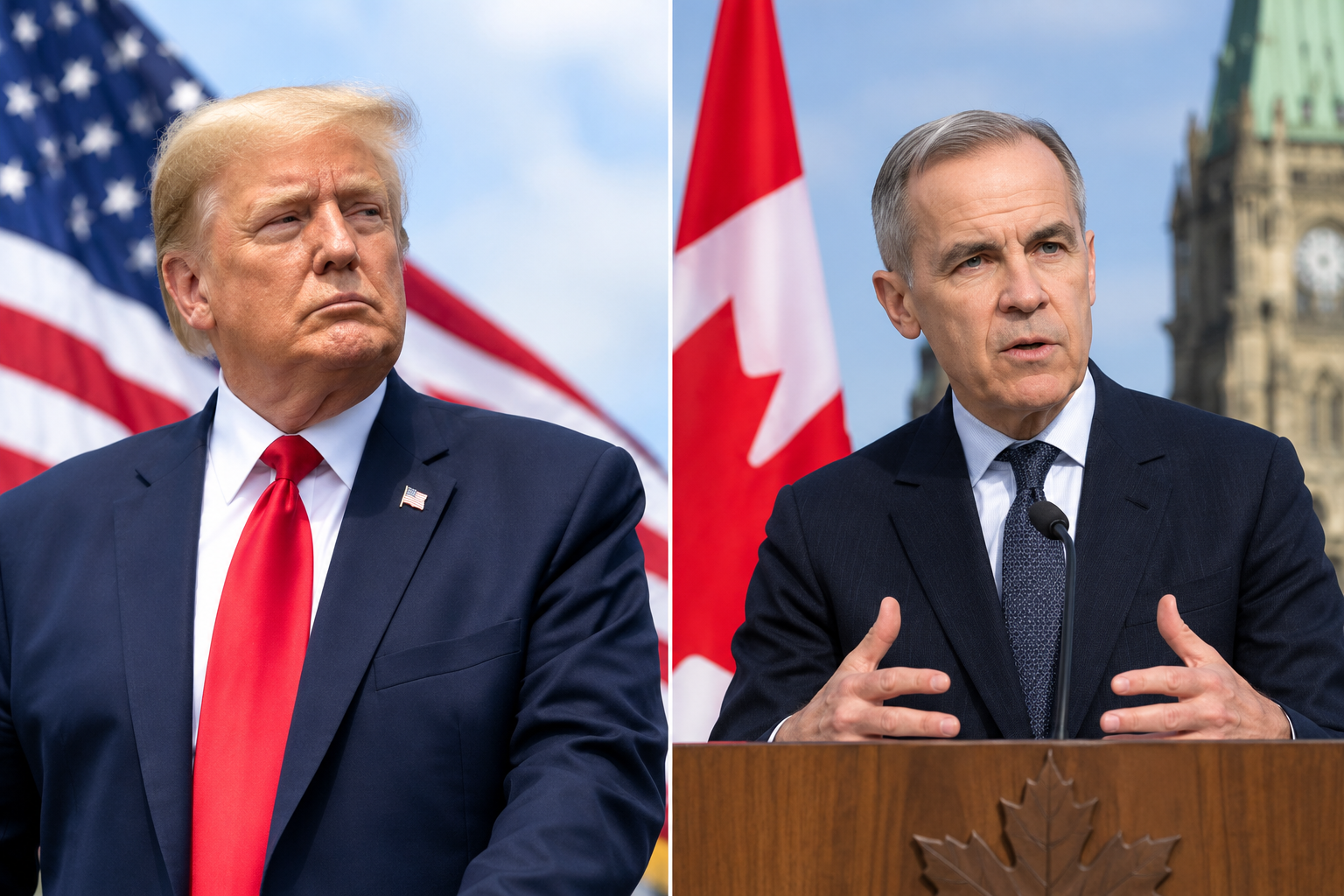
Canada and the United States are facing a deeper trade dispute after Canada introduced new tariffs on American products.
The new Canadian tariffs came into effect on Tuesday. They cover almost C$28 billion worth of US goods. Some of the new taxes are as high as 50%.
The tariffs affect a wide range of products, including steel, furniture, clothing and other goods imported from the United States. Canada says the tariffs are designed to respond to taxes that the US has placed on Canadian products.
The latest move comes after trade talks between Canada and the US broke down in late August. Since then, there has been little progress toward restarting negotiations.
Canadian Prime Minister Mark Carney has said his government still wants a long-term trade agreement with the United States. He said Canada is ready to return to the negotiating table when Washington is ready.
US Trade Representative Jamieson Greer, however, has said that the next move should come from Canada. He has criticized Canada's response and warned that the US could take additional action if Canada continues with retaliatory tariffs.
The dispute could have a major impact because Canada and the US have one of the world's biggest trading relationships. Their two-way trade was worth nearly $900 billion in 2025.
The United States has already placed tariffs on several Canadian products. These include a 25% tariff on Canadian cars and trucks, as well as tariffs on Canadian steel, aluminium and lumber. Other Canadian products have also faced tariffs.
Canada's latest measures are being described as a "dollar-for-dollar" response. In simple terms, Canada wants to impose similar economic pressure on American goods as the US is putting on Canadian products.
However, the Canadian government also faces a difficult problem: tariffs can hurt Canada's own businesses and consumers.
For example, Canadian seafood companies pushed the government to remove fresh fish and lobster from the latest tariff list. The seafood industry warned that tariffs could damage businesses on both sides of the border because Canadian and American seafood companies depend heavily on each other.
Canadian lobster is a good example. Lobsters caught in the United States are sometimes sent to Canada for processing before being shipped back to the US for sale. New tariffs could make this process more expensive and complicated.
Economists are also warning that tariffs could increase prices for Canadian consumers. Everyday products such as clothes, food and furniture could become more expensive if businesses have to pay higher costs for imported goods.
The Canadian Chamber of Commerce has also warned against allowing the dispute to become an endless cycle of new tariffs. Businesses are preparing for the possibility that the trade war could continue for a long time.
Canada's economy had shown some strength before the latest developments. The country's economy grew by 3.3% in the second quarter, while 181,000 jobs were added between April and July.
However, Canada lost around 41,000 jobs in August. The job losses came during a period of increased US tariffs and the collapse of trade negotiations.
At the same time, Canadian manufacturing has received some support as consumers and businesses have increasingly chosen products made in Canada.
Carney has also said Canada wants to reduce its dependence on the US by finding more international trading partners. Recent figures show that the percentage of Canadian exports going to the US has fallen from around 75% before the trade dispute to about 66%.
For now, both countries are under pressure to find a solution.
The US wants Canada to change its position, while Canada wants a stable and fair trade agreement. If negotiations do not restart soon, businesses and consumers on both sides of the border could face higher costs and more uncertainty.
The latest tariffs show that the Canada-US trade dispute is no longer a short-term disagreement. It could become a prolonged trade war unless both governments return to negotiations and reach a new agreement.
Summary
Canada has introduced new tariffs on about C$28 billion worth of goods from the United States, marking another major step in the growing trade dispute between the two countries. The new Canadian tariffs affect products such as steel, furniture, clothing and other American goods, with some tariffs reaching 50%. Canada says the measures are a response to US tariffs on Canadian products.
Both countries say they want a trade deal, but talks have stalled. Canadian Prime Minister Mark Carney says Canada is ready to negotiate, while US officials say Canada must make the next move. Businesses on both sides are now preparing for the possibility that the trade war could continue for a long time.
Content




×
![]()