
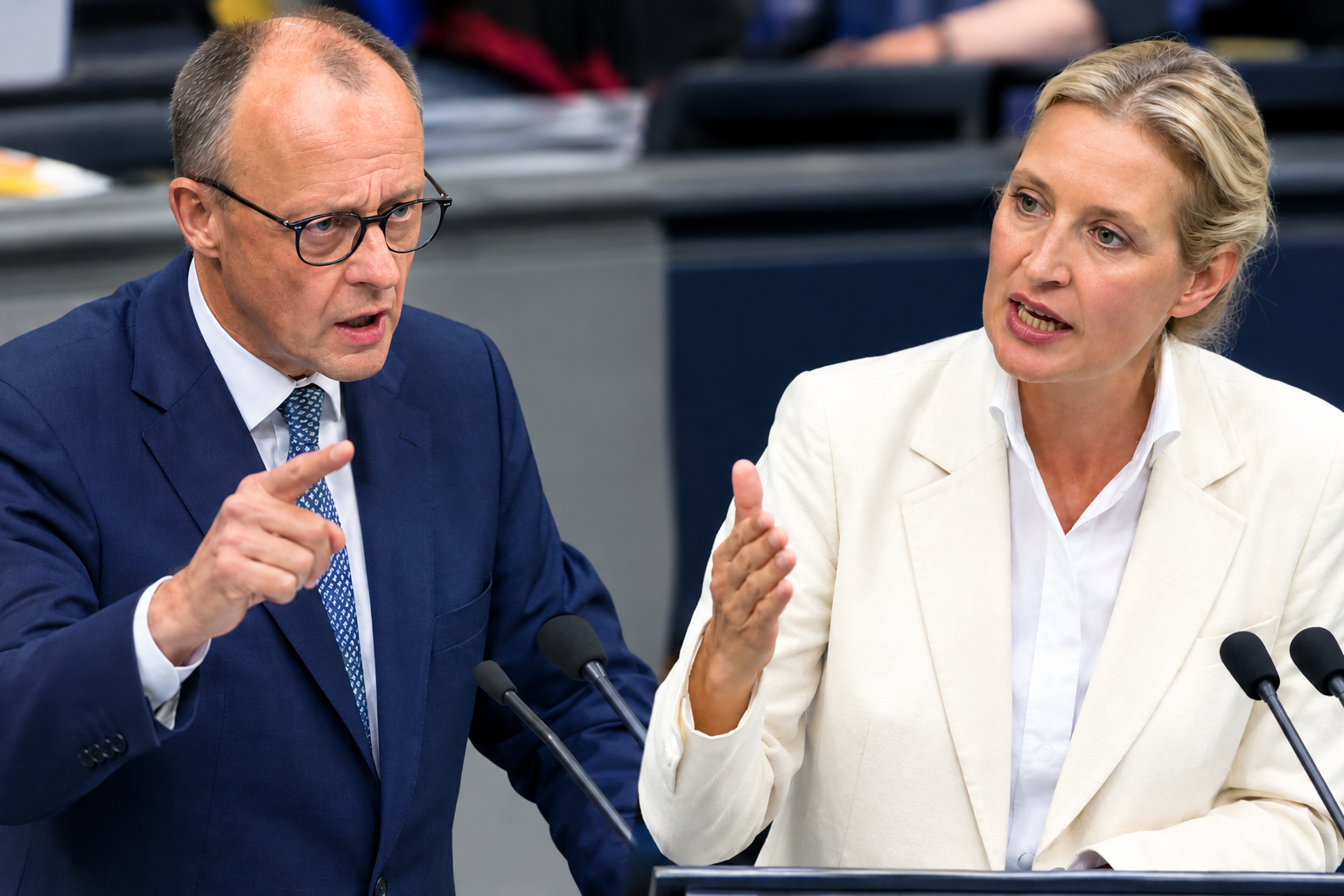
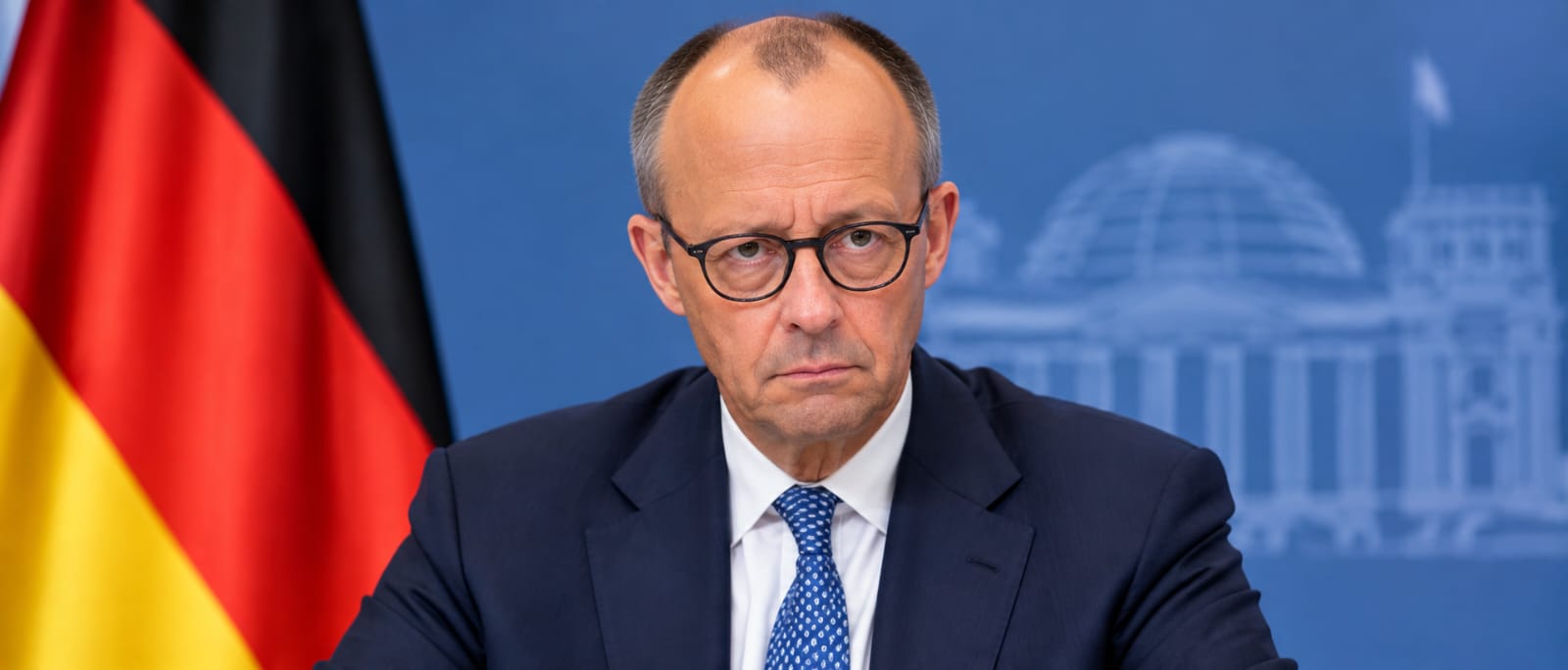
German Chancellor Friedrich Merz has clashed with Alternative for Germany (AfD) leader Alice Weidel in a tense debate in Germany’s parliament following the far-right party’s major election victory in the eastern state of Saxony-Anhalt.
The election result has created a major political challenge for Merz and his conservative Christian Democratic Union (CDU). The AfD won almost 44% of the vote in Saxony-Anhalt, becoming the strongest political force in the state. At the same time, the CDU suffered a major setback, with its share of the vote falling to about 17%.
The result is being seen as an important moment for German politics. No far-right party has previously taken control of one of Germany’s 16 states since the end of World War Two.
During the Bundestag debate, Weidel directly attacked Merz and his government. She said the CDU had been badly defeated in Saxony-Anhalt and argued that the coalition between Merz’s conservatives and the centre-left Social Democrats had failed.
Weidel also accused the government of damaging Germany’s economy and said voters had rejected Merz’s political approach. She argued that concerns about immigration and security were major reasons behind the AfD’s success.
Merz responded strongly. He described the AfD as a “destructive force” and criticized its policies on migration and its position toward Russia.
One of his strongest arguments focused on Germany’s workforce. Merz said that around one in six skilled workers in Germany has a migration background. He warned that the AfD’s proposed “remigration” policies could remove or discourage people who are important to the country’s economy.
Merz argued that Germany needs skilled workers from different backgrounds to keep hospitals, care homes, restaurants and other important parts of the economy operating.
He also accused the AfD of misleading voters. According to Merz, the party had suggested before the election that its candidate for state premier, Ulrich Siegmund, would only govern if the party won a majority. After falling short of a majority, however, the AfD began looking for possible political partners.
The AfD won enough seats to become the largest party but was three seats short of an outright majority. This means it would need support from another party to form a government.
The party has indicated that it could work with other political groups, including the left-wing populist Sahra Wagenknecht Alliance (BSW), if they support Siegmund as state premier.
The possibility of cooperation has also raised questions about Germany’s long-standing political “firewall” against the AfD. Mainstream parties have generally refused to form governments with the far-right party.
Some AfD politicians have argued that voters have given them a mandate to participate in government and that other parties should work with them.
The debate in Berlin became so heated that Bundestag President Julia Klöckner had to intervene. AfD lawmakers repeatedly heckled Merz, prompting Klöckner to warn that members could be removed from the chamber. She reminded lawmakers that parliament was not a football stadium.
Migration was one of the biggest points of disagreement between Merz and Weidel.
Weidel claimed that mass migration had contributed to security problems, including knife attacks and violence at train stations. Merz accepted that Germany needs to deport some people who do not have the right to remain in the country, but he argued that the government must distinguish between people who contribute to German society and those without permanent residency.
The AfD’s election success has also attracted international attention. US President Donald Trump praised the result and linked the AfD’s gains to what he described as Germany’s poor immigration policies.
The election has therefore become more than a state-level political event. It has intensified the debate over immigration, Germany’s economic future and whether mainstream parties should continue refusing to cooperate with the AfD.
For Merz, the result is a serious warning. His party remains part of the federal government, but the AfD’s growing popularity shows that many German voters are demanding a different approach, particularly on immigration and security.
The biggest question now is whether the AfD can turn its strong election performance into political power in Saxony-Anhalt. If it succeeds in finding a coalition partner, it could mark a historic development in German politics. If it fails, the result could still strengthen the AfD’s position as Germany’s leading opposition force and increase pressure on Merz to change his political strategy.
Summary
German Chancellor Friedrich Merz has strongly criticized the far-right Alternative for Germany (AfD) after the party’s major election victory in Saxony-Anhalt. In a heated parliament debate, AfD leader Alice Weidel said Merz’s government had failed and should step aside. Merz accused the AfD of harming Germany’s interests and warned that its migration policies could hurt the country’s economy and workforce. The AfD won almost 44% of the vote in Saxony-Anhalt but fell short of an outright majority.
Content
×
![]()