
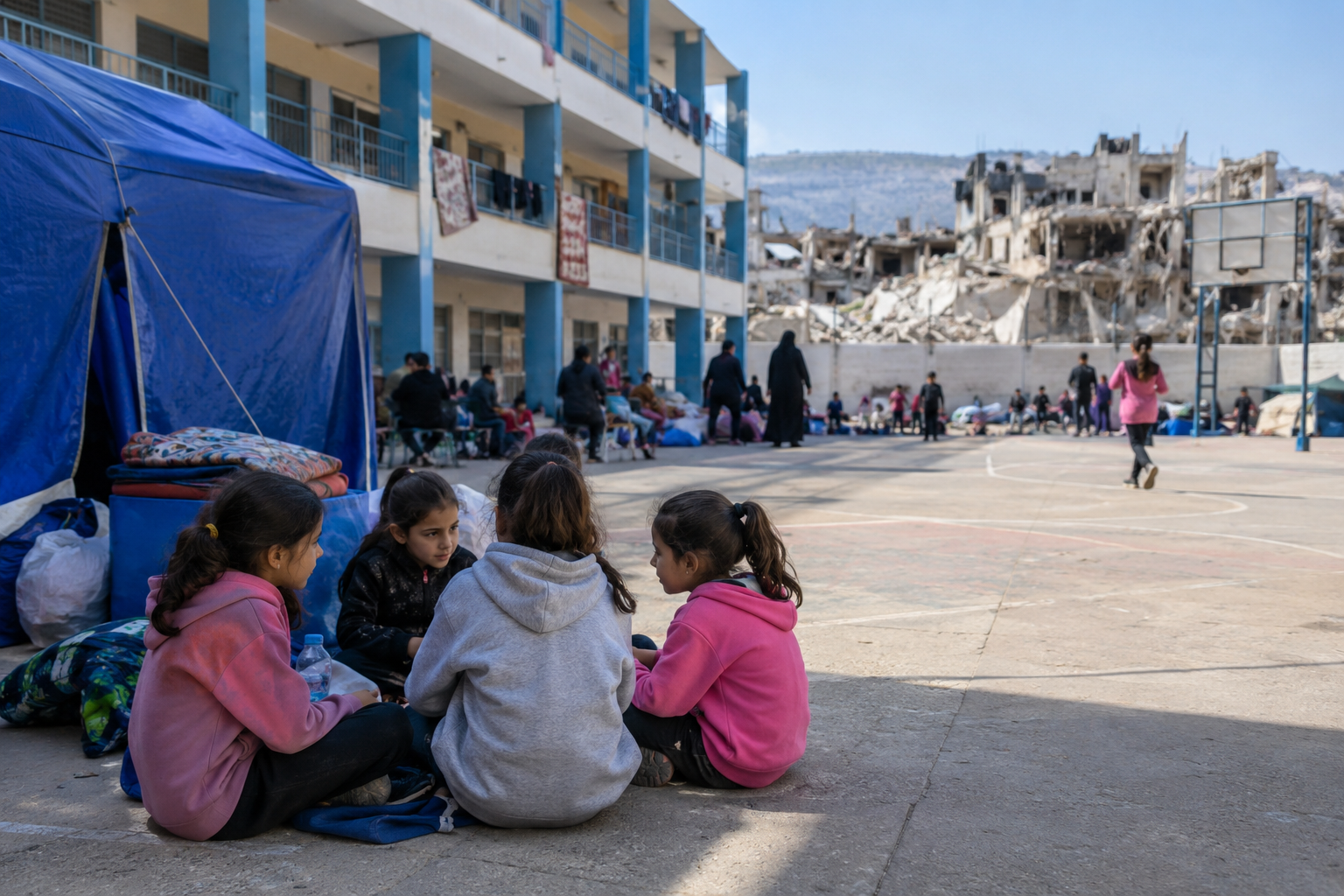
Schools across Lebanon are preparing to reopen for the new academic year on September 15, but many face a serious problem: they are still being used as shelters for people who were forced to leave their homes because of the fighting.
In southern Lebanon, villages such as Froun have suffered major destruction from Israeli air strikes. Many homes and buildings have been reduced to rubble, while some areas still do not have reliable water or electricity. Because of this, many displaced families cannot safely return home.
One school in Froun is preparing to welcome students again while also continuing to shelter displaced people. The school’s principal, Abbas Makki, said the school would not abandon families who still need a place to stay. The school will therefore have to serve two purposes at the same time: providing education for children and shelter for people who have lost their homes.
The situation became worse after fighting between Israel and Hezbollah intensified again in March. Israel carried out military operations in southern Lebanon, leading to the displacement of more than one million people. Many families fled southern Lebanon, the Bekaa Valley and areas around Beirut.
After a ceasefire and a framework agreement between Israel and Lebanon, some displaced people began returning to their villages. However, many returned to find their homes destroyed. Some families had no choice but to stay in schools or other temporary shelters.
In Froun, one displaced woman, Soujoud Ramadan, has even opened a small market near the school where she is staying. She sells snacks and basic household items because much of the town’s shopping area has been destroyed. Residents now have to travel to other villages to buy essential goods.
The Lebanese government wants all students to have access to education during the 2026-27 school year. Education Minister Rima Karami has said that displaced people living in schools should not be removed unless another suitable place is provided for them.
The government and local authorities are looking for different solutions. In some areas, displaced families are being moved to other buildings. In others, temporary classrooms are being planned because schools have been damaged or destroyed.
In Froun, officials are expected to provide temporary housing for displaced families so the school can return to normal educational activities. Other villages are also considering prefabricated classrooms to replace schools damaged during the fighting.
However, education experts warn that reopening schools will remain extremely difficult. According to UNESCO, more than 340 schools have been damaged, while hundreds more have been affected by fighting and displacement.
Schools need repairs, new equipment and safe classrooms. Teachers and students also need a stable environment where they can learn without fear of renewed violence.
The problem is especially serious because Lebanese children have already experienced repeated disruptions to their education over the past several years. Continued conflict could further damage their education and create long-term problems for an entire generation.
UNESCO education specialist Maysoun Chehab said schools cannot properly operate as both shelters and learning centres at the same time. If displaced families remain inside schools, classes may be delayed or there may not be enough space for students.
At the same time, simply forcing families out of schools would not solve the problem. They need safe and dignified places to live before they can leave.
Recent Israeli attacks in southern Lebanon have also created fears of renewed displacement. With fighting continuing in some areas, families who had returned home may once again be forced to leave.
Lebanon is therefore facing a difficult challenge as the new school year approaches. Authorities must find safe housing for displaced families while repairing damaged schools and helping children return to classrooms.
For many Lebanese families, reopening schools is about more than education. It is also a chance to bring some normal life back to communities that have suffered from war and displacement.
Summary
Schools in Lebanon are preparing to reopen on September 15, but many are still being used as shelters for people displaced by Israel’s war. Heavy damage to homes, schools, water and electricity systems has made it difficult for families to return. The government is trying to provide alternative shelters and temporary classrooms, but continued Israeli attacks are causing fresh displacement and creating new challenges for students and teachers.
Content


×
![]()