
AfD Leads in Mecklenburg-Western Pomerania
Exit polls showed the AfD receiving about 37% of the vote in Mecklenburg-Western Pomerania, narrowly ahead of the Social Democratic Party (SPD) at 35.5%. The CDU received around 5.5%, according to projections reported by Reuters.
The result would represent the CDU's weakest performance in a German state election in the postwar period if confirmed by the final count. The party was also close to the 5% threshold required for representation in the state parliament.
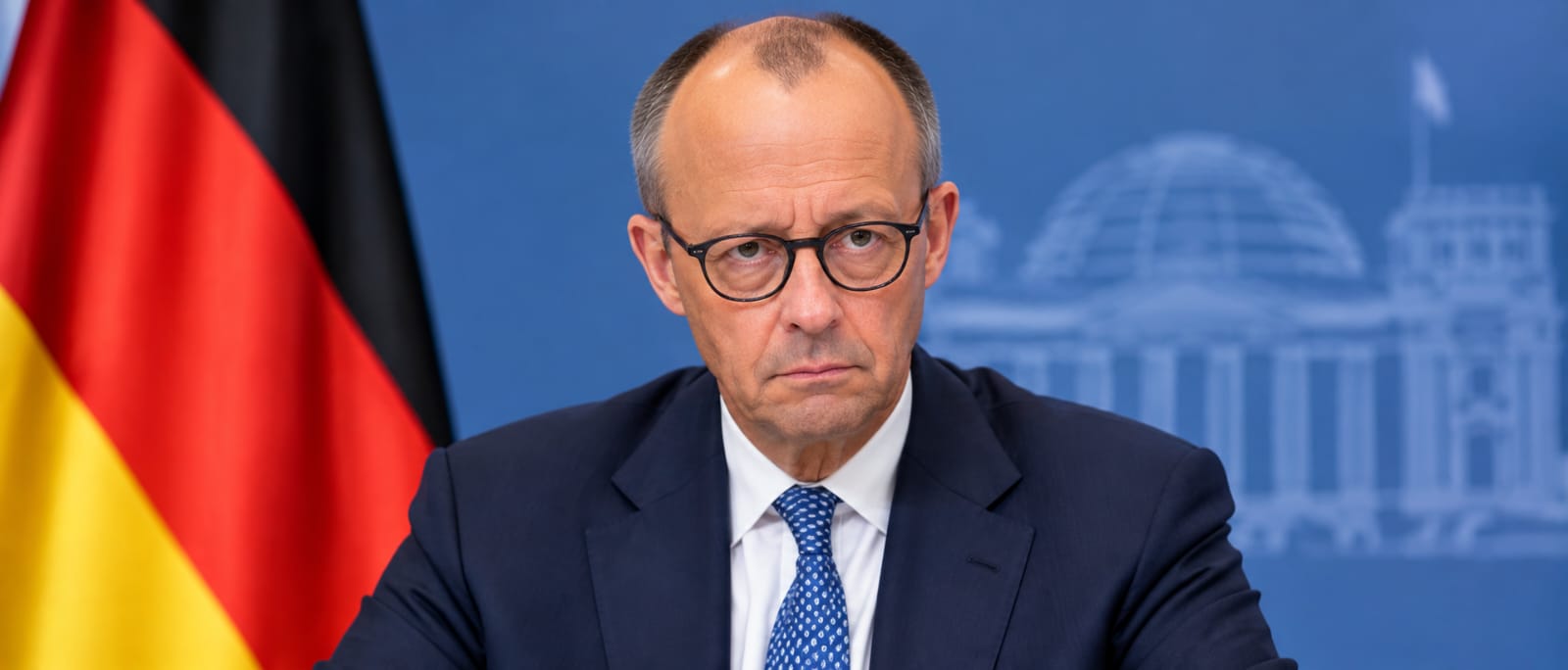
Merz Calls the CDU Result a “Disaster”
Speaking after the exit polls were released, Merz acknowledged the CDU's poor result in Mecklenburg-Western Pomerania and described it as a "disaster."
Despite the setback, Merz said Germany needs reforms to address economic difficulties and political divisions. He argued that the country should not simply return to previous policies and said his government would continue working on reforms.
Die Linke Leads in Berlin
Berlin produced a different political picture. Preliminary projections placed the left-wing Die Linke in first place, followed by the CDU and other parties.
Later projections reported by German media put Die Linke at around 24.5%, the CDU at 20%, the AfD at 16%, the Greens at 15% and the SPD at 12%.
The election campaign in Berlin was heavily focused on housing costs, rents and the city's shortage of affordable homes.
AfD Gains Attention Across Eastern Germany
The Mecklenburg-Western Pomerania result comes only two weeks after the AfD recorded a strong result in Saxony-Anhalt, where it received about 44% of the vote.
The party has campaigned on issues including immigration, opposition to continued military support for Ukraine and closer relations with Russia. These positions have contributed to its growing support in several eastern German states.
Other parties in Mecklenburg-Western Pomerania had ruled out forming a coalition with the AfD before the election, meaning that finishing first does not automatically give the party control of the state government.
Economic and Social Issues Shape the Vote
Economic concerns, rising costs and regional inequalities have been important issues in eastern Germany.
Reuters reported that eastern German states continue to face differences in wealth, demographic pressures and population changes compared with western Germany. These issues have contributed to political dissatisfaction in parts of the region.
In Mecklenburg-Western Pomerania, shortages of skilled workers and an aging population are also major challenges for the regional economy.
Berlin Election Focuses on Housing
Housing was one of the main issues in Berlin, where rents have risen substantially and the city faces a continuing shortage of homes.
Reuters reported that Berlin could need about 211,000 additional homes by 2040. The major parties have proposed different approaches to increasing housing supply and addressing rent costs.
The Berlin result also showed the AfD gaining compared with its previous state election performance, although it remained behind Die Linke and the CDU in the preliminary results.
Pressure on Merz Continues
The state elections come after recent setbacks for the CDU and growing internal discussion about Merz's leadership.
Before the latest vote, Merz had said he intended to remain in office and continue his reform agenda. Reuters reported that pressure on his government had increased following poor polling and the AfD's strong performance in eastern Germany.
The state election results therefore create another political challenge for Merz, although their direct effect on the federal government will depend on developments within the CDU and the wider governing coalition.
Key Points
- The AfD was projected to lead in Mecklenburg-Western Pomerania with about 37%.
- The SPD followed with about 35.5%.
- The CDU received around 5.5% in the state, according to exit projections.
- Merz described the CDU's result as a "disaster."
- Die Linke led the preliminary results in Berlin.
- Housing and rents were major issues in Berlin.
- The AfD's strong performance continues a series of gains in eastern Germany.
- Other parties in Mecklenburg-Western Pomerania had ruled out coalition cooperation with the AfD.
Source
This article is based on exit-poll projections, election reporting and statements from German political leaders.
Comments
Sign in to join the conversation