
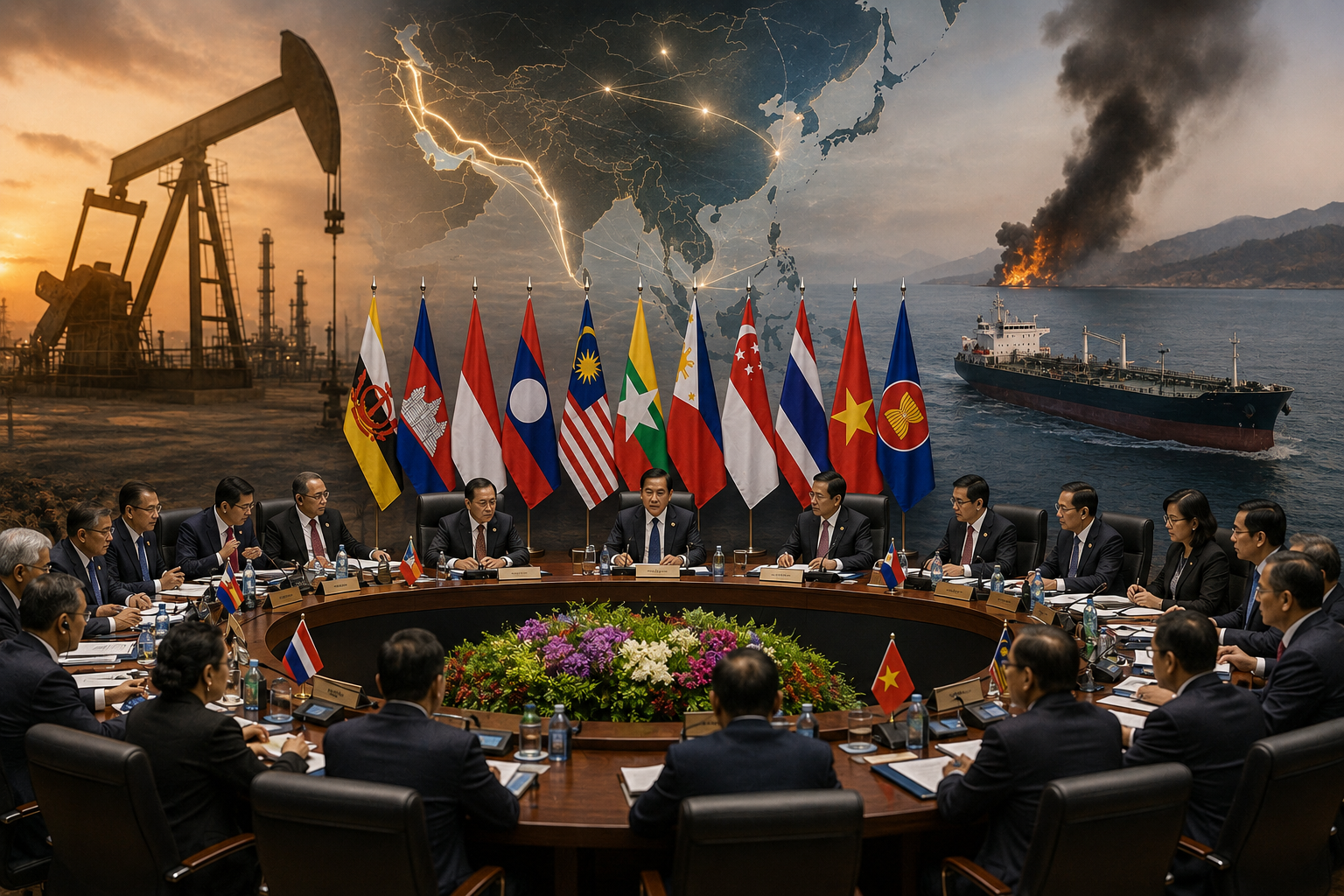
Leaders from Southeast Asian countries discussed the impact of the Iran war during the ASEAN summit. Philippine President Ferdinand Marcos Jr said the conflict has increased living costs and threatened jobs both in Southeast Asia and for workers in the Middle East.
Marcos urged ASEAN countries to work together to protect energy supplies and improve regional connections. The group is expected to release a statement calling for the reopening of the Strait of Hormuz and better coordination during international crises.
The conflict and the blockage of the Strait of Hormuz have badly affected Southeast Asia because many countries in the region depend on oil and gas passing through the waterway.
The Philippines declared a national emergency earlier this year due to energy shortages linked to the war. Countries including Thailand, Vietnam, Indonesia, and Malaysia have introduced energy-saving measures such as price controls and work-from-home policies.
ASEAN is also discussing plans for an energy-sharing agreement and a regional power grid to improve electricity cooperation by 2045.
Experts say ASEAN may push for stronger economic cooperation with partner countries in Asia-Pacific and Latin America. The bloc is also expected to stress the importance of international law, national sovereignty, and freedom of navigation.
The summit also comes amid tensions in the South China Sea, where both China and the US and its allies recently held military exercises.
Summary
Southeast Asian leaders say the Iran war and disruption in the Strait of Hormuz are causing energy shortages and rising prices across the region. ASEAN members are now discussing stronger cooperation on energy, trade, and regional security.
Content


×
![]()