
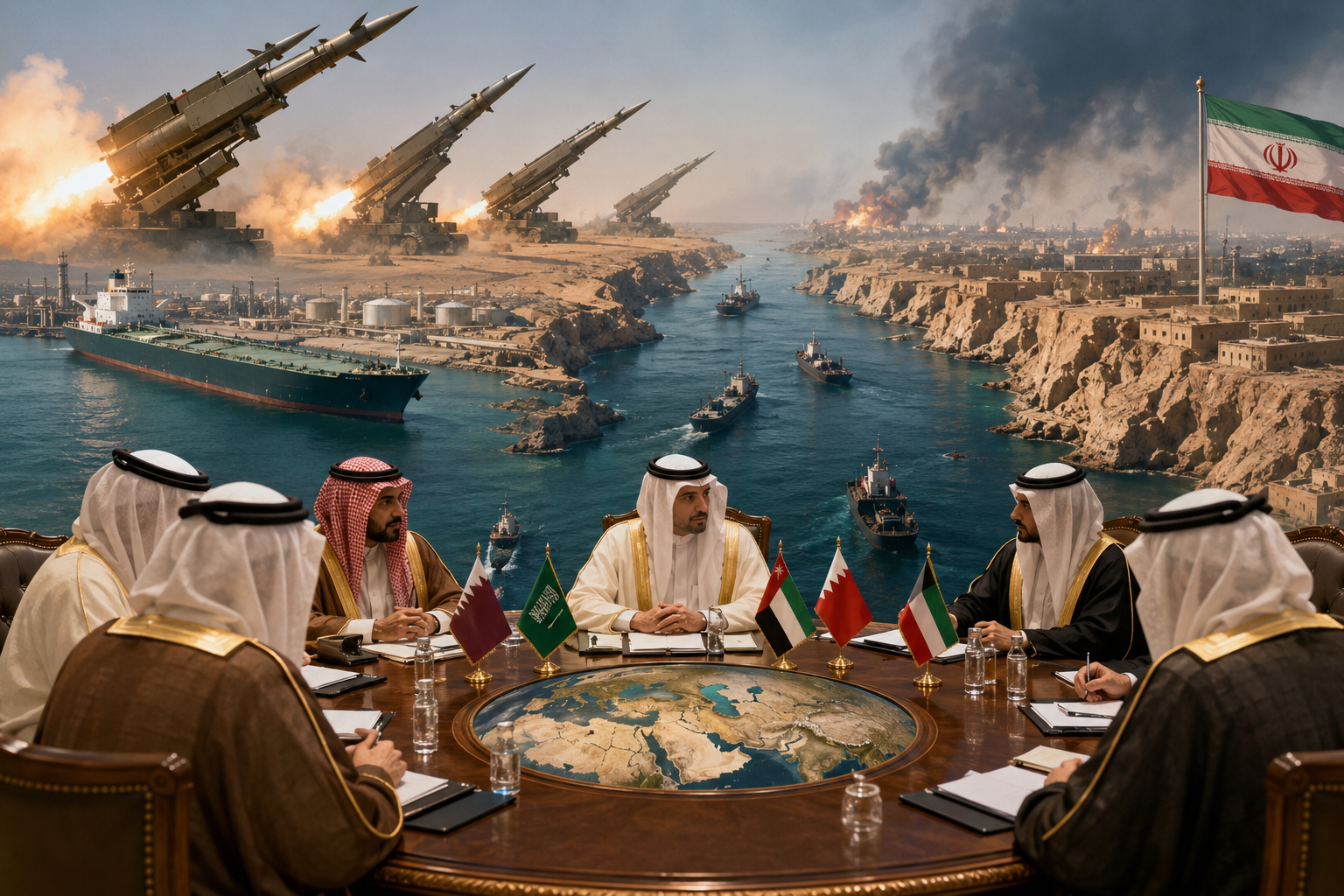
Gulf countries are trying to reduce tensions in the Middle East as fears grow over the crisis involving the United States, Israel, and Iran. Leaders in the Gulf region are worried that the conflict could damage their economies, threaten security, and create instability across the area.
Dania Thafer, executive director of the Gulf International Forum, explained that Gulf states are mainly focused on finding a peaceful solution. According to her, these countries do not see Iran’s nuclear programme as the biggest danger at the moment. Instead, they are more concerned about the Strait of Hormuz and Iran’s missile activities.
The Strait of Hormuz is one of the world’s most important shipping routes for oil and gas. A large amount of global energy supplies passes through this narrow waterway every day. If the route is blocked or disrupted, oil prices could rise sharply and many economies around the world could suffer. Gulf countries depend heavily on safe trade routes, so keeping the strait open is a top priority for them.
Thafer also pointed out that Gulf nations are worried about Iran’s missile programme. In recent years, missiles launched by Iran or groups linked to Iran have targeted areas in the Gulf region. These attacks have increased concerns about regional security and the safety of civilians and important infrastructure.
She said there is a difference between the priorities of Gulf leaders and those of former US President Donald Trump. Trump has strongly focused on stopping Iran’s nuclear programme, while Gulf states are more concerned about immediate security threats and regional stability. This difference shows that countries involved in the crisis may not always agree on the best way to handle the situation.
At the same time, Gulf countries do not want a major war in the region. A large conflict could hurt businesses, stop investments, and create long-term instability. Many Gulf states have spent years building their economies, improving tourism, and attracting international companies. War could damage these efforts and affect millions of people living in the region.
Thafer described the current situation as a “limbo” with low-intensity conflict. While there is no full-scale war, tensions remain high and uncertainty continues. Gulf countries are hoping diplomacy and dialogue can prevent the situation from becoming worse.
Regional leaders are likely to continue pushing for negotiations and peaceful discussions between all sides. Their main goal is to protect economic stability, maintain security, and avoid a wider conflict that could impact the entire Middle East and the global economy.
Summary
Gulf countries are calling for peace and stability as tensions grow between the United States, Israel, and Iran. Experts say Gulf leaders are more worried about the safety of the Strait of Hormuz and Iran’s missile attacks than Iran’s nuclear programme. They want a peaceful solution to avoid a larger conflict in the region.
Content
×
![]()