
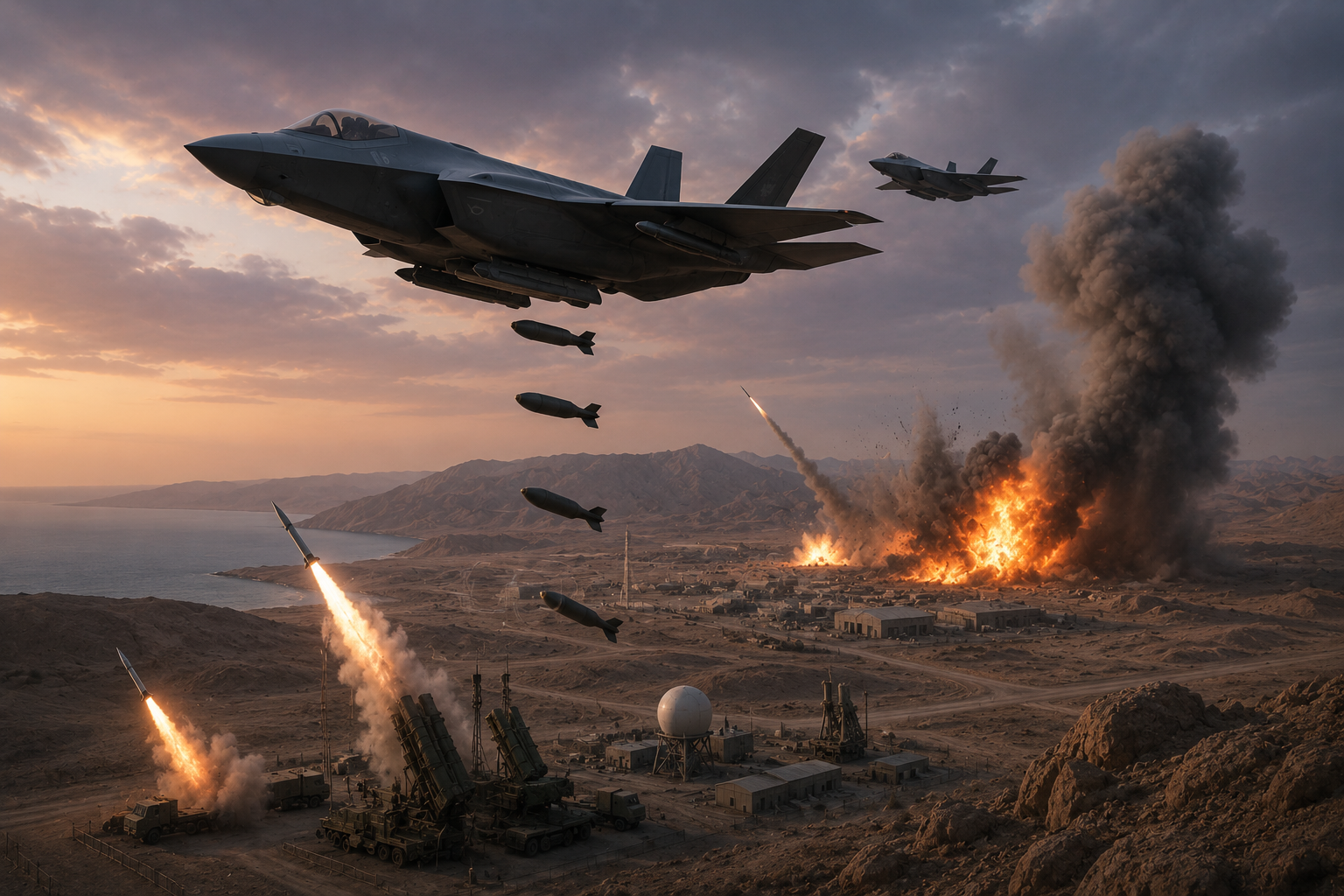
The United States has launched fresh air strikes on targets in southern Iran as tensions in the Middle East continue despite ongoing peace negotiations. According to US Central Command (CENTCOM), the attacks targeted Iranian missile launch sites and boats allegedly involved in laying mines near the Strait of Hormuz.
US officials described the operation as “self-defence strikes” aimed at protecting American troops and military assets in the region. Reports say explosions were heard near Bandar Abbas and other coastal areas in southern Iran.
The strikes come during sensitive talks between US and Iranian negotiators in Qatar, where both sides are discussing a possible agreement to reduce tensions and reopen shipping routes in the Strait of Hormuz. The waterway is one of the world’s most important oil trade routes, carrying a large share of global oil and gas supplies.
According to reports, the US accused Iranian forces of threatening naval security by placing mines in the strait. American officials said the military action was limited and defensive, stressing that Washington does not want a wider war.
Iranian media reported damage in several southern areas and strongly condemned the strikes. Iranian officials called the attacks a violation of international law and warned that continued military pressure could further destabilise the region.
Despite the military escalation, diplomatic efforts are still continuing. US Secretary of State Marco Rubio said negotiations remain active and focused on reopening the Strait of Hormuz, reducing regional tensions and discussing future nuclear-related issues.
Global markets are also closely watching the situation because any disruption in the Strait of Hormuz can quickly affect oil prices, shipping costs and inflation worldwide. Analysts warn that prolonged instability could deepen economic pressure on many countries already facing high living costs.
The latest strikes show that although both sides are talking about peace, the situation remains highly fragile. Many international observers fear that even limited military actions could increase the risk of a broader regional conflict if diplomacy fails.
Summary
The United States carried out new air strikes on military targets in southern Iran, saying the attacks were meant to protect American forces. The strikes happened while peace talks between Washington and Tehran continue over the Strait of Hormuz and regional tensions.
Content


×
![]()