
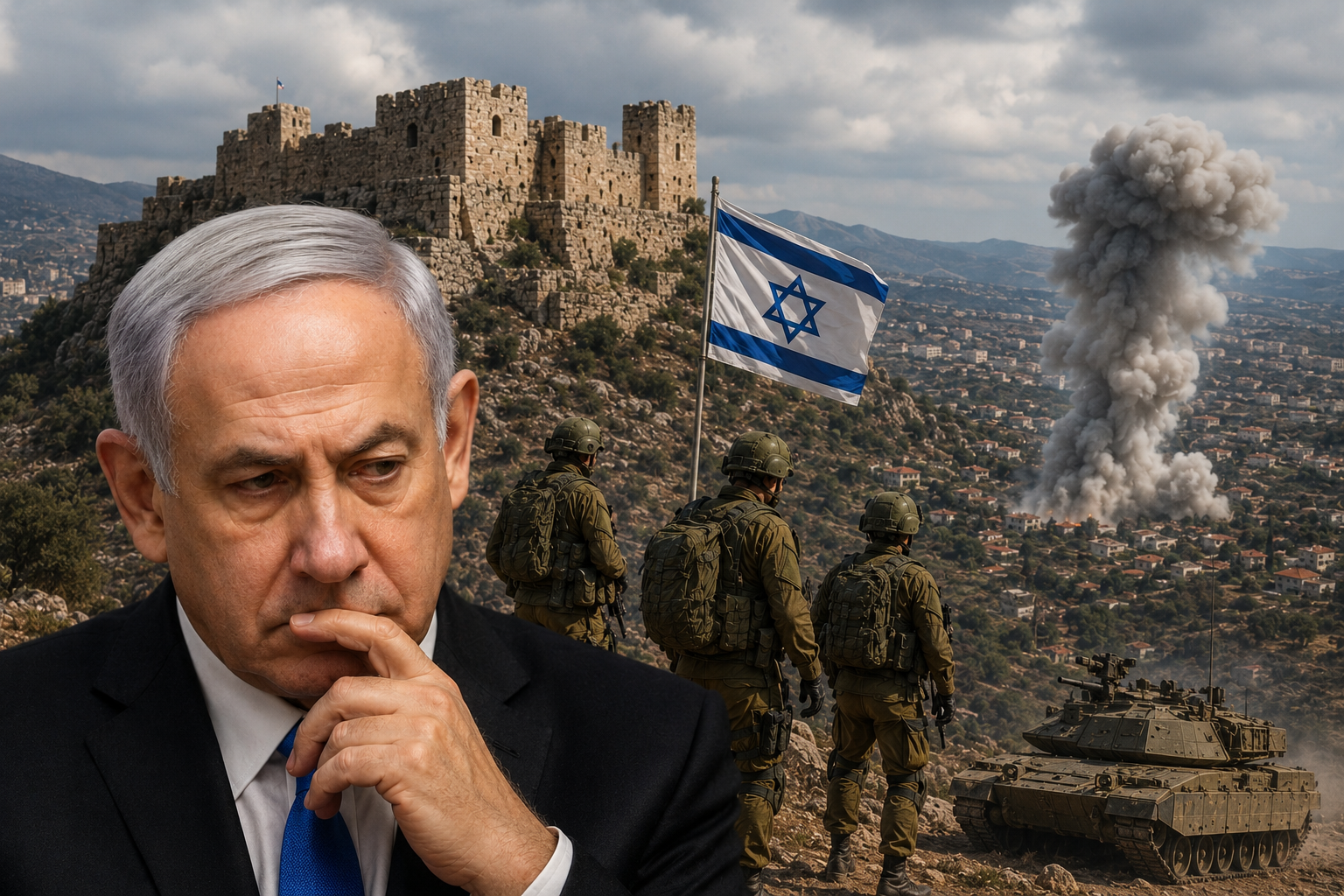
Israeli Prime Minister Benjamin Netanyahu is facing growing pressure to show meaningful results from Israel’s military campaign in Lebanon as international diplomatic efforts intensify and questions emerge about the long-term effectiveness of the operation. While Israeli officials have highlighted recent battlefield achievements, including the capture of the historic Beaufort Castle in southern Lebanon, analysts argue that these gains may be more symbolic than strategic.
According to Andreas Krieg, a senior lecturer at the School of Security Studies at King’s College London, the timing of Israel’s recent military advances is closely linked to broader regional developments. He believes that ongoing diplomatic contacts between the United States and Iran could eventually produce a memorandum of understanding that addresses several regional conflicts, including the situation in Lebanon. Such an agreement could place additional pressure on Israel to scale back its military activities.
Krieg argues that although Israel has secured some tactical victories on the ground, it has struggled to translate those achievements into lasting strategic success. Tactical victories generally refer to gains made during specific military operations, such as capturing territory, eliminating enemy positions, or disrupting military infrastructure. Strategic success, however, involves achieving broader political and security objectives that change the overall direction of a conflict.
In recent days, Israeli forces announced the capture of Beaufort Castle, a centuries-old fortress overlooking the Litani Valley in southern Lebanon. Israeli leaders described the operation as an important milestone in the campaign against Hezbollah. The site holds both military and symbolic significance due to its commanding position and long history of conflict in the region. Israeli officials said controlling the castle improves their ability to monitor and secure nearby areas.
However, critics argue that controlling a strategic location does not necessarily solve the larger challenges facing Israel in Lebanon. Hezbollah remains a powerful force with deep roots in southern Lebanon and continues to possess significant military capabilities. Despite months of fighting, the group has continued to launch attacks against Israeli positions and communities near the border, demonstrating its ability to remain operational.
Krieg believes Netanyahu is attempting to maximize visible military achievements before any future diplomatic settlement limits Israel’s freedom of action. According to this view, recent operations may be aimed not only at military objectives but also at shaping public perception. High-profile victories can help governments demonstrate progress to domestic audiences, particularly during periods of political and military uncertainty.
The Israeli government has repeatedly stated that its military actions are necessary to protect citizens from Hezbollah attacks and to prevent future threats along the northern border. Officials argue that the campaign is intended to weaken Hezbollah’s military infrastructure and improve security for Israeli communities. Supporters of the operation say that military pressure is needed to reduce the group's ability to launch rockets, drones, and other attacks.
At the same time, the conflict has drawn increasing international concern. Several European countries, including the United Kingdom, France, and Germany, have called for de-escalation and renewed diplomatic efforts. International leaders have warned that continued fighting could worsen the humanitarian situation in Lebanon, cause further displacement of civilians, and increase instability across the region.
The situation is also being closely watched because of broader regional tensions involving Iran, Israel, and the United States. Hezbollah is widely regarded as one of Iran’s closest regional allies, meaning developments in Lebanon are often connected to wider geopolitical negotiations. Analysts suggest that any future agreement involving Washington and Tehran could have implications for the conflict on Israel’s northern border.
Krieg further argued that Israel’s ongoing military campaigns in the region, including operations in Gaza, have produced limited long-term political benefits despite significant military efforts. He described the situation as part of a broader pattern in which military victories have not always translated into durable political outcomes. Such assessments remain the subject of intense debate among security experts and policymakers.
For Netanyahu, the coming weeks could be crucial. Military achievements may strengthen his position among supporters who favour a tough security approach, but growing international pressure and the possibility of new diplomatic arrangements could narrow his options. As negotiations continue and fighting persists, attention will remain focused on whether Israel can convert battlefield gains into lasting strategic advantages.
The future of the Lebanon campaign will likely depend not only on military developments but also on diplomatic efforts involving regional and international powers. With tensions remaining high and no clear resolution in sight, the conflict continues to shape the political landscape of the Middle East while placing increasing pressure on leaders on all sides.
Summary
An analyst says Israeli Prime Minister Benjamin Netanyahu is under growing pressure to show results from Israel’s military operations in Lebanon. While Israel has achieved some tactical victories, such as capturing Beaufort Castle, critics argue there have been few major strategic gains. With the US and Iran reportedly moving closer to an agreement that could affect Lebanon, Netanyahu may be trying to secure visible successes before facing international pressure to scale back military operations.
Content

×
![]()