
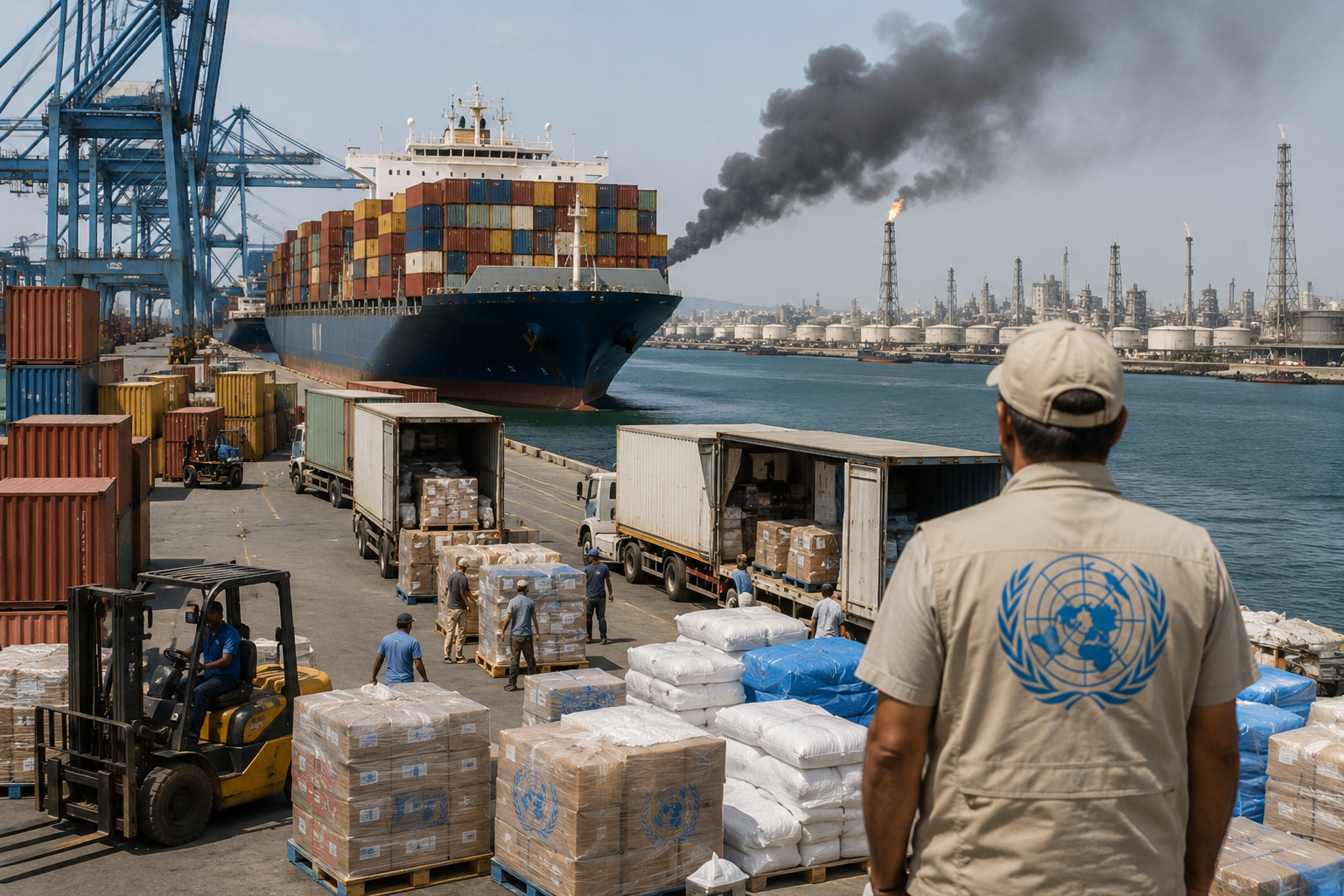
The United Nations says the ongoing disruption in and around the Strait of Hormuz is creating major challenges for humanitarian organizations that deliver food, medicine, and emergency supplies to vulnerable populations around the world.
Nearly 100 days after the conflict began following the February 28 US-Israeli attacks on Iran, the effects are being felt far beyond the Middle East. The Strait of Hormuz is one of the world's most important shipping routes, and any disruption there affects global trade and transportation networks.
Jean-Cedric Meeus, UNICEF's chief of global transport and logistics, warned that the crisis is placing enormous pressure on humanitarian supply chains. According to him, delays in shipping, congestion at major ports, and sharply rising transportation costs are making it increasingly difficult for aid agencies to reach people in need.
He explained that what started as a disruption to shipping lanes in the Middle East has developed into a wider humanitarian challenge. Aid organizations are now being forced to make difficult decisions about where limited resources should be sent, as higher operational costs reduce the amount of assistance they can provide.
The situation comes at a time when many humanitarian agencies are already struggling with funding shortages. As transportation costs continue to rise, organizations may have to reduce deliveries, delay projects, or prioritize only the most urgent emergencies.
UNICEF says children are among those most affected by the disruption. Delays in the delivery of vaccines, medical equipment, nutrition supplies, and emergency relief materials can have serious consequences for communities already facing poverty, conflict, or natural disasters.
Meeus also warned that even if a political agreement is reached and the Strait of Hormuz is fully reopened, the recovery process will be slow. Shipping schedules, supply networks, and logistics systems have already been heavily disrupted, and restoring normal operations could take many months.
According to the UN, conditions are unlikely to improve significantly before the end of the year, and some effects on global humanitarian supply chains may continue into 2027. This means aid agencies could face prolonged challenges in delivering assistance to millions of people worldwide.
The UN is urging efforts to stabilize global shipping routes and reduce disruptions, warning that the longer the crisis continues, the greater the risk of worsening humanitarian emergencies in regions that depend on international aid and imported supplies.
Summary
The United Nations has warned that the disruption of shipping routes around the Strait of Hormuz is causing serious problems for humanitarian aid deliveries worldwide. Rising transport costs, shipping delays, and supply shortages are affecting aid operations, and recovery could take years even if the conflict ends soon.
Content



×
![]()