
A powerful earthquake measuring 7.8 on the Richter scale struck the southern Philippines on Monday morning, causing widespread panic, damage to buildings, and loss of life. The earthquake occurred at 7:37 a.m. local time and was centered off the coast near General Santos City on the island of Mindanao, the country's largest southern island.
According to Philippine authorities, at least three people have been confirmed dead and five others injured. Rescue workers are continuing search operations in several damaged areas, and officials fear the number of casualties could rise as assessments continue.
The earthquake struck at a depth of around 10 kilometers beneath the seabed, making its impact especially strong near the surface. Residents across Mindanao reported violent shaking that lasted several seconds. Many people rushed out of homes, schools, offices, shopping centers, and other buildings in fear.
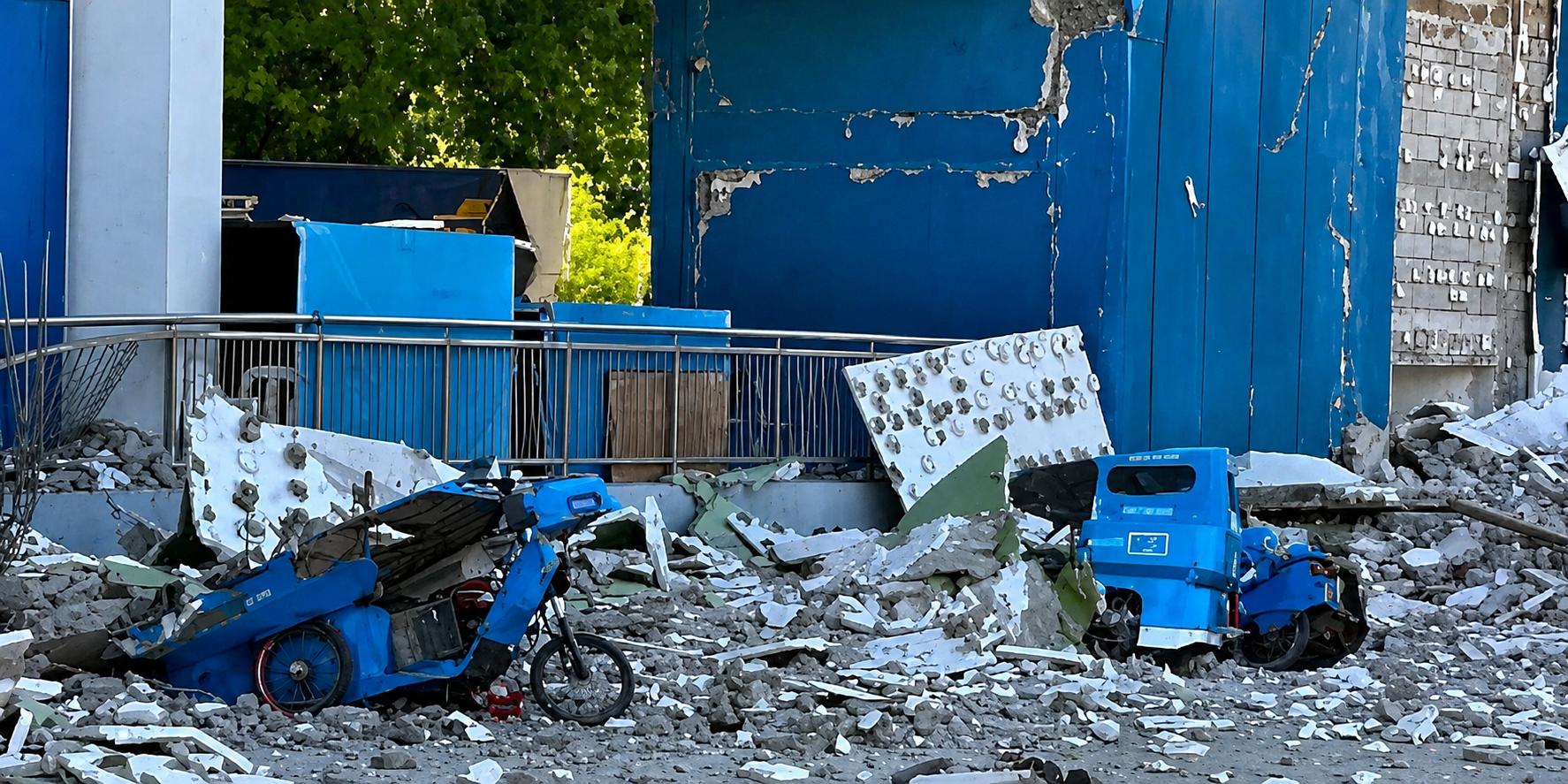
One of the most dramatic scenes came from General Santos City, where videos shared on social media showed a branch of the popular fast-food chain Jollibee collapsing during the earthquake. Other buildings, shopfronts, and commercial structures also suffered damage. Police said at least 37 buildings, mostly businesses, were affected by the quake.
The earthquake happened on the first day of the new school year in the Philippines. Videos showed students screaming and crying as classrooms shook. Teachers were seen comforting children and leading them to safety. Emergency responders later attended to students who became distressed or felt unwell after experiencing the strong tremor.
Following the earthquake, tsunami warnings were issued in several countries, including the Philippines, Indonesia, Japan, and Australia. Authorities warned people living along coastal areas to move immediately to higher ground as a precaution.
Small tsunami waves were later recorded in several locations. According to monitoring agencies, waves ranging from a few centimeters to over one meter were observed in parts of the Philippines, Indonesia, and Palau. The highest recorded wave in the Philippines measured about 1.4 meters along Mindanao's southern coast.
While some countries later lifted their tsunami warnings, Philippine authorities kept their warning active for several hours because monitoring instruments continued detecting unusual sea-level changes. Officials urged residents not to return to coastal areas until the danger had completely passed.
Philippine President Ferdinand Marcos Jr responded quickly to the disaster. He directed government agencies, emergency services, and local authorities to begin immediate response operations. He urged citizens to follow evacuation orders and prioritize their safety.
"Do not wait. Your life is more important than anything left behind," the president warned as officials monitored the tsunami threat.
The Philippine Red Cross was placed on its highest level of alert. Emergency teams were deployed to assess structural damage, help evacuate residents, provide medical assistance, and support rescue operations. Volunteers and disaster response personnel were sent to affected communities throughout Mindanao.
The earthquake also disrupted transportation. General Santos International Airport temporarily suspended operations while engineers carried out safety inspections of airport facilities. Authorities later said that most other airports across Mindanao continued operating normally.
As rescue efforts continued, scientists recorded a large number of aftershocks. By late morning, the Philippine Institute of Volcanology and Seismology reported 138 aftershocks, ranging in magnitude from 1.3 to 6.7. Experts warned that more aftershocks could occur in the coming days and advised residents to remain cautious.
Disaster officials also urged people not to re-enter damaged buildings because weakened structures could collapse during aftershocks. Engineers and safety inspectors are examining homes, schools, businesses, and public buildings before allowing residents to return.
General Santos City is one of the most important economic centers in southern Philippines. Often called the country's "Tuna Capital," the city is known for its fishing industry and serves as a major trading hub. The city is also famous as the hometown of boxing legend and former senator .
The Philippines is located on the Pacific Ring of Fire, one of the world's most active earthquake zones. Because several major tectonic plates meet beneath the region, earthquakes and volcanic activity are common. However, strong earthquakes like this one can still cause significant destruction and loss of life.
As emergency crews continue their work, communities across Mindanao are focusing on rescue efforts, helping displaced residents, and restoring damaged infrastructure. Authorities remain on alert for additional aftershocks and are urging the public to stay informed through official updates.
The disaster serves as another reminder of the Philippines' vulnerability to powerful natural events and the importance of preparedness, quick response, and community cooperation during emergencies.
Summary
A powerful 7.8-magnitude earthquake struck off the coast of southern Philippines on Monday morning, causing buildings to collapse, killing at least three people, and injuring several others. The quake triggered tsunami warnings across parts of the Pacific region, while hundreds of aftershocks continued to shake affected areas. Emergency teams are carrying out rescue and relief operations as authorities assess the damage.
Content




×
![]()