
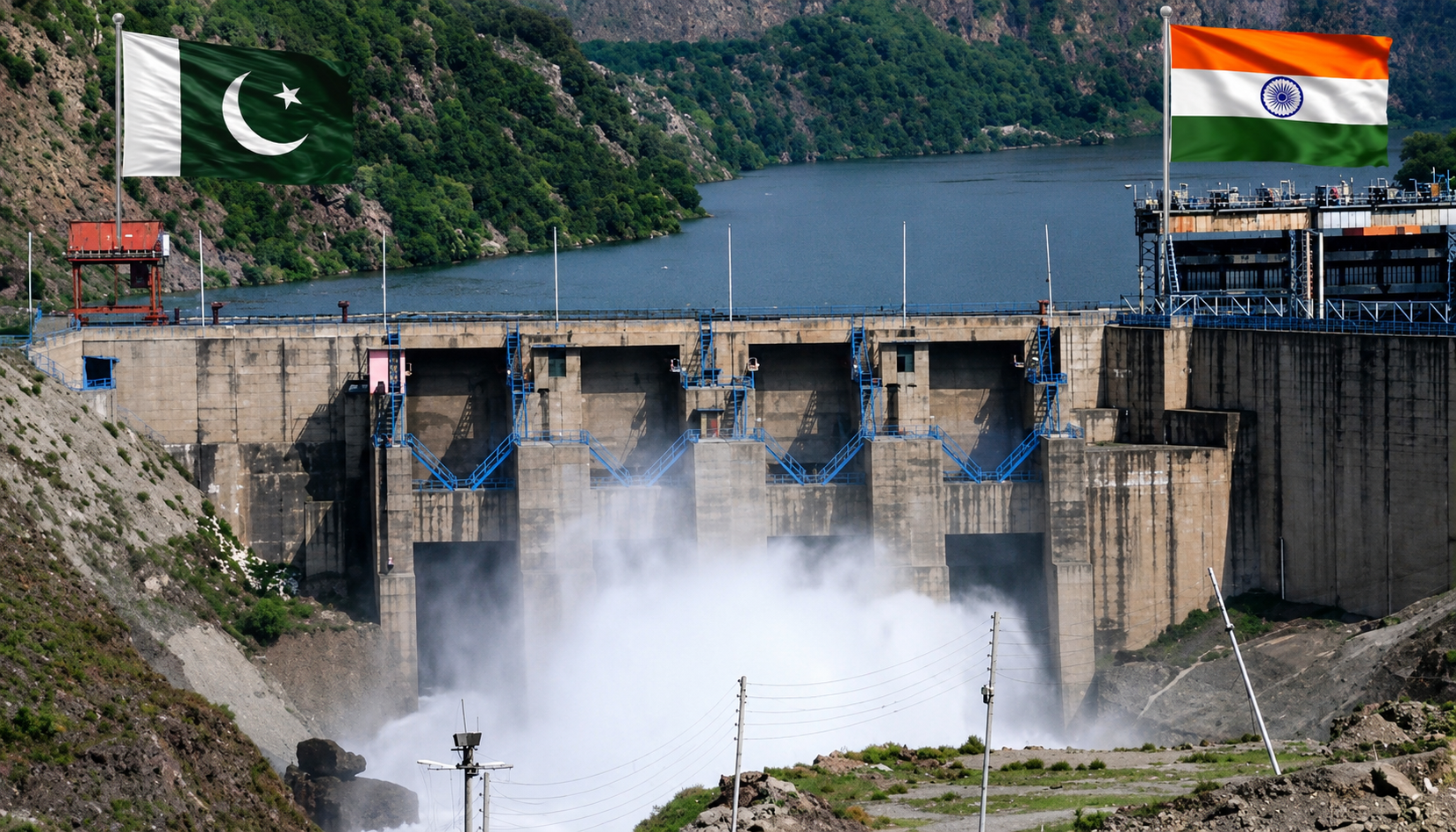
Pakistan has sharply criticized India's reported moves to restrict or regulate water flows from rivers shared by the two countries, with senior officials warning that any deliberate attempt to block Pakistan's water supply would be considered an "act of war." The statement reflects the seriousness with which Islamabad views the issue, as water from the Indus river system is essential for Pakistan's agriculture, economy, and daily life.
The dispute centers on rivers governed by the Indus Waters Treaty, a landmark water-sharing agreement signed in 1960. The treaty has long been regarded as one of the most durable agreements between India and Pakistan, surviving wars, diplomatic crises, and decades of political hostility. However, recent tensions have placed the future of the arrangement under increased scrutiny.
Pakistani officials argue that water is a vital national resource and that any disruption to river flows could have severe consequences for millions of citizens. Agriculture accounts for a significant share of Pakistan's economy and depends heavily on irrigation supplied by the Indus basin. Crops such as wheat, rice, cotton, and sugarcane rely on consistent water availability throughout the year.
According to Pakistani authorities, restricting water supplies could threaten food security, reduce agricultural production, and create economic hardship for farming communities. Officials have repeatedly stressed that access to water is not merely an environmental issue but a matter of national security.
The strong language used by Pakistan reflects growing concerns about water scarcity across South Asia. Climate change, population growth, and increasing demand for resources have placed significant pressure on regional water systems. Experts warn that competition over shared rivers may become more intense in the future unless cooperative management mechanisms are strengthened.
India, meanwhile, has maintained that it has rights under existing agreements to utilize water resources available within its territory. Indian officials have argued that infrastructure projects and water management initiatives are intended to maximize domestic use while remaining within legal frameworks. New Delhi has also linked some of its policy decisions to broader security concerns and deteriorating bilateral relations.
The exchange of statements has further strained relations between the two nuclear-armed neighbors, whose ties have often been marked by political disputes, military tensions, and disagreements over regional security issues. Analysts note that while water disputes have traditionally been managed through technical and diplomatic channels, the increasingly heated rhetoric demonstrates how sensitive the issue has become.
Experts emphasize that the Indus Waters Treaty contains mechanisms for dialogue, technical consultations, and dispute resolution. Many believe these channels remain the most effective way to address disagreements and prevent escalation. International observers have also urged both countries to pursue diplomatic engagement rather than confrontation.
The dispute highlights the growing importance of water security in the 21st century. Across South Asia, changing weather patterns, shrinking glaciers, and rising demand are placing unprecedented pressure on river systems that support hundreds of millions of people. As these challenges increase, cooperation over shared resources may become even more critical for regional stability.
For Pakistan, the issue remains particularly urgent because of the country's dependence on the Indus river network. Any significant reduction in water availability could affect agricultural output, increase food prices, and place additional stress on an economy already facing multiple challenges.
While diplomatic discussions are expected to continue, Pakistan's description of water restrictions as an "act of war" underscores the seriousness of the dispute and the high stakes involved. The coming months may prove crucial in determining whether the disagreement leads to greater confrontation or renewed efforts to preserve one of the world's most important international water-sharing arrangements.
Summary
Pakistan has strongly condemned India's reported efforts to restrict water flows, describing any attempt to block or divert water destined for Pakistan as an "act of war." The dispute has intensified concerns about regional stability, with officials warning that water security is directly linked to food production, economic stability, and national security. The issue has reignited debate over the future of the Indus Waters Treaty, a decades-old agreement governing shared river resources between the two neighboring countries.
Content




×
![]()