
The war between Russia and Ukraine reached a new level after a massive Ukrainian drone attack struck Moscow and nearby regions. The attack targeted important infrastructure, including the Kapotnya oil refinery in southeastern Moscow. It was one of the largest Ukrainian drone operations since the start of the full-scale war and caused major disruption across the Russian capital.
According to Russian officials, nearly 200 drones were launched toward Moscow, while close to 1,000 drones and several cruise missiles were intercepted across Russia within 24 hours. Despite Russia's strong air defense systems, some drones managed to reach their targets and cause significant damage.
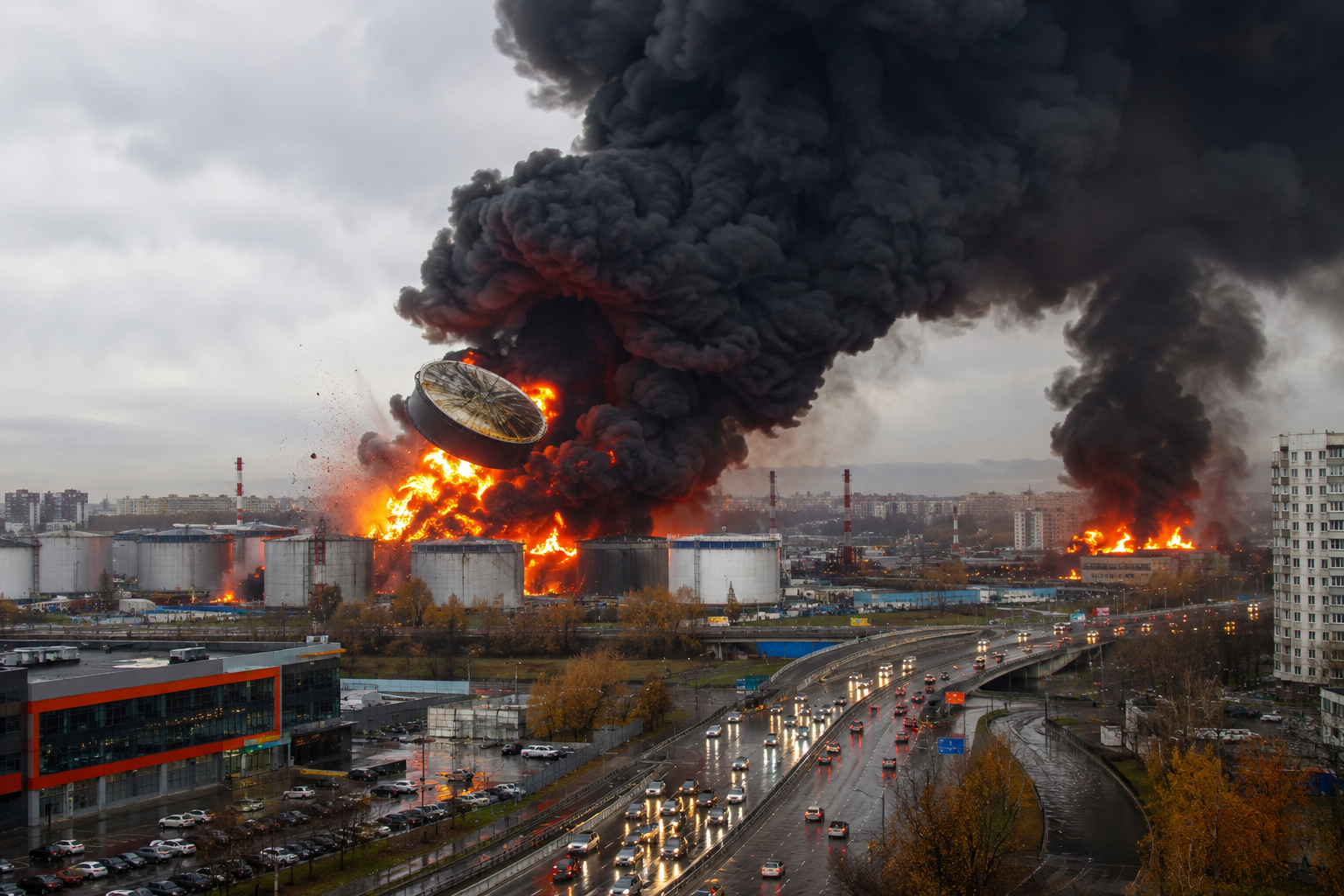
One of the main targets was the Kapotnya oil refinery, which has been hit several times in recent weeks. The strike triggered a huge fire, sending thick black smoke high into the sky. Videos shared on social media showed dramatic scenes, including a large explosion that blew the roof off an oil storage tank. The blast sent debris flying through the air and created a massive cloud of smoke visible from many parts of the city.
Residents living near the refinery described frightening moments during the attack. Many said they were awakened by loud explosions and felt their buildings shaking. Some reported smelling strong burning odors and having difficulty breathing due to the smoke.
An unusual effect of the refinery fire was what many residents described as "black rain." People in southeastern Moscow said they noticed tiny black droplets falling from the sky and leaving dark stains on clothes, cars, and other surfaces. Some residents shared photos showing black spots covering jackets and outdoor areas.
Russian authorities denied that actual oil rain was falling. However, local officials warned residents in affected districts to keep their windows closed. Families with children, elderly people, and people suffering from respiratory illnesses were advised to leave the area until conditions improved.
The attack also caused disruptions across Moscow. All four major airports in the city temporarily suspended operations, leading to hundreds of flight cancellations and delays. Travelers faced long waits as authorities worked to ensure safety following the drone strikes.
Another fire broke out at a shopping center near the refinery after drone debris reportedly fell on the building. Videos showed damaged buildings, broken windows, and emergency crews responding to multiple locations across the city.
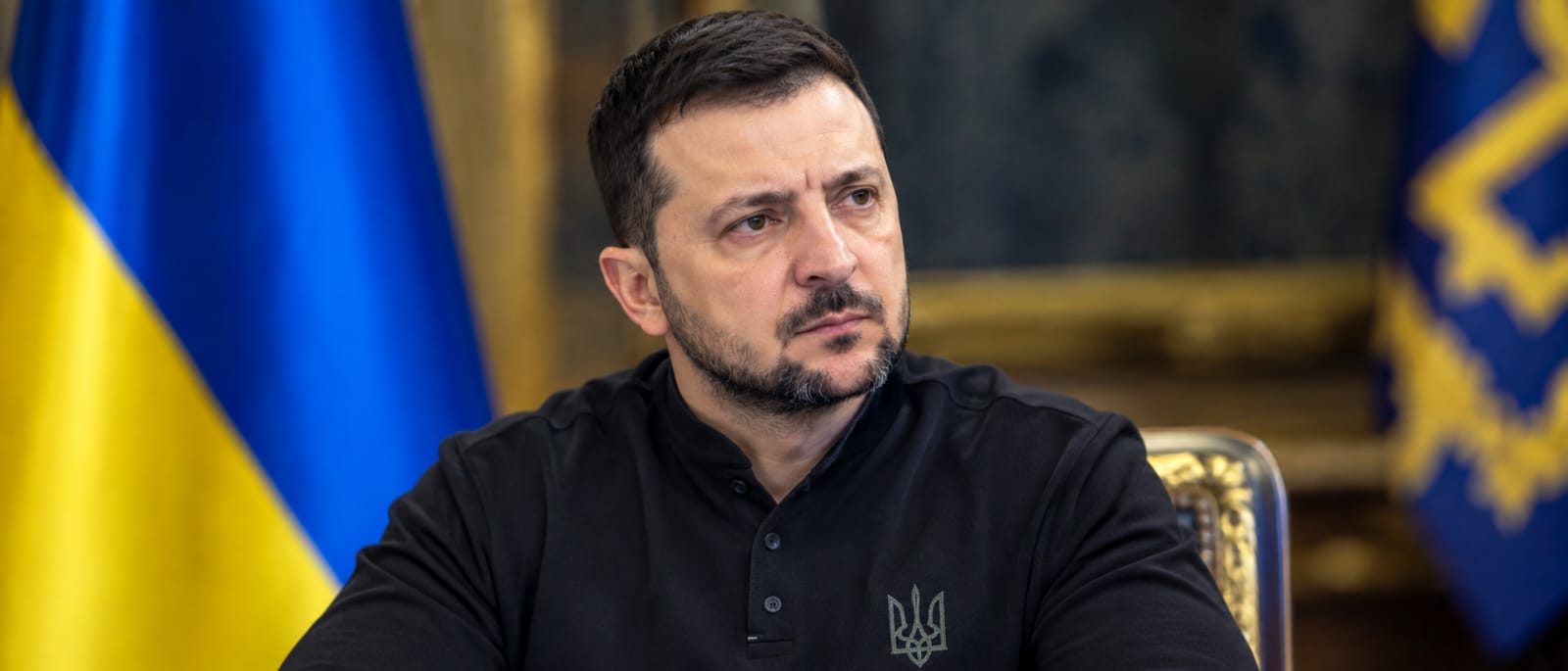
Ukrainian President Volodymyr Zelensky said the attack was a response to recent Russian strikes on Kyiv. Last week, Russian attacks reportedly caused significant damage in the Ukrainian capital, including a fire at the historic Pechersk Lavra monastery, an important religious site.
Speaking after the attack, Zelensky said Ukraine never wanted the war but would continue responding to Russian aggression. His comments reflected Kyiv's growing strategy of striking targets deep inside Russia to show that the conflict can affect Russian territory as well.
Russian officials strongly condemned the attack. Foreign Minister Sergei Lavrov warned that Russia would respond with large-scale strikes against Ukraine. He stated that words alone were no longer enough and suggested that military retaliation would continue.
At the same time, Russia launched its own overnight attacks on Ukraine. Ukrainian authorities reported that more than 200 drones and several ballistic missiles targeted different regions of the country. The continuing exchange of attacks demonstrates how both sides are increasingly using long-range weapons to strike beyond the front lines.
Military analysts note that Ukraine has significantly improved its drone capabilities since 2023. Early drone attacks on Moscow involved only a small number of aircraft and caused limited damage. Today, Ukraine can launch large-scale operations involving hundreds of drones at once, creating challenges even for advanced air defense systems.
Experts explain that many drone attacks include decoy drones designed to confuse and overwhelm air defenses. These drones help identify weak points in Russia's protective network and increase the chances that some attack drones will reach their intended targets.
Although Moscow is heavily protected by air defense systems, no defense network can guarantee complete protection against large drone swarms. The latest attack is likely to raise questions within Russia about the effectiveness of those defenses, especially around key infrastructure such as oil facilities.
For many Russians, the war has often felt distant despite continuing for more than four years. However, attacks on Moscow and other major cities are bringing the reality of the conflict closer to ordinary citizens. Residents who once viewed the war as something happening far away are now experiencing its consequences directly.
As both Russia and Ukraine continue exchanging strikes, fears are growing that the conflict could become even more destructive. Diplomatic efforts to end the war remain limited, while both sides appear determined to continue military operations.
The latest drone attack on Moscow serves as a reminder that the war is no longer confined to battlefields near the front lines. Instead, it is increasingly affecting major cities, critical infrastructure, and civilian populations on both sides. With tensions remaining high and retaliatory attacks continuing, the prospect of a quick resolution to the conflict appears distant.
Summary
Ukraine launched one of its biggest drone attacks on Moscow since the war began, targeting an oil refinery in the Russian capital. The strike caused large fires, thick black smoke, and reports of black oily droplets falling from the sky. Russian authorities said hundreds of drones were intercepted, but several targets were still hit. The attack came as Ukraine responded to recent Russian strikes on Kyiv, highlighting the growing reach of the conflict deep inside Russia.
Content
×
![]()