
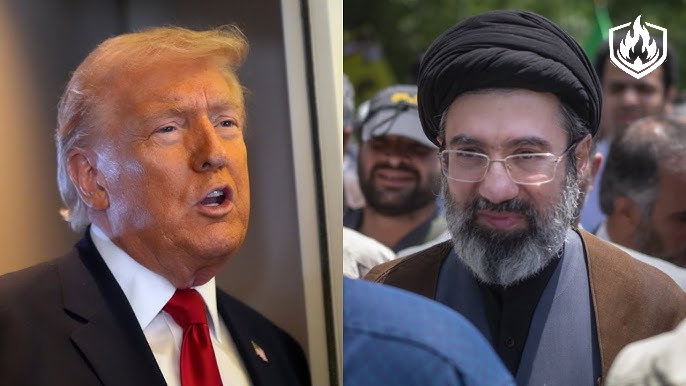
New talks between the United States and Iran are taking place in Switzerland as both countries try to keep a fragile peace agreement alive. The discussions come at a difficult time, with continued fighting in Lebanon and disagreements over the Strait of Hormuz.
US Vice President JD Vance arrived in Switzerland on Sunday for the negotiations. He is expected to meet with Iranian officials, including Parliament Speaker Mohammad Bagher Ghalibaf and Foreign Minister Abbas Araghchi. Pakistan's Prime Minister Shehbaz Sharif and Army Chief Field Marshal Asim Munir are also taking part as mediators.
Pakistan has played an important role in helping both sides communicate during the conflict. Officials say they will continue supporting efforts to make sure the agreement between the US and Iran is carried out successfully.
One of the main issues in the talks is the Strait of Hormuz, one of the world's most important oil shipping routes. Iran's military announced that it had closed the strait, claiming that Israel's continued military actions in Lebanon violated the recent peace agreement.
Iran also accused the United States of failing to fully implement parts of the agreement. Iranian officials say the deal required an immediate end to military operations across the region, including in Lebanon.
However, the United States strongly disagrees with Iran's claim. US military officials said that commercial ships are still passing through the Strait of Hormuz and that shipping traffic remains active. According to US Central Command, dozens of merchant vessels successfully traveled through the waterway on Saturday.
The Strait of Hormuz is extremely important to global energy markets. Around 20 million barrels of oil pass through the strait every day. Any disruption can affect oil prices and create concerns for countries that depend on Middle Eastern energy supplies.
Meanwhile, fighting between Israel and Hezbollah continues to threaten the broader peace process. Lebanon's Health Ministry reported that dozens of people were killed in recent Israeli air strikes. Israel says it targeted Hezbollah positions and militants, while Hezbollah accuses Israel of trying to undermine the peace agreement.
Although a ceasefire between Israel and Hezbollah was recently announced, both sides have continued to exchange fire. This has created concerns that the wider US-Iran agreement could be damaged if the violence continues.
JD Vance said he hopes the talks will help make progress on both Iran's nuclear program and the ceasefire situation in Lebanon. He also said that recent developments suggest tensions may be easing, although the situation remains unstable.
Iran's Foreign Ministry said it will use the talks to demand that the United States fulfill all promises made under the agreement. Iranian officials believe several commitments have not yet been fully implemented.
Political experts say the next few days will be very important. If the talks succeed, they could strengthen the peace agreement and reduce tensions across the Middle East. If they fail, the region could face more instability, continued conflict, and further concerns about global oil supplies.
For now, world leaders and energy markets are closely watching the negotiations in Switzerland, hoping that diplomacy can prevent a new escalation in the region.
Summary
The United States and Iran have started new talks in Switzerland to protect a recent peace agreement. At the same time, Iran says it has closed the Strait of Hormuz because of continued Israeli attacks in Lebanon, but the US says ships are still moving through the waterway normally. The talks aim to reduce tensions, address ceasefire concerns, and discuss Iran's nuclear program.
Content

×
![]()