
Recovery efforts in Venezuela are becoming more challenging as experts warn about the continuing danger of aftershocks following the powerful earthquakes that struck the country. While emergency teams are working to rescue survivors, clear debris, and provide aid to affected communities, scientists say the situation remains extremely risky.
Adam Pascale, chief scientist at the Seismology Research Centre in Australia, has stressed the importance of staying alert during the recovery phase. According to him, strong aftershocks can occur after major earthquakes and may cause additional damage to buildings that have already been weakened. These aftershocks can also endanger rescue workers and residents returning to damaged areas.
Pascale said there needs to be a high level of awareness about the risks that remain after the main earthquakes. He explained that the period immediately following a major quake is often one of the most dangerous times because damaged structures can collapse without warning if shaken again by aftershocks.
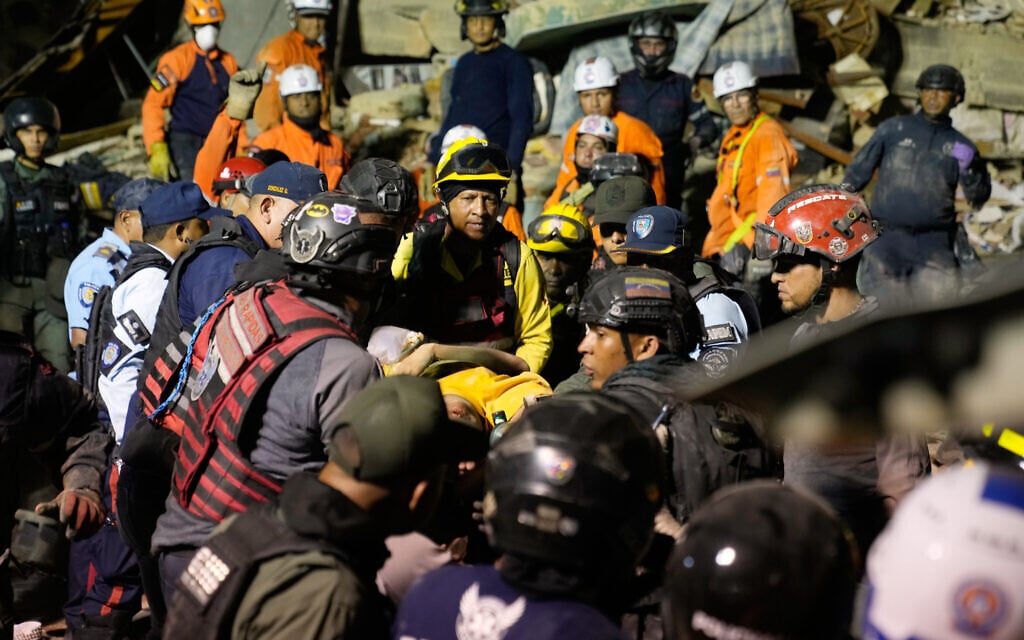
Emergency responders in Venezuela are continuing search-and-rescue operations in several affected regions. Teams are working around the clock to locate survivors trapped under rubble, provide medical assistance to the injured, and distribute food, water, and shelter supplies to families who have lost their homes.
However, every rescue mission carries additional risks due to the possibility of more ground movement. Rescue workers often have to enter unstable buildings and disaster zones where another tremor could trigger further collapses. Experts say this is why safety measures and careful planning are essential during recovery operations.
Aftershocks are smaller earthquakes that occur after a larger earthquake. They happen as the Earth's crust adjusts to the changes caused by the main quake. While many aftershocks are minor, some can be strong enough to cause significant damage, especially in areas where buildings and infrastructure have already been weakened.
Scientists cannot predict the exact time or strength of aftershocks. Because of this uncertainty, authorities usually advise people to stay away from damaged buildings until safety inspections have been completed. Residents are also encouraged to remain prepared for sudden shaking and to follow official safety instructions.
The earthquakes have already caused widespread destruction in parts of Venezuela. Homes, schools, hospitals, roads, and other important infrastructure have been damaged or destroyed. Thousands of people have been displaced, forcing many families to seek temporary shelter while authorities assess the extent of the damage.
As recovery operations continue, engineers and emergency officials are inspecting buildings to determine which structures are safe and which may need to be demolished. This process is crucial because weakened buildings can pose a serious threat to anyone nearby if they collapse during an aftershock.
Pascale also noted that there is a possibility, although smaller, that another earthquake of similar or even greater magnitude could occur after the initial events. While this risk cannot be completely ruled out, he explained that the likelihood generally decreases as more time passes following the main earthquakes.
Experts say the first few days after a major earthquake are usually the period of greatest concern. During this time, seismic activity can remain elevated, and aftershocks are often more frequent. As days and weeks pass, the number and intensity of aftershocks typically decline, although some may continue for months.
Authorities are urging residents to remain cautious and avoid unnecessary travel into heavily damaged areas. People living near affected zones are being encouraged to prepare emergency supplies, including food, water, flashlights, batteries, medications, and important documents, in case additional earthquakes occur.
International aid organizations and neighboring countries are also monitoring the situation closely. Humanitarian groups are working with local authorities to provide support for survivors and help communities begin the long process of recovery and rebuilding.
The emotional impact of the disaster is also significant. Many survivors are coping with the loss of family members, homes, and livelihoods. The ongoing threat of aftershocks can increase stress and anxiety, making recovery even more difficult for affected communities.
Despite the challenges, rescue teams, volunteers, and local residents continue to work together to help those in need. Their efforts are focused on saving lives, restoring essential services, and supporting families affected by the earthquakes.
Experts emphasize that public awareness and caution remain critical during this period. While the immediate shock of the disaster may have passed, the dangers have not completely disappeared. Strong aftershocks, unstable buildings, and the possibility of additional seismic activity mean that recovery efforts must proceed carefully.
For now, authorities and scientists are continuing to monitor the situation closely. Their goal is to protect lives while helping communities recover from one of the most devastating natural disasters to strike Venezuela in recent years.
Summary
Experts are warning that the recovery process in Venezuela remains highly dangerous after the powerful earthquakes that struck the country. Seismology Research Centre chief scientist Adam Pascale said strong aftershocks could continue to hit affected areas, putting rescue workers and survivors at risk. He also noted that while the chance of another major earthquake decreases over time, it cannot be completely ruled out in the days following the disaster.
Content


×
![]()