
Venezuela is facing a major humanitarian and economic crisis after two powerful earthquakes hit the country on Wednesday. The earthquakes, measuring 7.2 and 7.5 in magnitude, struck about 160 kilometers west of the capital city, Caracas. The disaster has caused widespread destruction and left at least 188 people dead, with many others injured or missing.
Rescue teams have been working around the clock to search for survivors trapped under collapsed buildings. Families are gathering near damaged areas hoping for news about loved ones. Many residents spent the night outdoors because they feared additional aftershocks could cause more buildings to collapse.
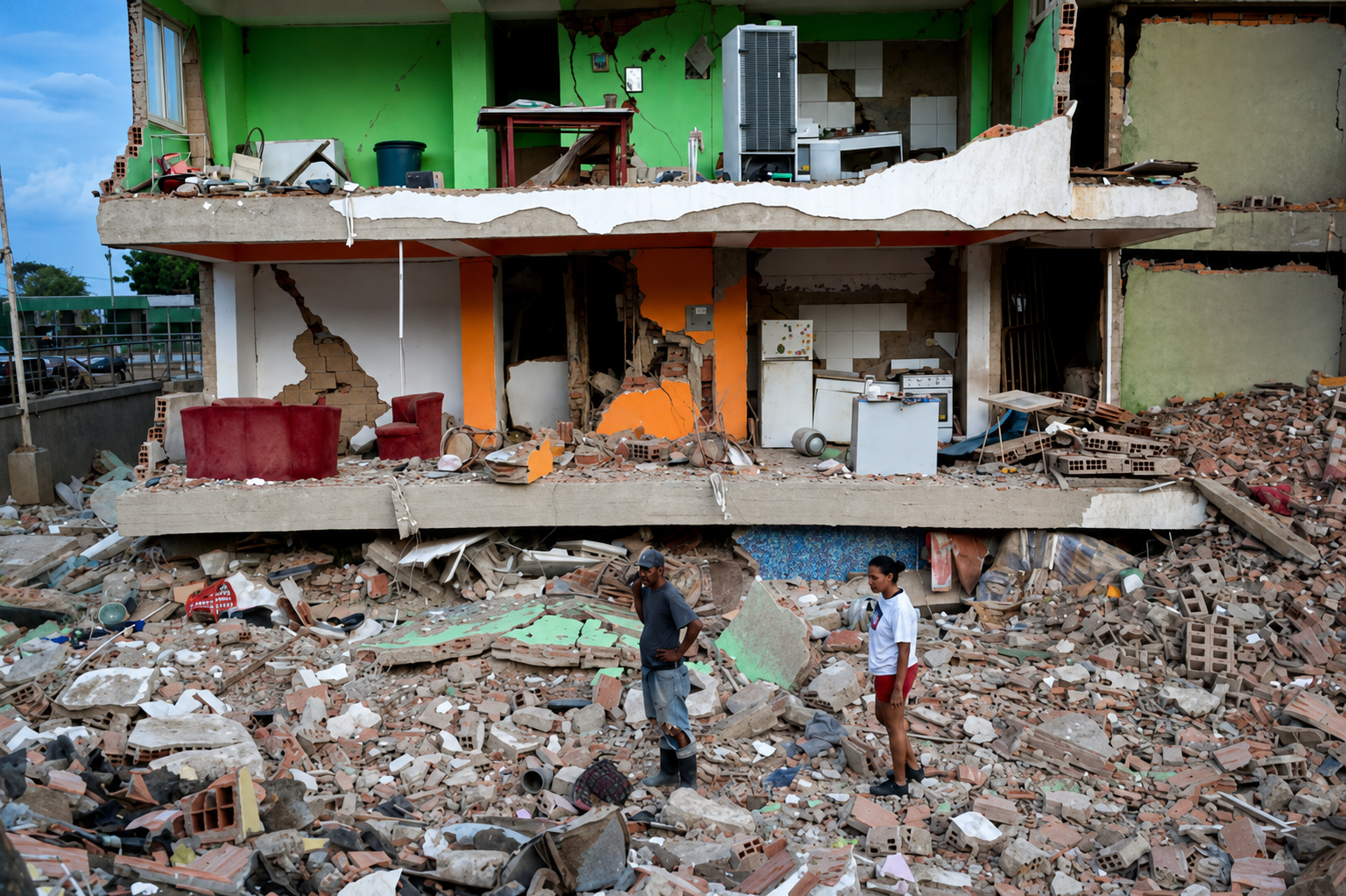
The earthquakes caused serious damage to homes, schools, hospitals, roads, and public infrastructure. Large piles of rubble can be seen in several cities and towns near the epicenter. In Caracas, emergency workers and volunteers are helping clear debris and provide support to affected communities.
According to preliminary estimates from the United States Geological Survey (USGS), the financial damage from the disaster could be equal to between 1 and 7 percent of Venezuela's economy. With the country's gross domestic product estimated at around $111 billion, the losses could reach several billion dollars. Experts believe the country will need significant rebuilding efforts over the coming months and years.
Interim President Delcy Rodriguez announced that a $200 million reconstruction fund has been created with support from the International Monetary Fund (IMF). The money will be used to rebuild damaged infrastructure, hospitals, schools, and housing. Government officials say restoring essential services is one of their top priorities.
Economists say international support will be critical for Venezuela's recovery. The country has faced economic difficulties for many years, and the earthquake has added new challenges. Experts believe foreign governments, international organizations, and financial institutions may need to provide additional assistance to help rebuild affected areas.
The United States has already begun sending teams to assess the damage and determine what aid is needed. US Secretary of State Marco Rubio said the United States is preparing a full government response to support rescue and recovery efforts. Officials expect to have a clearer picture of the situation within the next few days.
The United Nations has also mobilized humanitarian assistance. Emergency supplies, medical support, and rescue equipment are being sent to affected areas. Switzerland has provided 18 tonnes of rescue equipment to help local authorities carry out search and recovery operations. Several private companies are also assisting with debris removal and infrastructure repairs.
The disaster comes at a difficult time for Venezuela. Millions of people were already living in poverty before the earthquakes. Many families struggled to access food, medicine, and basic services. In some areas, hospitals already faced shortages of equipment, clean water, and reliable electricity.
Medical facilities are now under even greater pressure. Hospitals in Caracas and nearby cities have been treating large numbers of injured people. Healthcare workers have been asked to work extra shifts to handle the emergency. Authorities have also cancelled school classes for the rest of the week while safety inspections and damage assessments continue.
Housing is another major concern. Many buildings suffered structural damage, leaving thousands of people without safe places to live. Some families have moved into temporary shelters while officials inspect damaged homes. Experts warn that rebuilding housing could take a long time and require significant investment.
Despite the destruction, there was some positive news regarding Venezuela's oil industry, which is a major source of income for the country. Initial reports indicate that key oil and gas facilities were not seriously damaged. The El Palito refinery, located near the earthquake zone, reportedly remained operational after inspections.
The Moron Petrochemical Complex temporarily stopped operations after a storage tank leak was discovered. However, production resumed the following day after safety checks were completed. Major energy companies operating in Venezuela, including Chevron, Shell, Eni, and Repsol, reported that their employees were safe and that operations continued without major disruptions.
Experts say this is important because Venezuela depends heavily on oil revenue. If major oil facilities had been damaged, the country's economic recovery would have become even more difficult. Keeping energy production running may help the government secure funds needed for reconstruction.
As recovery efforts continue, attention is focused on helping survivors, rebuilding damaged communities, and restoring essential services. Rescue teams are still searching for missing people, while aid organizations work to provide food, shelter, medical care, and clean water.
The earthquakes have left a deep impact on Venezuela, both emotionally and economically. While the country faces a long road to recovery, support from local communities, international organizations, and foreign governments is expected to play a key role in helping affected families rebuild their lives. The coming weeks will be critical as authorities assess the full extent of the damage and begin the challenging process of reconstruction.
Summary
Venezuela is struggling after two powerful earthquakes struck near the capital, Caracas. At least 188 people have died, thousands have been affected, and major damage has been reported to homes, hospitals, roads, and public buildings. Experts say the economic losses could reach up to 7 percent of the country's GDP. International aid is arriving as rescue and recovery efforts continue.
Content


×
![]()