
Venezuela is continuing a massive search-and-rescue operation after two devastating earthquakes struck the country on Wednesday evening, leaving at least 235 people dead and more than 4,300 injured. The disaster has triggered an international response as rescue teams, medical personnel, and emergency supplies arrive from around the world to help those affected.
The earthquakes measured 7.2 and 7.5 in magnitude and struck less than a minute apart. According to experts, this type of event is known as a "doublet" earthquake, which is less common than a single major earthquake followed by smaller aftershocks. The second quake was the strongest recorded in Venezuela since 1900, making the disaster one of the most significant in the country's recent history.
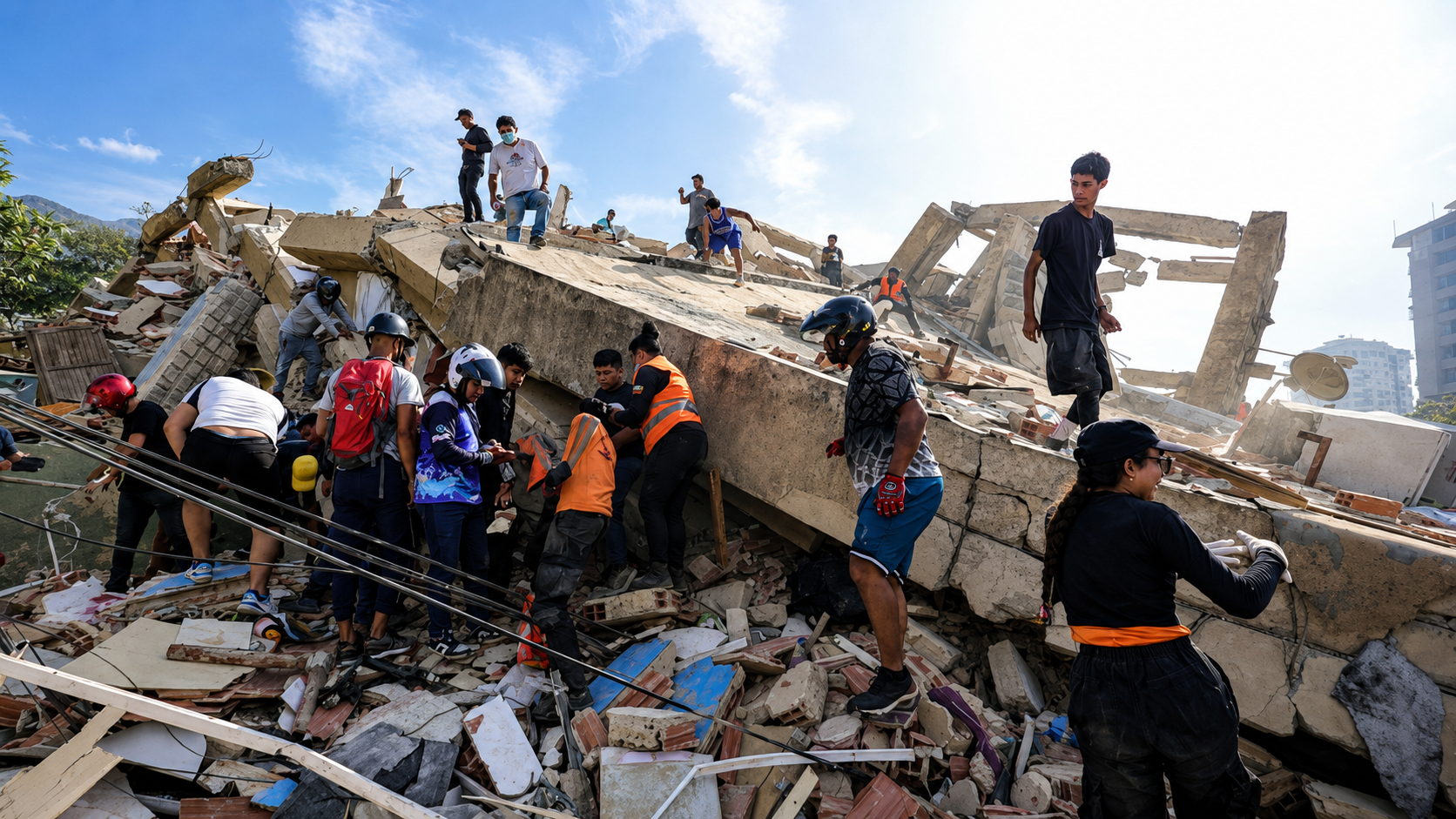
The earthquakes hit northern Venezuela on Wednesday evening, causing severe damage in the capital city of Caracas and the coastal state of La Guaira. Hundreds of buildings were damaged or completely destroyed. In several neighborhoods, apartment blocks, hotels, and commercial buildings collapsed, trapping residents under tons of concrete and debris.
Rescue workers have been searching around the clock for survivors. In many locations, emergency teams have reported hearing voices and cries for help coming from beneath collapsed structures. These signs have given hope to families waiting anxiously for news of missing loved ones.
One of the most emotional moments of the rescue effort came when a woman named Graciela Mora was pulled alive from the rubble of a collapsed building in La Guaira. Despite suffering injuries, including a broken finger, she survived after holding onto a doorframe during the earthquake. Her rescue has become a symbol of hope for many Venezuelans as teams continue searching for others who may still be trapped.
Emergency workers have emphasized that the first 72 hours after a major earthquake are often the most critical for finding survivors. Search-and-rescue specialists are using heavy equipment, listening devices, and specially trained dogs to locate people buried under debris.
International assistance has begun arriving in Venezuela to support these efforts. Switzerland sent a team of 80 rescue workers, along with eight search dogs and approximately 18 tonnes of emergency supplies. The rescue dogs play an important role in locating survivors by detecting human scent beneath collapsed structures.
Mexico has also dispatched rescue personnel, medical teams, and humanitarian aid. Additional support has come from several countries, including Spain, Chile, China, Russia, Qatar, the United Kingdom, and the United States. Governments and humanitarian organizations around the world have pledged assistance in response to the crisis.
The United States has sent military and emergency personnel to support relief operations. A senior US military official arrived in Caracas to coordinate the movement of rescue workers, equipment, and humanitarian assistance into affected areas. The US government has also pledged significant financial support for emergency relief efforts.
Meanwhile, aid organizations are working to deliver food, water, medicine, shelter materials, and communication equipment to disaster zones. Volunteers in different countries have organized donation drives to collect supplies for earthquake victims.
The disaster has placed enormous pressure on Venezuela's healthcare system. Doctors working in affected regions say hospitals are overwhelmed by the large number of injured patients arriving for treatment. Medical facilities are reportedly facing serious shortages of medicines, equipment, and supplies.
Dr. Franklin Rodriguez, who traveled from Caracas to assist in La Guaira, described the situation as critical. According to medical personnel on the ground, hospitals lack the capacity to handle the massive influx of injured people, while many victims remain trapped under rubble awaiting rescue.
Health experts warn that the earthquake has worsened an already difficult humanitarian situation in Venezuela. The country has faced years of economic challenges, including shortages of medical supplies and strained public services. The destruction caused by the earthquakes is expected to place even greater demands on healthcare facilities and emergency responders.
Beyond the human toll, the earthquakes have caused widespread damage to infrastructure. Roads have been blocked by debris, buildings have collapsed, and some transportation facilities have suffered damage. Satellite images released after the disaster show entire sections of neighborhoods reduced to rubble, particularly in parts of La Guaira.
The earthquakes also affected foreign nationals living in or visiting Venezuela. Several countries have confirmed that some of their citizens were among those killed or remain missing. Reports indicate that victims include citizens from Spain, Brazil, China, Italy, and Portugal. Foreign governments have established emergency hotlines and support services for families seeking information about missing relatives.
Residents who survived the earthquakes have described scenes of panic and chaos. Many people fled into streets and public squares as buildings shook violently around them. Some families spent the night outdoors, fearing additional tremors or building collapses. Witnesses said the shaking felt unusually strong and lasted longer than expected.
Experts explain that the severity of the destruction was partly due to the shallow depth of the earthquakes. When an earthquake occurs closer to the Earth's surface, more energy reaches the ground, resulting in stronger shaking and greater damage. This factor likely contributed to the extensive destruction seen across northern Venezuela.
As rescue efforts continue, authorities expect casualty figures to rise. Hundreds of people are still reported missing, and emergency crews remain focused on locating survivors. Search teams are working day and night despite difficult conditions, hoping to save as many lives as possible.
For many Venezuelans, the coming days will be crucial. Rescue workers, medical staff, volunteers, and international aid organizations are all racing against time to help those affected. While the country faces a long and difficult recovery, stories of survival and the arrival of global support have provided a measure of hope amid the tragedy.
The disaster has united communities both inside and outside Venezuela, with governments, charities, and ordinary citizens contributing to relief efforts. As the search for survivors continues, the world is watching closely and offering support to a nation facing one of the most devastating natural disasters in its history.
Summary
Venezuela is facing one of the worst natural disasters in its modern history after two powerful earthquakes struck the country on Wednesday evening. The twin quakes killed at least 235 people, injured more than 4,300, and caused widespread destruction across several regions. Rescue teams from around the world have arrived to help search for survivors trapped beneath collapsed buildings, while hospitals struggle to treat thousands of injured people.
Content
×
![]()