
The people of Venezuela are facing one of the worst natural disasters in the country's modern history after two powerful earthquakes struck on June 24. The earthquakes, measuring 7.2 and 7.5 in magnitude, caused widespread destruction across several regions, with the coastal state of La Guaira among the hardest-hit areas.
According to officials, more than 1,400 people have lost their lives, while thousands are believed to be trapped beneath collapsed buildings and debris. The number of casualties continues to rise as rescue teams work around the clock to search for survivors.
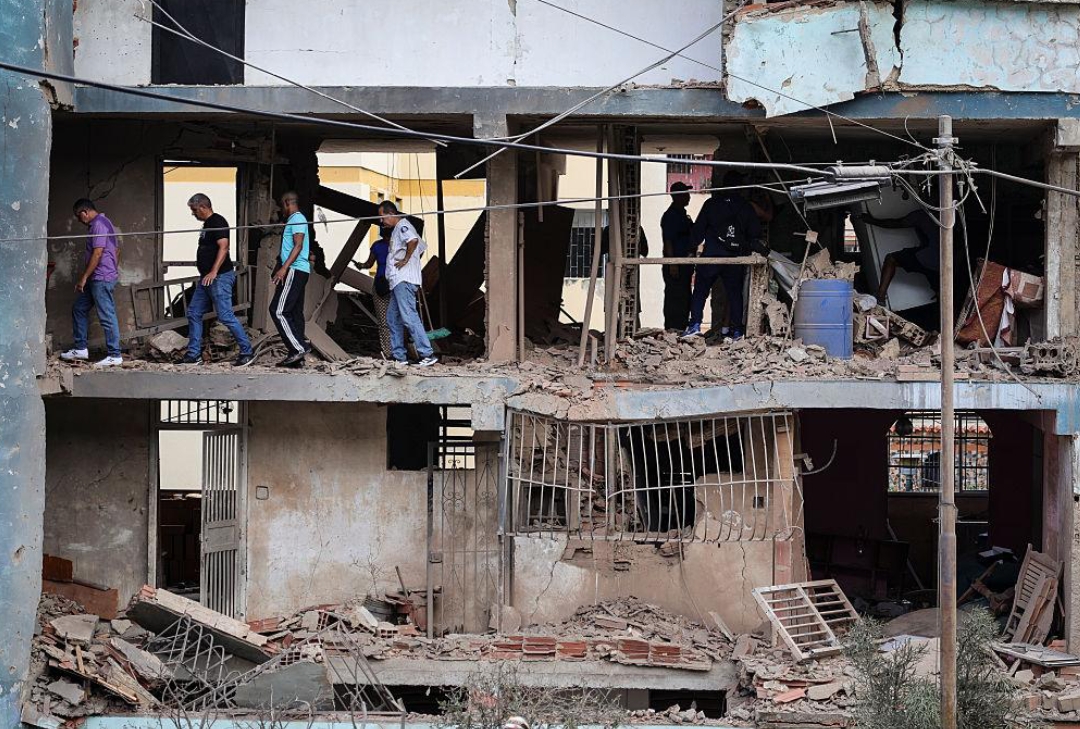
In towns such as Catia La Mar, entire neighborhoods have been reduced to rubble. Buildings that once housed hundreds of families now lie in ruins. Residents can be seen digging through debris with their bare hands, shovels, and simple tools, hoping to find relatives, friends, or neighbors alive.
Many families have gathered around collapsed structures, desperately waiting for news. Some listen carefully for sounds coming from beneath the rubble, while others search for personal belongings that might help identify missing loved ones.
One father, Jesús Suárez, traveled more than 200 kilometers to search for his son, Jean. Standing near the remains of a collapsed building, he fears his son may still be trapped inside. He says there is very little information available and not enough equipment to safely rescue people from the wreckage.
Similar stories can be heard throughout the disaster zone. Relatives of 31-year-old Carlos Eduardo say they occasionally heard him groaning from beneath the rubble. Although they know he is trapped, they are unable to reach him without heavy rescue machinery. They continue to wait anxiously, hoping rescue workers can arrive in time.
Rescue operations are facing major challenges. Humanitarian organizations say the first 48 to 72 hours after an earthquake are the most critical for saving lives. However, damaged roads, collapsed infrastructure, and limited rescue equipment have slowed efforts in many areas.
International rescue teams from countries including Mexico, Spain, the United States, the United Kingdom, Colombia, and Switzerland have arrived in Venezuela to assist local authorities. Volunteers are using drones, search dogs, and specialized equipment to locate survivors hidden beneath the debris.
In some areas, rescuers have repeatedly asked crowds to remain silent so they can listen for signs of life. Families often gather around drone video feeds, searching for any clue that might reveal the location of a missing relative.
As rescue efforts continue, concerns about public health are growing. Residents report strong odors coming from areas where bodies remain trapped under collapsed buildings. Many fear the situation could lead to disease outbreaks if recovery efforts do not move faster.
Government officials say food, water, and emergency supplies are being distributed to affected communities. However, many survivors claim that help has been slow to arrive. Some families have relied on volunteers and aid groups for basic necessities.
Thousands of people have also lost their homes. Many are sleeping in cars, temporary shelters, or open spaces away from damaged buildings. At Simón Bolívar International Airport, which was closed because of earthquake damage, families have parked their vehicles and are using them as temporary homes.
Among them is Alexandra Gabino, a mother of two who narrowly escaped the disaster with her husband and children. She described the terrifying moments when the earthquakes struck, causing nearby buildings to collapse. Although her family survived, they lost nearly everything they owned.
Her husband has attempted to return to their damaged apartment to recover important documents and a few essential belongings. However, the building remains unstable, making every trip inside extremely dangerous.
Like many survivors, Gabino is struggling with both emotional and financial losses. She says people often tell survivors to be thankful they are alive, but the pain of losing homes, possessions, and loved ones remains overwhelming.
Across Venezuela, scenes of heartbreak and resilience continue to unfold. Families comfort one another while rescue workers search tirelessly through mountains of concrete and twisted metal. Every successful rescue brings hope, while every passing hour increases fears for those still missing.
The United Nations estimates that around 50,000 people may still be unaccounted for. Rescue teams continue their urgent mission, knowing that time is running out for many trapped survivors.
Despite the tragedy, communities have come together to help one another. Volunteers distribute food and water, offer shelter to displaced families, and assist rescue efforts wherever possible. For many Venezuelans, these acts of solidarity provide hope during an incredibly difficult time.
As the nation mourns its losses, the focus remains on finding survivors and supporting those affected by the disaster. Families across the country continue to wait for answers, holding on to hope that their loved ones may still be found alive beneath the rubble.
Summary
Rescue teams and families are racing against time to find survivors after two powerful earthquakes devastated parts of Venezuela. Thousands remain trapped under collapsed buildings, while survivors struggle with loss, fear, and a growing humanitarian crisis.
Content
×
![]()