
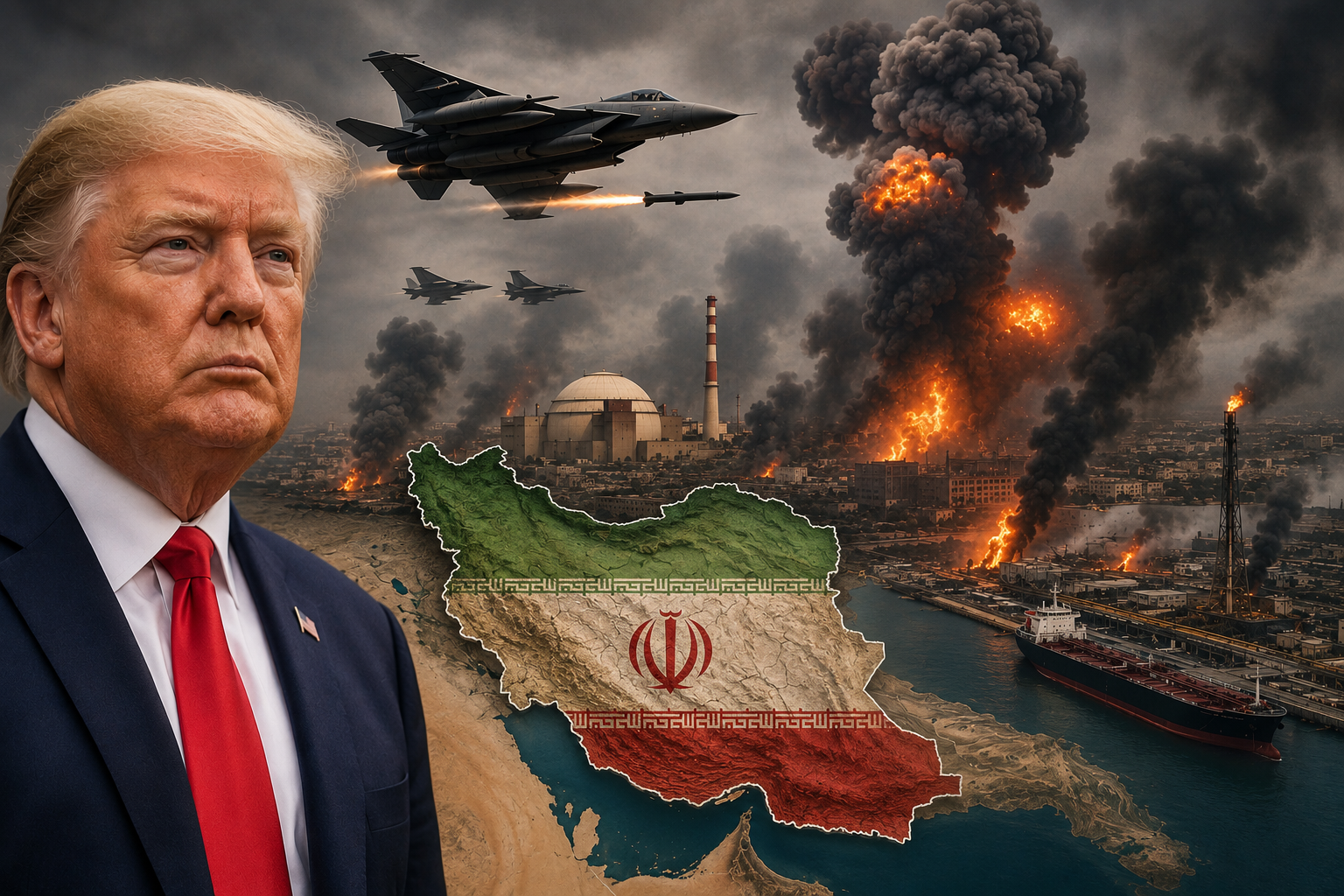
The United States launched a new wave of airstrikes across several parts of Iran, hitting military and commercial sites in at least four provinces. The attacks caused multiple explosions in different cities and have further increased tensions between the two countries.
One of the most important locations affected was Bushehr, where several explosions were reported. Bushehr is home to Iran's only nuclear power plant, making it one of the country's most sensitive locations. While explosions were heard in the area, there has been no official confirmation that the nuclear power plant itself was damaged.
Heavy explosions were also reported in Jask, where at least ten blasts were heard. Jask is an important coastal city near the Strait of Hormuz. Another nearby city, Sirik, also reported several explosions. These two cities are strategically important because they are close to one of the world's busiest shipping routes for oil and natural gas.
Reports also said explosions occurred in Bandar Abbas, Iran's largest port city, as well as in Kangan, Bandar-e Deyr, and Asaluyeh. Asaluyeh is especially important because it is a major center for Iran's natural gas and energy industry. Any damage to facilities in this region could affect the country's energy production and exports.
In southeastern Iran, explosions were also reported near Konarak and nearby towns. It is not yet clear which specific facilities were targeted there, but local reports suggest military-related sites may have been among the targets.
According to Iranian sources, the attacks focused on both military and commercial facilities. However, officials have not yet released full details about the damage or possible casualties. Emergency teams and security forces were seen responding to several of the affected areas.
Over the past few nights, the number and size of attacks inside Iran have continued to increase. The latest strikes covered a wider area than previous operations, showing that the conflict is expanding across different regions of the country.
Iranian officials strongly condemned the attacks and warned that they would continue to respond if the strikes do not stop. Leaders in Tehran have said they are prepared to take what they describe as "crushing retaliation" against any further military action. These statements have raised concerns that the conflict could become even more serious in the coming days.
The Strait of Hormuz remains one of the biggest concerns. A large share of the world's oil shipments passes through this narrow waterway every day. Any military activity near the strait could disrupt global energy supplies and affect oil prices around the world.
Many countries are closely watching the situation and calling for restraint. International observers fear that continued military exchanges between the United States and Iran could lead to a wider regional conflict involving other countries in the Middle East.
At this stage, the full impact of the airstrikes is still being assessed. More information is expected as Iranian authorities inspect the damaged areas and release official updates. The situation remains tense, and many people are waiting to see whether both sides choose further military action or move toward reducing tensions.
Summary
The United States carried out airstrikes in several parts of Iran, targeting military and commercial facilities in at least four provinces. Explosions were reported in cities including Bushehr, Bandar Abbas, Jask, Sirik, Asaluyeh, Kangan, Bandar-e Deyr, and Konarak. Iranian officials say they will respond if the attacks continue, raising fears of a wider conflict in the region.
Content



×
![]()